Foods which help to recover wound


The goal of a wound-healing diet is to eat a range of foods that gives you a high amount of calories, proteins, vitamins, and minerals your body wants. Canadian province Health Services advised training in four food groups: fruits and vegetables, grains, milk, and meat. The Cleveland Clinic suggested that the following minimum amounts of foods keep up a healthy selection every day:
Fruits and vegetables: a pair of meals every
Grains: five meals
Milk: three meals
Meats and beans: five meals
Oils, fats, and sugars: restricted servings
Remember that if you’ve got a polygenic disease, you’ll need to keep this selection up whereas still maintaining healthy glucose levels. Don’t stop to speak along with your doctor or dietician for a lot of personalized wound healing diet set up.
Choose power foods:
Among the most effective foods for wound healing are proteins such as:
- Meat, poultry, or fish
- Tofu
- Beans
- Eggs
- Milk
- Cheese
Greek dairy product
According to the Cleveland Clinic and Canadian province Health Services, power foods high in vitamin A and C include:
- Citrus fruits and juices
- Strawberries
- Tomatoes
- Peppers
- Carrots
- Spinach
- Cauliflower
- Dark, leafy like greens

Liver
To mix up the dark, leafy like vegetables on your plate, Healthline advises the following power greens:
- Kelp
- Kale
- Bok choy
- Spinach
- Parsley
- Green beans
Foods high in atomic number 30 which will promote healing include:
- Fortified cereals
- Seafood
- Meat
- Eggs
- Nuts and seeds
Fisher Titus center further suggested avoiding the empty calories in processed foods and refined grains. It’s a simple plan to prevent soda and alcohol and focus instead on healthier fluids throughout your recovery.
Drink lots of fluids
You’ll need to remain hydrous to market the healthy skin that promotes wound healing. At the same time, water is that the superior liquid; milk, soup, tea, occasional and natural juices also are healthy choices.
Berries
Antioxidants are a powerhouse of nutrition that helps the body to repair the injury. Suitable for when you go through surgery.
Fruits with antioxidants include:
- Grapes
- Pomegranates
- Blueberries
- Raspberries
- Strawberries
- Goji berries
Dark, leaflike Greens
Leafy greens might not be as in style as colorful berries and delicious fats. However, they’re very important! A good serving of green on your plate or juice offers you a dose of vitamin A, C, and E, additionally, as fat-soluble vitamin that is important for curdling.
Incorporate these vitamin-rich, dark, leaflike greens:
- Kale
- Spinach
- Swiss chard
- Bok choy
- Mustard greens
- Romaine lettuce
You will even be occupying the B-complex vitamins that help with energy levels. Don’t forget fiber, Iron, magnesium, metal, and Ca. Greens are sort of a multivitamin!
Meat or alternative
As you age, it’s essential to eat sufficient amounts of macromolecule. Following surgery, your body wants a high quantity of macromolecule and Iron. Your muscles are probably broken, touched, and shaped throughout the surgical operation. And currently must repair those muscles.
Amino acids within the macromolecule help improve muscle injury by creating Tissue. Iron can help you regain your energy levels a lot as quickly as Iron creates new blood cells.
Stock up on Iron and macromolecule through foods like:
- Poultry
- Seafood
- Beans and lentils
- Nuts
- Eggs
- Tofu
After surgery, you’ll realize that you have a problem digesting or perhaps manuduction more durable meats. Another plentiful supply of macromolecules is our next powerhouse food.
Eggs
Nature has provided us with a perfect medicinal food showing system packed in a real case. However, they are a regular 1st meal to serve to sufferers. Thus sick people and with intelligent reason.
One egg provides you with:
- 6 Grams of macromolecule
- Vitamins A, E, and K
- B complex vitamins (including B12)
- Riboflavin
- Folic acid
- Calcium
- Zinc
- Iron
All those nutrients we’ve got are already mentioned as being necessary for a fast recovery. The most effective half is that eggs are honest to serve and prepare.
You may be interested
Fara: Traditional Steamed Rice-Flour Dumplings of Chhattisgarh
Anshika Jain - November 13, 2026India’s traditional cuisine is known for transforming simple agricultural ingredients into nutritious, flavourful and culturally meaningful dishes. Across different regions, rice, lentils, seasonal vegetables and locally available…
Mocha Ghonto: Bengal’s Banana Blossom Curry with Potatoes and Bengali Spices
Anshika Jain - November 13, 2026Bengali cuisine is celebrated for its remarkable variety of vegetarian preparations, distinctive spice combinations and creative use of seasonal vegetables. Among its traditional dishes, Mocha Ghonto holds…
Aloo Pitika: Assam’s Rustic Mashed Potato Dish with Mustard Oil, Onions and Herbs
Anshika Jain - November 13, 2026Indian regional cuisine is filled with traditional dishes that demonstrate how simple ingredients can create distinctive flavours and memorable eating experiences. Among the many vegetarian preparations of…
Most from this category
Chakuli Pitha: Odisha’s Traditional Fermented Rice and Black Gram Pancakes
Anshika Jain - November 13, 2026
Papanasi: Romania’s Soft Cheese Doughnuts Served with Sour Cream and Fruit Preserves
Anshika Jain - November 13, 2026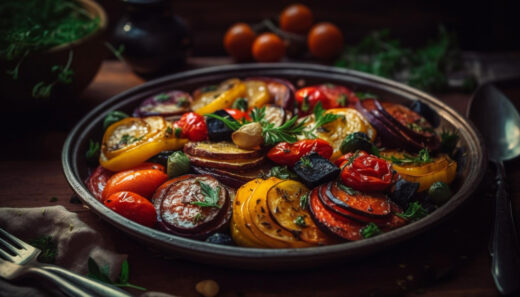
Briam: Greece’s Oven-Roasted Vegetable Dish with Olive Oil, Herbs and Tomatoes
Anshika Jain - November 13, 2026
Bissara: Vegetarian Preparation of Fava Beans, Split Peas, Garlic and Olive Oil
Anshika Jain - November 12, 2026Chakuli Pitha: Odisha’s Traditional Fermented Rice and Black Gram Pancakes
Anshika Jain - November 13, 2026Papanasi: Romania’s Soft Cheese Doughnuts Served with Sour Cream and Fruit Preserves
Anshika Jain - November 13, 2026Briam: Greece’s Oven-Roasted Vegetable Dish with Olive Oil, Herbs and Tomatoes
Anshika Jain - November 13, 2026