

Ajapsandali: Stew of Aubergine, Tomatoes, Peppers and Fresh Herbs

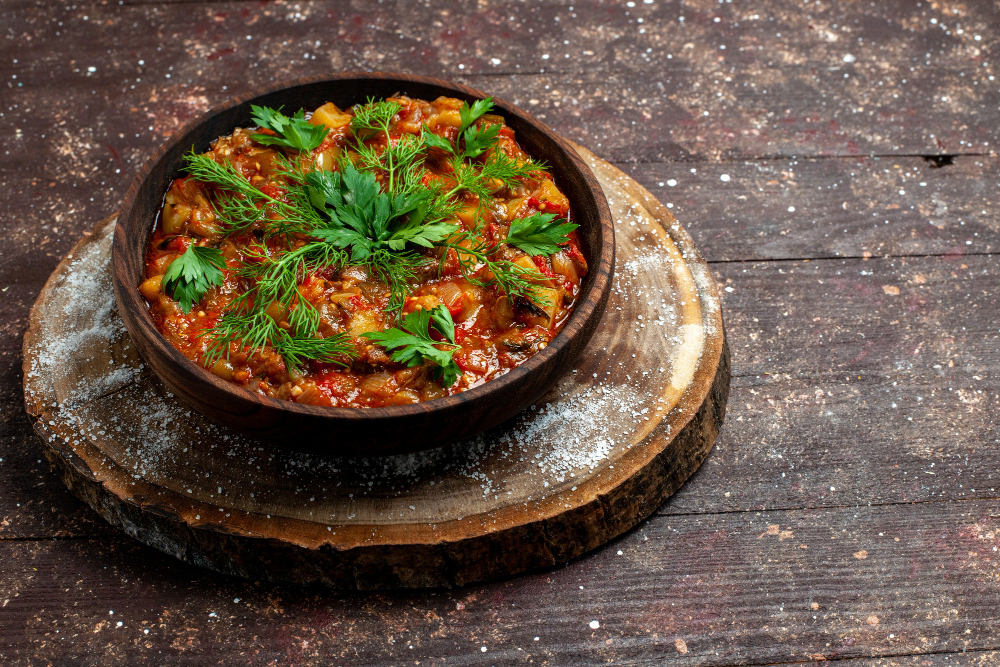
Georgian cuisine is known for its generous use of fresh vegetables, aromatic herbs, walnuts, garlic and distinctive seasonings. Among its many traditional preparations, Ajapsandali holds a special place as a colourful and flavourful vegetable dish. Prepared primarily with aubergine, tomatoes, sweet peppers, onions and fresh herbs, it brings together simple seasonal ingredients through slow cooking. The vegetables gradually soften, release their natural juices and develop a rich, balanced flavour without requiring complicated sauces or heavy seasoning.
Ajapsandali is particularly associated with summer, when aubergines, tomatoes and peppers are readily available in Georgian markets. It is commonly prepared in homes and can be served as a main vegetable dish, a side preparation or part of a larger meal. Although recipes differ between households, aubergine remains the defining ingredient. Fresh coriander, basil, parsley and garlic give the dish much of its characteristic Georgian identity.
The dish is sometimes compared with French ratatouille because both preparations use several vegetables cooked together. However, Ajapsandali has its own distinctive character, especially because of its generous use of fresh herbs and the way its vegetables are combined. It is not simply a mixture of cooked vegetables; it is a preparation in which each ingredient contributes a different texture and flavour to the finished dish.
The Georgian Culinary Background of Ajapsandali
Ajapsandali is widely recognised as a traditional Georgian vegetable preparation, particularly associated with Tbilisi and the country’s home-cooking culture. Its precise historical origin and the meaning of its name are not firmly established. Some culinary accounts describe it as an everyday urban Georgian dish, while similar preparations are also found in neighbouring parts of the Caucasus. This reflects the region’s long history of shared ingredients, agricultural traditions and culinary exchange.
Rather than being defined by one fixed recipe, Ajapsandali is shaped by household preferences and the vegetables available during the season. Some cooks prefer to fry aubergine and other vegetables separately before combining them, while others layer the ingredients directly in a pot and allow them to cook together. Potatoes, carrots, green beans and different varieties of peppers may appear in particular versions, although aubergine remains central to the dish.
This flexibility is an important part of its appeal. Ajapsandali does not depend on expensive ingredients or specialised cooking equipment. A selection of fresh vegetables, a suitable cooking pot, vegetable oil and a generous quantity of herbs are enough to create a satisfying meal. Its preparation also reflects a practical approach to seasonal cooking, in which vegetables are allowed to provide most of the flavour and moisture.
The Importance of Aubergine in Ajapsandali
Aubergine, also known as eggplant or brinjal, is the most important ingredient in Ajapsandali. Its soft flesh absorbs the flavours of tomatoes, peppers, garlic and herbs, making it especially suitable for slow-cooked vegetable dishes. When cooked properly, aubergine becomes tender without completely losing its structure. It also gives the preparation a substantial texture, allowing the dish to work as more than a simple vegetable side.
The way aubergine is prepared can influence the final result. Some cooks cut it into medium-sized cubes, while others prefer thick slices or longer pieces. Salting the cut aubergine before cooking is a common preparation method. It can help draw moisture from the surface and season the vegetable. After resting, the pieces can be patted dry before being fried or added to the cooking pot.
In some traditional-style preparations, aubergine is fried separately until lightly golden. This creates a richer flavour and helps the pieces retain their identity when combined with the other vegetables. In slower, lighter versions, the aubergine is cooked directly with tomatoes, onions and peppers. Both methods can produce a delicious vegetarian dish, although the first generally creates a deeper, more developed flavour.
Tomatoes and Peppers: Building the Dish’s Natural Flavour
Tomatoes provide the moisture and acidity that bring the ingredients of Ajapsandali together. As they cook, their flesh softens and releases juice, creating a natural sauce around the aubergine and other vegetables. Ripe tomatoes are particularly useful because they provide sweetness as well as acidity. Their flavour balances the mildness of aubergine and the natural sweetness of cooked onions and peppers.
Fresh tomatoes can be peeled and chopped before being added to the pot. Some cooks grate them or crush them to create a smoother consistency. When tomatoes are particularly juicy, additional water may not be necessary. This is useful because Ajapsandali is generally intended to have a thick, vegetable-rich consistency rather than the appearance of a watery soup.
Sweet peppers add another layer of flavour. Red peppers contribute natural sweetness, while green peppers can provide a slightly sharper, more vegetal taste. Using a combination of colours also gives the finished dish an attractive appearance. The peppers soften during cooking and blend with the tomatoes, but they should not be cooked so extensively that every piece loses its shape.
The relationship between these ingredients is important. Aubergine provides softness and substance, tomatoes create the moist base, and peppers contribute sweetness and aroma. Together, they establish the flavour foundation that makes Ajapsandali recognisable.
Garlic and Fresh Herbs: The Distinctive Georgian Character
Fresh herbs are among the most important elements of Ajapsandali. Georgian cooking frequently uses herbs generously, and this dish demonstrates how a combination of green ingredients can transform a simple vegetable preparation. Coriander, basil and parsley are particularly common, while some recipes also include dill or other seasonal herbs.
Fresh coriander contributes a bright, slightly citrus-like flavour that works well with tomatoes and aubergine. Basil adds a sweet, aromatic quality, with purple basil often associated with Georgian-style preparations. Parsley provides freshness and helps balance the stronger flavours of garlic and chilli. The combination creates a fragrant finish that distinguishes Ajapsandali from many other vegetable stews.
Garlic is another essential ingredient. It may be added during the later stages of cooking so that its aroma remains noticeable. Adding it too early can cause its flavour to become less pronounced during prolonged cooking. Some cooks also add fresh chilli or dried chilli flakes for gentle heat, although the amount can be adjusted according to preference.
The herbs should generally be added towards the end of cooking. This helps preserve their freshness and aroma instead of allowing them to disappear into the sauce. Once the pot is removed from the heat, resting it briefly with the lid on allows the flavours to settle and spread throughout the vegetables.
How Traditional Ajapsandali Is Prepared
The preparation of Ajapsandali begins with selecting fresh, firm vegetables. Aubergines should have smooth skins and feel relatively heavy for their size. Tomatoes should be ripe and juicy, while peppers should be fresh and free from soft or damaged areas. Fresh herbs are best added close to the end of cooking so that their aroma remains strong.
The aubergines are washed, cut into medium-sized pieces and lightly salted if the chosen recipe uses this method. After resting, they are dried and either fried separately or reserved for cooking directly in the pot. Onions are sliced or chopped and softened in vegetable oil until translucent. Peppers are then added and cooked until they begin to lose their firmness.
Tomatoes are incorporated next. As they soften, they release their juices and form a base for the remaining ingredients. The aubergine is returned to the pot if it has been fried separately. The vegetables are then cooked gently, allowing their flavours to combine. The cooking time depends on the size of the pieces and the method being used, but the goal is to achieve tenderness without turning everything into a completely uniform purée.
Garlic, chilli, salt and freshly chopped herbs are added towards the end. The dish is stirred carefully so that the aubergine remains in recognisable pieces. Once cooking is complete, the pot is allowed to rest for several minutes before serving. This resting period helps the flavours become more harmonious.
A Vegetarian Ajapsandali Recipe
A vegetarian version of Ajapsandali can be prepared using aubergine, tomatoes, sweet peppers, onions, garlic, fresh herbs and vegetable oil. These ingredients are sufficient to create a complete and flavourful dish. No meat, fish, meat stock, eggs or dairy products are required. The preparation is also naturally suitable for a vegan diet when made with vegetable oil and plant-based accompaniments.
For a home-style preparation serving approximately four people, use two medium aubergines, three ripe tomatoes, two sweet peppers, two medium onions and four garlic cloves. A small green chilli can be included for heat. Use a generous handful of fresh coriander, a handful of basil and some parsley. Sunflower oil or another neutral vegetable oil works well, while salt and freshly ground black pepper can be adjusted according to taste.
Wash and cut the aubergines into medium-sized cubes. Sprinkle them lightly with salt and leave them to rest for approximately twenty minutes. Pat them dry before cooking. Heat some vegetable oil in a large pan and fry the aubergine pieces in batches until they become lightly golden and tender. Transfer them to a plate.
Finally, add the crushed garlic, chopped chilli, coriander, basil and parsley. Season with salt and black pepper. Stir gently and cook for another minute or two, then remove the pan from the heat. Cover and allow the Ajapsandali to rest briefly before serving. The result should be a thick, fragrant vegetable preparation in which the aubergine remains soft and the tomato, pepper and herb flavours are clearly present.
Why Slow Cooking Matters
Slow cooking is central to the character of Ajapsandali. Instead of relying on a large quantity of spices or a complicated sauce, the dish develops its flavour through the gradual cooking of vegetables. As the onions soften, they become sweeter. Tomatoes release their juice and acidity, while aubergines absorb the surrounding flavours. Peppers become tender and contribute their natural sweetness to the mixture.
Cooking over a low or medium-low flame also helps maintain the texture of the ingredients. High heat can cause the vegetables to brown too quickly or stick to the bottom of the pan before the aubergine becomes tender. A covered pot encourages the vegetables to cook in their own moisture, although occasional stirring is still important.
Some Georgian recipes use a separate-frying method, in which aubergine and other vegetables are cooked individually before being combined. This approach requires more time and oil but can produce a richer result. Other recipes use a simpler one-pot method, placing the vegetables together and allowing them to soften gradually. Neither approach should be treated as the only correct version because Ajapsandali is known for its household variations.
Regional and Household Variations
One of the most interesting characteristics of Ajapsandali is the freedom to adapt it according to the vegetables available and the preferences of the cook. Although aubergine, tomatoes and peppers form the central combination, additional vegetables are sometimes included. Potatoes are a familiar addition in several recipes and make the dish more filling. Carrots can introduce extra sweetness, while green beans provide a different texture.
Some versions use more green peppers, while others rely on red peppers for a sweeter flavour. The amount of garlic, chilli and fresh herbs also changes from household to household. Certain cooks prefer a pronounced garlic flavour, while others use it more gently to allow the basil and coriander to remain prominent.
The cooking technique can vary as well. In one preparation, the vegetables are fried separately before being combined. In another, they are layered directly in a pot. Some cooks prefer a thicker preparation with very little added liquid, while others allow the tomatoes to form a more generous sauce. These differences are part of the dish’s culinary character rather than evidence of a single rigid formula.
How Ajapsandali Is Served in Georgia
Ajapsandali can be enjoyed warm, at room temperature or chilled. Its versatility makes it suitable for different meals and seasons, although it is especially associated with summer vegetable cooking. When served warm, the aubergine is soft, the tomato mixture is fragrant and the herbs provide a fresh finish. When served cold or at room temperature, the flavours have more time to settle, creating a slightly different but equally appealing experience.
Bread is a natural accompaniment because it can be used to scoop up the vegetable mixture and its tomato-rich juices. Georgian meals often include several dishes served together, and Ajapsandali fits comfortably alongside salads, vegetable preparations and other traditional foods. It can also be served as a light main course when prepared in a generous portion.
The dish does not require a heavy garnish. A little fresh coriander or basil added just before serving is usually enough. Some cooks finish it with a small drizzle of vegetable oil or a little freshly ground black pepper. The aim is to highlight the vegetables rather than cover their natural flavours.
Nutritional Value of Ajapsandali
Ajapsandali brings together several vegetables that contribute different nutrients to the diet. Aubergine provides dietary fibre and contains naturally occurring plant compounds. Tomatoes contribute vitamin C, potassium and lycopene, a carotenoid associated with the red colour of ripe tomatoes. Sweet peppers are also sources of vitamin C and other plant compounds, while fresh herbs contribute flavour and small amounts of various micronutrients.
Because the dish is prepared mainly from vegetables, it can be a useful way to include a variety of plant foods in everyday meals. Its fibre content comes from the vegetables, particularly when they are prepared without excessive peeling or over-processing. The exact nutritional composition depends on the ingredients, serving size and amount of oil used during cooking.
Vegetable oil is important for the cooking process, especially when aubergines are fried separately. However, aubergine can absorb a considerable amount of oil, so using moderate quantities and cooking in batches can help prevent the dish from becoming unnecessarily heavy. A one-pot preparation with less oil is another option for people who prefer a lighter version.
Ajapsandali should not be considered a complete source of every nutrient needed in a balanced meal. It can be paired with other plant-based foods, such as beans, lentils or whole grains, to create a more substantial meal with additional protein and energy.
Tips for Preparing Flavourful Ajapsandali at Home
The quality of the vegetables has a significant effect on the finished dish. Ripe tomatoes are particularly important because they provide the moisture needed to bring the ingredients together. If the tomatoes are firm or relatively dry, the preparation may require a little additional water. Choosing fresh aubergines with firm flesh also helps the pieces retain a pleasant texture during cooking.
Cutting the vegetables into reasonably similar pieces encourages more even cooking. Very small aubergine cubes may break down before larger pepper pieces become tender, while oversized pieces can take longer to cook. Medium-sized pieces generally provide a good balance between tenderness and structure.
Another useful technique is to avoid overcrowding the pan when frying aubergine. Cooking it in batches allows the pieces to brown more evenly. If too many pieces are placed together, they may release moisture and soften without developing the lightly golden surface that adds depth to the dish.
The herbs should be added near the end rather than at the beginning. This preserves their fresh aroma and prevents their flavour from becoming muted during prolonged cooking. Finally, allowing the dish to rest before serving is worthwhile.
Ajapsandali and the Value of Seasonal Vegetarian Cooking
Ajapsandali represents a style of cooking in which seasonal vegetables are treated as the main attraction rather than as supporting ingredients. Its preparation does not depend on meat substitutes, elaborate sauces or complicated culinary techniques. Instead, it uses the natural qualities of aubergine, tomatoes, peppers, onions and herbs to create a dish with depth and variety.
This approach remains relevant to contemporary vegetarian cooking. Seasonal vegetables can be affordable, widely available and adaptable to different meal plans. A preparation such as Ajapsandali also demonstrates that vegetarian food does not need to be complicated to be satisfying. The contrast between soft aubergine, sweet peppers, juicy tomatoes and fresh herbs creates a variety of textures and flavours within one pot.
The dish can be adapted to different kitchens without losing its central identity. Fresh Georgian purple basil may not be available everywhere, but ordinary fresh basil can provide a suitable alternative. Similarly, different sweet pepper varieties can be used according to local availability. The most important elements are the aubergine-centred preparation, the combination of tomatoes and peppers, and the generous use of fresh herbs.
Conclusion
Ajapsandali is a distinctive Georgian vegetarian dish that celebrates the flavour of seasonal vegetables through a simple but carefully balanced cooking process. Aubergine provides its soft and substantial foundation, tomatoes create a naturally rich sauce, and peppers contribute sweetness and colour. Garlic, coriander, basil and parsley bring freshness and give the preparation its characteristic aromatic finish.
Its flexible cooking methods make it suitable for different households and preferences. Whether the vegetables are fried separately or slowly cooked together in one pot, the result is a comforting preparation that can be served warm, at room temperature or cold. Potatoes and other vegetables may be included, but the central combination of aubergine, tomatoes, peppers and herbs remains especially recognisable.
More than a simple vegetable stew, Ajapsandali reflects the importance of seasonal ingredients and generous herb use in Georgian food culture. Its entirely plant-based preparation makes it a practical choice for vegetarian and vegan meals, while its rich flavour and adaptable serving style give it a place in both traditional and modern kitchens.
Online Internship with Certificate
You may be interested

Fara: Traditional Steamed Rice-Flour Dumplings of Chhattisgarh
Anshika Jain - November 13, 2026India’s traditional cuisine is known for transforming simple agricultural ingredients into nutritious, flavourful and culturally meaningful dishes. Across different regions, rice, lentils, seasonal vegetables and locally available…

Mocha Ghonto: Bengal’s Banana Blossom Curry with Potatoes and Bengali Spices
Anshika Jain - November 13, 2026Bengali cuisine is celebrated for its remarkable variety of vegetarian preparations, distinctive spice combinations and creative use of seasonal vegetables. Among its traditional dishes, Mocha Ghonto holds…

Aloo Pitika: Assam’s Rustic Mashed Potato Dish with Mustard Oil, Onions and Herbs
Anshika Jain - November 13, 2026Indian regional cuisine is filled with traditional dishes that demonstrate how simple ingredients can create distinctive flavours and memorable eating experiences. Among the many vegetarian preparations of…
Most from this category

Chakuli Pitha: Odisha’s Traditional Fermented Rice and Black Gram Pancakes
Anshika Jain - November 13, 2026
Papanasi: Romania’s Soft Cheese Doughnuts Served with Sour Cream and Fruit Preserves
Anshika Jain - November 13, 2026
Briam: Greece’s Oven-Roasted Vegetable Dish with Olive Oil, Herbs and Tomatoes
Anshika Jain - November 13, 2026
Bissara: Vegetarian Preparation of Fava Beans, Split Peas, Garlic and Olive Oil
Anshika Jain - November 12, 2026Chakuli Pitha: Odisha’s Traditional Fermented Rice and Black Gram Pancakes
Anshika Jain - November 13, 2026Papanasi: Romania’s Soft Cheese Doughnuts Served with Sour Cream and Fruit Preserves
Anshika Jain - November 13, 2026Briam: Greece’s Oven-Roasted Vegetable Dish with Olive Oil, Herbs and Tomatoes
Anshika Jain - November 13, 2026





Leave a Comment