

Fara: Traditional Steamed Rice-Flour Dumplings of Chhattisgarh

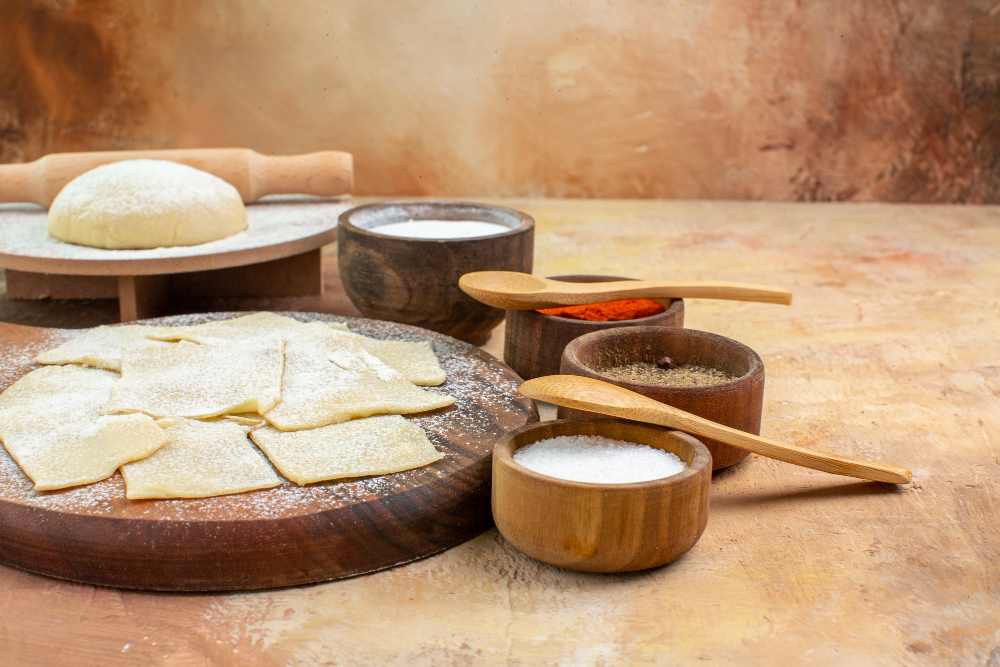
India’s traditional cuisine is known for transforming simple agricultural ingredients into nutritious, flavourful and culturally meaningful dishes. Across different regions, rice, lentils, seasonal vegetables and locally available spices form the foundation of everyday meals. Chhattisgarh, often called the rice bowl of India, has a particularly rich food culture shaped by its agricultural landscape and long-standing culinary traditions. Among its distinctive vegetarian preparations is Fara, a traditional dish made primarily from rice flour and commonly prepared with lentils, spices and aromatic ingredients. Its simple composition, steaming technique and satisfying texture make it an interesting example of regional Indian cooking.
Fara is generally prepared by shaping a rice-based dough into small dumplings or elongated pieces, sometimes incorporating ground or soaked lentils for additional flavour and texture. These dumplings are then steamed until cooked. Depending on household traditions and regional preferences, they may be served directly after steaming or lightly sautéed with mustard seeds, curry leaves, green chillies and other seasonings. This flexibility allows the dish to be enjoyed in different ways while retaining its traditional character.
Unlike many popular Indian snacks that depend on deep-frying, Fara is traditionally associated with steaming. This cooking method allows the rice flour and lentil mixture to become firm and tender without requiring a large quantity of oil. The result is a comforting vegetarian preparation that can be served as a breakfast dish, evening snack or part of a larger meal.
The Culinary Heritage of Fara in Chhattisgarh
Chhattisgarh has a food culture closely connected to rice cultivation. Rice is an essential ingredient in many households, appearing in everyday meals as well as traditional snacks, festive preparations and community cooking. The availability of rice and rice flour has encouraged the development of several regional dishes that use these ingredients in different forms. Fara reflects this culinary tradition by turning rice flour into a shaped and steamed preparation that is both practical and adaptable.
Traditional food in Chhattisgarh often reflects the relationship between local agriculture, household resources and seasonal availability. Many regional recipes rely on ingredients that are familiar and accessible rather than expensive or complicated. Rice flour, lentils, green chillies, coriander, garlic and mustard seeds are commonly used in everyday Indian cooking, making Fara an example of how ordinary ingredients can be combined to create a distinctive regional dish.
The preparation of Fara also reflects the importance of home cooking and inherited culinary knowledge. In many households, recipes are learned through observation and repeated practice rather than written measurements. The consistency of the dough, the size of the dumplings and the steaming time may vary from one family to another. These differences are part of the living food tradition rather than signs of a single fixed recipe.
What Makes Fara Different from Other Indian Dumplings?
Indian cuisine includes several types of steamed dumplings, but Fara has a distinct identity because of its rice-flour foundation and its association with Chhattisgarhi food culture. Other Indian preparations may use wheat flour, semolina, gram flour or fermented batter, whereas Fara commonly uses rice flour shaped into individual pieces. Lentils may be included as a filling, mixed into the preparation or used as part of the seasoning, depending on the recipe.
The texture of Fara is another defining feature. Properly prepared dumplings are soft and slightly firm, allowing them to hold their shape while remaining easy to bite. Rice flour provides the main structure, while lentils can contribute a more substantial texture and an earthy flavour. When spices are incorporated into the dough or lentil mixture, they create a balanced taste without overpowering the natural flavour of the grains.
The steaming process also distinguishes Fara from fried snacks. Instead of developing a crisp outer layer through deep-frying, the dumplings cook through gentle exposure to steam. This produces a softer finish and allows the ingredients to retain their individual character. Some households prefer this simple steamed version, while others add a final tempering to introduce a more pronounced aroma and flavour.
Main Ingredients Used in Traditional Fara
Rice flour is the central ingredient in Fara and determines much of its texture. It is usually combined with hot water and salt to form a soft dough. The water must be added carefully because rice flour behaves differently from wheat flour and does not develop gluten. The dough therefore needs sufficient moisture to remain flexible while being shaped. If it becomes too dry, the dumplings may crack; if it is excessively wet, they may lose their shape during cooking.
Lentils are an important ingredient in many stuffed versions of Fara. Chana dal and urad dal are commonly used, although the choice can differ between households. The lentils are soaked and ground or prepared into a coarse mixture, then combined with green chillies, ginger, cumin, coriander and other seasonings. This filling introduces a savoury centre that contrasts with the mild flavour of the rice-flour covering. Some preparations use a plain rice-flour dough without stuffing, allowing the seasoning added later to provide most of the flavour.
Sesame seeds, mustard seeds, curry leaves, garlic and fresh coriander are often used when Fara receives a final tempering. Sesame seeds contribute a gentle nuttiness, while mustard seeds release a distinctive aroma when heated in oil. Green chillies provide heat, and coriander adds freshness. The combination gives the dish a more complex flavour without requiring elaborate ingredients.
The ingredients can be adjusted according to household preferences, but the traditional preparation remains centred on rice and plant-based seasonings. It can also be made vegan by using vegetable oil instead of ghee and checking that any accompanying chutney or seasoning contains no animal-derived ingredients.
How Fara Is Traditionally Prepared
The preparation of Fara begins with making the rice-flour dough. Water is heated with salt and a small amount of oil, after which rice flour is gradually added and mixed until it begins to come together. The mixture is allowed to cool slightly before being kneaded into a smooth and workable dough. This stage is important because the dough must be soft enough to shape but firm enough to retain its structure during steaming.
For a stuffed variation, the lentil filling is prepared separately. Soaked lentils are ground into a coarse paste and mixed with ingredients such as ginger, green chilli, cumin, coriander, turmeric and salt. The filling should have enough consistency to remain inside the dumplings without becoming watery. A well-prepared filling gives Fara its characteristic contrast between the tender outer layer and the savoury interior.
Small portions of dough are then shaped into balls and flattened into discs or small oval forms. A portion of the lentil mixture is placed in the centre, and the edges are carefully sealed. Depending on local and family traditions, the dumplings may be crescent-shaped, oval or elongated. In simpler versions, the dough is rolled into small fingers or cylindrical pieces without any filling. Both approaches reflect the flexibility of this regional preparation.
Once cooked, Fara can be served immediately with chutney. Another popular approach is to give the dumplings a light tempering. Mustard seeds, sesame seeds, curry leaves, garlic and green chillies are heated in a small amount of oil before the steamed pieces are added. The dumplings are gently tossed so that the seasoning coats their surface. This creates a more aromatic preparation while preserving the soft texture inside.
Different Ways to Enjoy Fara
One of the reasons Fara remains adaptable is that it can be prepared in several forms without changing its basic identity. Plain steamed Fara is a simple version in which the rice-flour pieces are cooked without a lentil filling. Its mild flavour makes it suitable for people who prefer lightly seasoned food. It can be served with coriander chutney, tomato chutney or another homemade accompaniment.
Stuffed Fara offers a more substantial eating experience. In this version, a seasoned lentil mixture is enclosed inside the rice-flour dough. The filling gives each piece a stronger savoury flavour and adds plant-based protein to the preparation. Chana dal provides an earthy taste, while urad dal creates a softer and somewhat richer filling. The choice depends on the texture and flavour preferred by the cook.
Tempered Fara is prepared by seasoning steamed dumplings in a pan. Mustard seeds, sesame seeds, curry leaves and green chillies are commonly used for this purpose. The brief sautéing process adds aroma and a slightly firmer exterior. It is particularly suitable when leftover steamed Fara is available and needs to be served in a different form.
Herb-based variations can include fresh coriander, ginger, green chillies and other locally preferred ingredients. These additions bring freshness to the dough or filling and allow cooks to adjust the intensity of the dish. Some households may also adapt the preparation with finely chopped vegetables, although such additions should be understood as variations rather than essential ingredients of every traditional recipe.
Fara and the Importance of Steaming in Regional Cooking
Steaming is an important cooking technique in several Indian food traditions. It allows ingredients to cook through hot vapour rather than direct contact with oil or intense dry heat. In the case of Fara, steaming helps the rice-flour dough retain moisture while becoming firm enough to handle. It also allows the lentil filling, when present, to cook inside the covering without requiring deep-frying.
The technique is practical for home kitchens because it does not require specialised equipment. A traditional steamer can be used, but a deep vessel with boiling water and a suitable perforated plate can also work. The key is to keep the dumplings above the water rather than allowing them to sit directly in it. Covering the vessel helps maintain a steady cooking environment and prevents the pieces from drying out.
Steaming also makes Fara different from many popular fried snacks. Its texture is naturally soft rather than crunchy, and the flavour comes primarily from the rice, lentils and seasoning. A tempering can add a little oil and crispness to the surface, but it is not necessary for the basic preparation. This gives households the option of keeping the dish simple or making it more strongly flavoured according to the occasion.
Fara as a Vegetarian and Plant-Based Food
Fara is particularly interesting from a vegetarian food perspective because its main ingredients are plant-based. Rice flour provides carbohydrates, while lentils contribute plant protein and several important nutrients. When the filling contains chana dal or urad dal, it also adds dietary fibre and makes the dumplings more substantial than a preparation made only with rice flour.
The nutritional value of Fara depends on its ingredients, portion size and cooking method. A plain steamed version with minimal oil is generally lower in added fat than a deep-fried snack. A lentil-filled version offers a combination of cereal and pulse ingredients, which can contribute to a more varied protein intake. However, the exact nutrient content changes according to the type and quantity of lentils, the amount of oil used and the size of each serving.
Fara can also fit into a vegan diet when prepared with vegetable oil and served with plant-based chutneys. The traditional rice-flour and lentil combination does not inherently require dairy or eggs. This makes it suitable for people looking for a regional Indian snack that can be prepared without animal-derived ingredients.
It is important, however, not to describe every version of Fara as automatically low-calorie or suitable for every dietary requirement. Rice flour is a carbohydrate-rich ingredient, and the total nutritional profile depends on the recipe. People managing specific dietary needs should consider their overall meal pattern and portion size rather than relying on a single dish as a complete nutritional solution.
Cultural and Seasonal Significance of Fara
Food in Chhattisgarh is closely connected with family traditions, agricultural life and seasonal celebrations. Fara represents this relationship through its reliance on rice, an ingredient deeply rooted in the state’s food culture. The preparation is not simply about combining flour and lentils; it also reflects the practical cooking knowledge developed in households where locally available grains are transformed into everyday meals and festive dishes.
Fara is particularly associated with the spring season and the month of Phagun in some accounts of Chhattisgarhi food traditions. During this period, family visits and household gatherings create opportunities to prepare traditional dishes together. Preparing the dough, making the lentil filling and shaping individual dumplings can involve several family members, turning cooking into a shared activity. The dish therefore carries a social significance beyond its role as a snack.
The preparation also illustrates how regional recipes are preserved through everyday practice. Different households may use different proportions of rice flour and lentils, prefer plain or stuffed dumplings, or choose different shapes and seasonings. These variations allow the dish to remain connected to local preferences while preserving its basic identity. In this way, Fara contributes to the continuity of Chhattisgarh’s culinary heritage.
Serving Fara with Traditional Accompaniments
Fara is usually enjoyed warm, when the rice-flour covering is soft and the lentil filling is aromatic. Its relatively mild flavour makes it suitable for serving with stronger accompaniments. Green coriander chutney is a popular choice because its freshness and chilli-based seasoning complement the gentle taste of the dumplings. Tomato chutney offers a tangy alternative, while garlic chutney creates a more intense combination.
A lightly tempered version can be served on its own as a breakfast or evening snack. Mustard seeds, sesame seeds, curry leaves and green chillies provide enough flavour to make the preparation satisfying without requiring a separate sauce. For a fuller vegetarian meal, Fara can also be served alongside seasonal vegetable preparations or other traditional dishes.
The serving style often depends on the occasion. A simple steamed version may be preferred for an everyday breakfast, while stuffed or tempered Fara can be prepared when guests visit or when a more substantial snack is desired. Its ability to work in different meal settings makes it a flexible part of regional home cooking.
Fara in Contemporary Indian Food Culture
As interest in regional Indian cuisine grows, traditional dishes such as Fara are receiving attention beyond their places of origin. Food festivals, regional tourism initiatives, restaurants and home-cooking platforms are creating opportunities for people to discover dishes that were once primarily associated with local households. Fara is particularly suitable for introduction to new audiences because its ingredients are familiar, its preparation is relatively straightforward and its steamed format is different from many widely recognised Indian snacks.
The dish is sometimes compared with dumplings from other culinary traditions because of its shaped dough and optional filling. Such comparisons can help new audiences understand its form, but Fara has its own regional identity. Its rice-flour base, lentil-based variations and characteristic seasonings connect it to the food culture of Chhattisgarh rather than to any single international dumpling tradition.
Contemporary cooks can also introduce creative variations while respecting the traditional preparation. Different lentils, fresh herbs and carefully selected vegetables can be used to develop new versions. The tempering can be adjusted to create milder or spicier flavours, while the original steamed form can be retained. These adaptations make the dish relevant to modern kitchens without removing the ingredients and cooking methods that define it.
For restaurants and regional food businesses, Fara offers an opportunity to present Chhattisgarhi cuisine through a preparation that is relatively easy to portion and serve. It can be included in vegetarian snack menus, regional food tasting experiences and cultural food events. Its connection with rice cultivation also makes it a useful example of how local agricultural ingredients shape distinctive regional dishes.
Tips for Preparing Soft and Well-Shaped Fara
The quality of Fara depends largely on the consistency of the rice-flour dough. Adding hot water gradually and mixing it thoroughly helps prevent dry patches and uneven texture. The dough should be kneaded while it is still warm enough to handle comfortably, but it should not be so hot that it becomes difficult to shape. Keeping it covered while preparing the filling can prevent its surface from drying.
The lentil filling should be thick rather than watery. Excess moisture can make the dumplings difficult to seal and may cause the covering to split during cooking. Grinding the lentils to a coarse or moderately smooth consistency, depending on the preferred texture, helps create a filling that remains inside the rice-flour layer.
Careful shaping is equally important. The edges should be sealed properly so that the filling does not escape during steaming. Dumplings should be arranged with enough space between them to allow steam to circulate. Overcrowding the steaming plate can lead to uneven cooking, especially when the pieces are large.
Once the dumplings are cooked, they should be handled gently because freshly steamed rice-flour preparations can be delicate. If they are to be tempered, allowing them to rest briefly before adding them to the seasoning can help them retain their shape. These simple techniques make the preparation more consistent while preserving its traditional character.
Conclusion
Fara is a distinctive example of Chhattisgarh’s rice-based vegetarian food tradition. Made primarily from rice flour and often enriched with a spiced lentil filling, it demonstrates how simple ingredients can be transformed into a satisfying regional preparation. Its steamed cooking method, adaptable shapes and variety of seasonings give it a character that is different from many fried Indian snacks.
Beyond its ingredients and preparation, Fara reflects the importance of household cooking. Seasonal food practices and shared culinary knowledge in Chhattisgarh. Its connection with rice cultivation highlights the influence of local agriculture on regional cuisine, while its different forms demonstrate how traditional recipes evolve through family preferences and changing food habits.
As Indian regional cuisine gains wider recognition, Fara deserves attention as more than an unfamiliar dumpling. It is a vegetarian dish with a strong cultural connection, a practical cooking method and considerable scope for adaptation. Whether enjoyed plain, stuffed with lentils or lightly tempered with mustard seeds and sesame. Fara offers a flavourful introduction to the traditional food heritage of Chhattisgarh.
Online Internship with Certificate
You may be interested
Mocha Ghonto: Bengal’s Banana Blossom Curry with Potatoes and Bengali Spices
Anshika Jain - November 13, 2026Bengali cuisine is celebrated for its remarkable variety of vegetarian preparations, distinctive spice combinations and creative use of seasonal vegetables. Among its traditional dishes, Mocha Ghonto holds…
Aloo Pitika: Assam’s Rustic Mashed Potato Dish with Mustard Oil, Onions and Herbs
Anshika Jain - November 13, 2026Indian regional cuisine is filled with traditional dishes that demonstrate how simple ingredients can create distinctive flavours and memorable eating experiences. Among the many vegetarian preparations of…
Chakuli Pitha: Odisha’s Traditional Fermented Rice and Black Gram Pancakes
Anshika Jain - November 13, 2026Indian regional cuisine is known for its remarkable diversity, with traditional recipes reflecting local agricultural practices, seasonal ingredients and generations of culinary knowledge. Among the many traditional…
Most from this category

Papanasi: Romania’s Soft Cheese Doughnuts Served with Sour Cream and Fruit Preserves
Anshika Jain - November 13, 2026
Briam: Greece’s Oven-Roasted Vegetable Dish with Olive Oil, Herbs and Tomatoes
Anshika Jain - November 13, 2026
Bissara: Vegetarian Preparation of Fava Beans, Split Peas, Garlic and Olive Oil
Anshika Jain - November 12, 2026
Kuku Bademjan: Vegetarian Dish of Aubergine, Fresh Herbs and Aromatic Spices
Anshika Jain - November 12, 2026Papanasi: Romania’s Soft Cheese Doughnuts Served with Sour Cream and Fruit Preserves
Anshika Jain - November 13, 2026Briam: Greece’s Oven-Roasted Vegetable Dish with Olive Oil, Herbs and Tomatoes
Anshika Jain - November 13, 2026Bissara: Vegetarian Preparation of Fava Beans, Split Peas, Garlic and Olive Oil
Anshika Jain - November 12, 2026


Leave a Comment