

Mammi: The Dark Finnish Easter Dessert Shaped by Rye, Malt and Slow Cooking

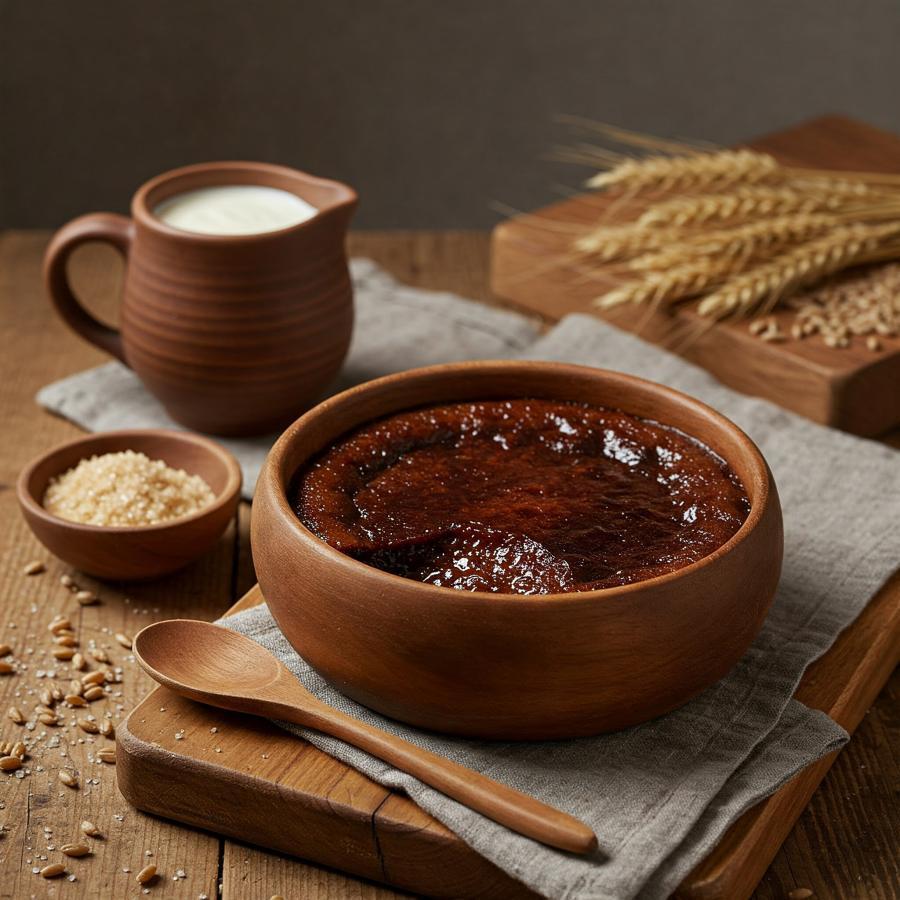
Among Europe’s traditional sweets, few are as distinctive in appearance and preparation as mämmi, a dark, dense rye-based dessert associated with Easter in Finland. Its deep brown colour, malty aroma and soft, almost pudding-like texture distinguish it from the cakes, pastries and creamy desserts commonly found on festive tables. Traditionally prepared through a slow process involving rye flour, rye malt and water, mämmi demonstrates how grain chemistry, temperature and time can transform relatively simple ingredients into a complex sweet dish.
Mämmi is more than a seasonal dessert. It represents a food tradition shaped by agricultural life, the availability of grains and techniques developed before modern ovens and processed sweeteners became widespread. Its preparation relies on controlled heating and prolonged cooking rather than elaborate decoration or a long list of ingredients. The result is a dessert whose flavour develops through the interaction of rye starches, naturally occurring enzymes, grain compounds and heat.
Although its dark appearance may seem unusual to people unfamiliar with Finnish cuisine, mämmi has a distinctive place in the country’s food culture. It is traditionally served cold, often with cream, milk or sugar, and is particularly associated with Easter. Understanding mämmi requires looking beyond its appearance to the science of rye, the role of malt, the importance of slow preparation and the cultural history that has sustained this dessert across generations.
What Is Mämmi?
Mämmi is a traditional Finnish dessert made primarily from rye flour, malted rye and water. Some modern recipes include salt, while serving customs vary between households. Its characteristic darkness comes from the grain ingredients and the prolonged preparation and baking process.
The finished dessert is dense but soft, with a slightly sticky consistency and a flavour that combines earthy rye notes, malty sweetness and gentle bitterness. Its taste is not identical to that of a heavily sweetened pudding because much of its distinctive sweetness develops through the transformation of grain carbohydrates during preparation. Some people enjoy it with cream and sugar, while others prefer it with milk or other accompaniments that soften its intense grain flavour.
Its simplicity is part of its appeal. A small number of ingredients undergo a series of transformations that produce a dessert with a recognisable flavour, appearance and cultural identity. Mämmi is therefore an interesting example of how traditional cooking can achieve complexity without relying on an extensive ingredient list.
The Historical and Cultural Importance of Mämmi
Rye was especially significant in northern European agriculture because it could grow in conditions that were less favourable for some other cereal crops.
Historically, rye supported the preparation of breads, porridges and other staple foods. Techniques involving soaking, fermenting, malting and slow heating allowed households to modify the texture, flavour and keeping qualities of grains. Mämmi emerged within this broader culinary environment, where food preparation depended heavily on seasonal resources and practical knowledge passed between generations.
The dessert’s association with Easter is particularly notable because its flavour and appearance differ from the bright, creamy and richly decorated sweets commonly linked with festive celebrations in many cultures. Mammi is usually served cold and has a restrained appearance, reflecting a food tradition in which the preparation process itself contributes much of the dish’s character.
Today, mämmi occupies a place in Finland’s culinary identity. Its seasonal availability reinforces its connection with Easter, while supermarkets, bakeries and food producers have helped maintain its presence in contemporary life. Some consumers value it for its connection to family traditions, while others appreciate its distinctive taste as an example of northern European food heritage.
The continued popularity of mämmi illustrates how traditional foods can survive changes in eating habits and food technology. Rather than becoming obsolete, a dish rooted in older grain-processing techniques can gain renewed attention as consumers become interested in regional cuisine, food history and the science behind traditional preparation methods.
Rye: The Grain at the Centre of Mämmi
Rye is the defining ingredient in mämmi, and its chemical composition helps explain the dessert’s texture and flavour. Like other cereal grains, rye contains starch, proteins, dietary fibre, minerals and a range of naturally occurring compounds that influence how it behaves during cooking. However, rye differs from wheat in important ways, particularly in the composition of its fibre and the properties of its storage proteins.
Starch is especially important because it provides the carbohydrate base that changes during the preparation of mämmi. When rye flour is mixed with water and heated, starch granules absorb moisture and begin to swell. Under suitable conditions, this process, known as gelatinisation, changes the physical structure of the starch and contributes to the thickening of the mixture.
Rye also contains arabinoxylans, a group of dietary fibres that influence water absorption and the viscosity of grain mixtures. These compounds can help retain water and affect how a rye-based preparation flows, thickens and sets. Their presence contributes to the distinctive consistency of many rye foods, although the final texture of mämmi depends on the proportions of ingredients and the details of the preparation process.
The grain’s flavour compounds also matter. Rye has an earthy, cereal-like character that differs from the milder flavour of refined wheat flour. When rye is malted and slowly cooked, its aromas interact with products formed during heating, creating a richer sensory profile. The combination of grain flavour, malt and prolonged preparation helps give mämmi its characteristic taste.
How Malt Creates Sweetness Without Making Mämmi a Conventional Sugar Dessert
Malt plays an important role in the preparation of traditional mämmi. It is produced by allowing grains to germinate under controlled conditions and then drying them. During germination, the grain activates enzymes that help break down stored nutrients to support the developing plant. In food production, this natural process is used to create ingredients with distinctive flavour and enzymatic properties.
One important group of enzymes is amylases, which act on starch. Depending on the malt and the preparation conditions, these enzymes can break some of the starch into smaller carbohydrates, including maltose and other sugars. These transformations help develop the characteristic sweetness of malted grain mixtures.
In mämmi preparation, the interaction between malt enzymes, rye starch and temperature is particularly important. As the preparation continues, changes in temperature influence enzyme activity and the physical behaviour of the mixture.
This helps explain why the preparation of mämmi is not simply a matter of combining flour, malt and water and baking them immediately. The timing and temperature of the process affect the availability of sugars and the balance between sweetness, grain flavour and thickness.
The result is a dessert with a malty character that can be sweet without relying entirely on added sugar. Nevertheless, the amount of naturally produced sugar varies according to the recipe and the ingredients used.
The Science of Slow Preparation
One of the most distinctive aspects of mämmi is its slow preparation. Traditional methods generally involve mixing rye flour and malt with water, allowing the mixture to undergo controlled heating and then baking it for an extended period. Recipes differ in the number of heating stages, the resting time and the final baking conditions, but temperature management remains central to the process.
During the early stages, enzymes in the malt can act on accessible starch when conditions are favourable. As the mixture is heated, the starch absorbs water and gelatinises, increasing the thickness of the preparation. These changes occur alongside the gradual development of the flavour associated with rye and malt.
The mixture’s temperature also determines how long the enzymes remain active. Enzymes are proteins whose activity depends on conditions such as temperature and acidity. If the mixture becomes too hot, enzymes lose their functional structure and stop working effectively. If the temperature is unsuitable for their activity, the conversion of starch into sugars may be limited. Traditional preparation methods reflect accumulated practical knowledge about how to balance these processes.
Once the mixture is baked for a prolonged period, moisture gradually moves through the food and the overall structure changes. The surface and exposed areas may become darker, while the interior develops its characteristic dense texture. The exact result depends on the vessel, oven temperature, cooking duration and the quantity being prepared.
Slow preparation therefore performs several functions at once. It allows the ingredients to interact, creates a thick grain-based structure and develops the dessert’s distinctive flavour. The method demonstrates that cooking time is not merely a practical requirement; it can be an essential part of the chemistry that defines a traditional food.
Why Mämmi Has Such a Dark Colour
Mämmi’s deep brown appearance is one of its most recognisable characteristics. Its colour develops through a combination of grain-derived compounds and changes that occur during prolonged heating. The darkness is not simply evidence that the dessert has been burned. Rather, it is part of the product’s normal appearance when prepared according to traditional methods.
One important set of reactions associated with heated foods is the Maillard reaction. It occurs when reducing sugars react with amino compounds, including those found in proteins. The reaction produces a complex mixture of flavour and colour compounds, particularly under conditions that support the necessary chemical interactions. The Maillard reaction contributes to the browning of bread crusts, roasted foods and many cooked cereal products.
Mämmi’s preparation also involves changes in the carbohydrates naturally present in rye and malt. Some reactions associated with sugar breakdown can contribute to colour and flavour development during heating. However, the precise contribution of each reaction depends on the recipe, moisture level, acidity and temperature profile. It would be inaccurate to attribute the dessert’s entire colour to one chemical process.
Because mämmi contains substantial moisture during much of its preparation, its reactions do not necessarily follow the same pattern as those occurring on the dry surface of toasted bread. Water content affects temperature, the movement of dissolved compounds and the rate at which different reactions proceed.
The resulting colour is accompanied by a complex aroma. Malt, rye and heat-generated compounds combine to produce notes that can be described as earthy, toasted, caramel-like or slightly bitter. These qualities contribute to the dessert’s distinctive sensory identity.
Texture, Moisture and the Formation of a Dense Dessert
The texture of mämmi results from the interaction between starch, water and rye fibre. Unlike a sponge cake, which depends on a network capable of trapping air, mämmi is designed to remain dense. Its structure develops through hydration, starch gelatinisation and the gradual redistribution of moisture during cooking and cooling.
When rye starch is heated with water, the granules swell and contribute to a thickened mixture. As the preparation continues, starch molecules and other grain components influence how water is retained. Rye’s soluble and water-binding fibres can also affect viscosity, producing a texture that feels substantial rather than airy.
Cooling further changes the structure. As a cooked starch-based food cools, some starch molecules can reassociate into more ordered structures, a process known as retrogradation. The extent of this process depends on the starch composition, moisture and storage conditions. It can influence firmness and the way the dessert feels when eaten cold.
Mämmi’s texture is therefore not determined by one ingredient alone. Flour particle size, water quantity, malt characteristics, heating conditions and cooling time can all influence the final result. Traditional cooks often develop a sense of the correct consistency through experience, while commercial producers can standardise these factors to achieve more consistent products.
Nutritional Characteristics of Mämmi
Because mämmi is based on rye, its nutritional characteristics differ from those of desserts made primarily with refined sugar, cream and white flour. Rye contributes carbohydrates, dietary fibre and some minerals, although the precise nutritional profile varies with the ingredients, recipe and serving size.
Rye’s dietary fibre includes arabinoxylans and other non-starch polysaccharides. Fibre can contribute to normal digestive function as part of an overall balanced diet. Whole-grain ingredients may also provide more of the grain’s original components than highly refined cereal ingredients, depending on how the flour is processed.
However, mämmi should not automatically be considered a low-sugar or low-calorie food. The carbohydrate content can be substantial, and added sugar or sweetened accompaniments may increase the total sugar and energy in a serving. Cream and milk also change the nutritional profile of the finished dish.
The dessert’s glycaemic effect depends on several factors, including the ingredients, the extent of starch transformation, the amount consumed and the other foods eaten alongside it. It is therefore not possible to predict an individual’s blood-glucose response solely from the dessert’s dark colour or traditional reputation.
People with specific dietary needs should check the product label or recipe rather than relying on general descriptions. Mämmi commonly contains rye and is therefore unsuitable for people who must avoid gluten because of coeliac disease. Its nutritional value is best understood in the context of the full diet rather than as a single food with universally beneficial or harmful effects.
How Mämmi Is Served and Enjoyed Today
Traditionally, mämmi is served chilled, often in a small bowl with cream, milk or sugar. The dairy accompaniment can soften its intense grain flavour and create a smoother mouthfeel. Some people enjoy the contrast between mämmi’s earthy sweetness and the freshness of cold cream or milk, while others prefer to eat it without additional sweeteners.
Modern food producers have made mämmi widely available in packaged form, particularly around Easter. Commercial products offer convenience while retaining the dessert’s traditional identity. Differences in sweetness, moisture and texture mean that one brand may taste noticeably different from another.
Mämmi has also inspired contemporary interpretations. Chefs and home cooks may use it in layered desserts, pair it with berries or incorporate it into ice cream and other sweet preparations. Such adaptations introduce new textures and flavours without necessarily replacing the traditional way of serving it.
These modern uses illustrate how a culturally specific food can move beyond its original setting while retaining its distinctive character. Mämmi’s strong grain flavour makes it particularly interesting for culinary experimentation, because it can provide contrast against tart fruit, creamy ingredients and other flavours.
Despite these variations, its connection with Easter remains important. For many people in Finland, eating mämmi is not only a sensory experience but also a way of participating in a familiar seasonal tradition.
Conclusion: A Dessert That Reveals the Chemistry of Grain
Mämmi is an exceptional example of how a simple grain-based preparation can develop a complex identity through carefully controlled cooking. Rye provides starch, fibre and characteristic cereal flavours, while malt contributes enzymes that can transform part of the grain’s starch into smaller carbohydrates. Slow heating and baking then influence the dessert’s colour, aroma, moisture and dense texture.
Its dark appearance, malty sweetness and distinctive consistency are the results of interacting physical and chemical processes rather than a single unusual ingredient. The preparation demonstrates the importance of temperature, enzyme activity, starch gelatinisation and the reactions that develop during prolonged cooking.
At the same time, mämmi represents more than food chemistry. Its enduring place in Finnish Easter traditions connects modern consumers with older agricultural practices and regional culinary knowledge. Whether served traditionally with cream or adapted into contemporary desserts, it demonstrates how time-tested cooking methods can remain relevant in changing food cultures.
Mämmi reminds us that culinary sophistication does not always depend on complicated techniques or expensive ingredients. Sometimes, it emerges from understanding how a grain behaves, how time changes flavour and how generations of practical experience can turn a handful of ingredients into a food with a lasting cultural identity.
Online Internship with Certificate
You may be interested
Sikil Pak: Maya Pumpkin-Seed Dip with Roasted Seeds and Tomato
Anshika Jain - October 22, 2026Traditional foods often reveal how communities transform simple, locally available ingredients into preparations with distinctive flavours and cultural significance. Sikil Pak, also written as Sikil P'aak, is…
Tinutuan: Indonesian Rice Porridge Celebrating Vegetables
Anshika Jain - October 22, 2026Across Indonesia, traditional food reflects the diversity of local agriculture, community customs and everyday eating habits. Among the distinctive dishes of North Sulawesi is Tinutuan, a savoury…
Khorisa-Based Preparations: Fermented Bamboo Shoots
Anshika Jain - October 22, 2026Northeast India is home to a remarkable variety of traditional foods shaped by local agriculture, seasonal ingredients and generations of culinary knowledge. Among the region’s distinctive ingredients…
Most from this category
Jadoh: Khasi Rice Dish That Reflects the Culinary Heritage of Meghalaya
Anshika Jain - October 22, 2026
Anishi Curry: How Fermented Leaf Cakes Create a Distinctive Flavour in Naga Cuisine
Anshika Jain - October 22, 2026
Su Filindeu: Sardinia’s Delicate Pasta Made by Repeatedly Stretching Dough
Anshika Jain - October 21, 2026Jadoh: Khasi Rice Dish That Reflects the Culinary Heritage of Meghalaya
Anshika Jain - October 22, 2026Anishi Curry: How Fermented Leaf Cakes Create a Distinctive Flavour in Naga Cuisine
Anshika Jain - October 22, 2026Papeda: Translucent, Elastic Sago Porridge of Eastern Indonesia
Anshika Jain - October 21, 2026
Sikil Pak: Maya Pumpkin-Seed Dip with Roasted Seeds and Tomato
October 22, 2026
Tinutuan: Indonesian Rice Porridge Celebrating Vegetables
October 22, 2026

Leave a Comment