

Kabak Tatlisi: Turkish Pumpkin Dessert with a Glossy, Syrupy Finish

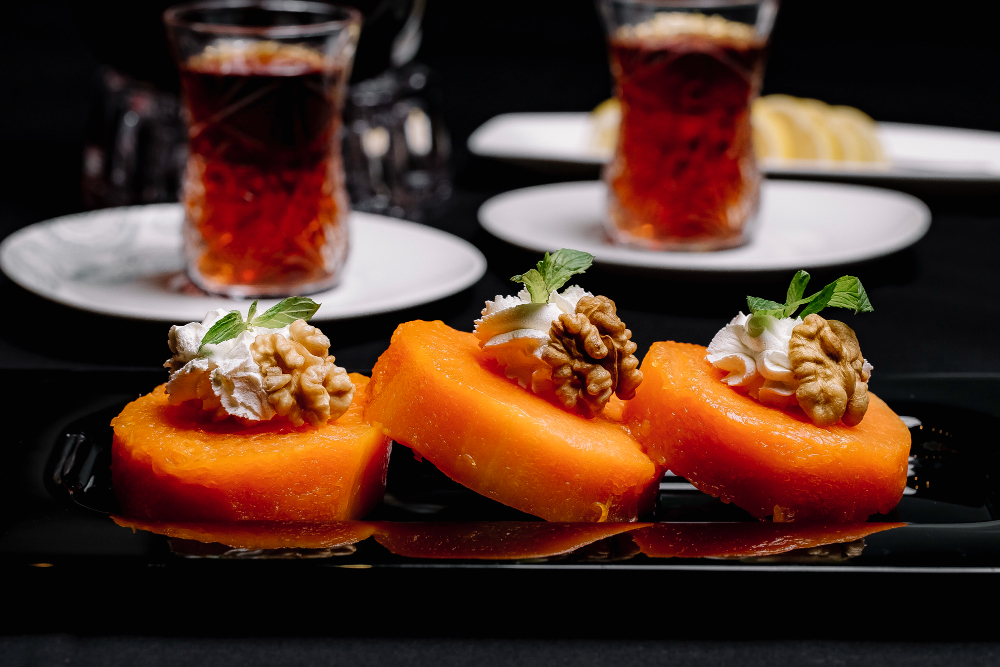
Kabak Tatlısı is a traditional Turkish dessert that transforms an everyday autumn vegetable into a glossy, syrup-coated sweet through a remarkably simple cooking process. Prepared by slowly cooking pumpkin with sugar until the flesh becomes tender and absorbs the surrounding syrup, this dessert celebrates the natural character of pumpkin rather than concealing it beneath pastry, cream, or elaborate flavourings. It is commonly served with chopped walnuts, while tahini, a paste made from sesame seeds, adds a creamy texture and a pleasantly savoury contrast to the sweetness.
The name kabak tatlısı translates broadly as pumpkin or squash dessert in Turkish. The word kabak can refer to different kinds of squash, but the dessert is typically prepared with a firm, sweet winter pumpkin that can retain its shape during cooking. Unlike pumpkin pie, which combines pumpkin with a custard-like filling and a pastry crust, kabak tatlısı keeps the pumpkin pieces largely intact. Their appearance is an important part of the dish: the pieces become soft and slightly translucent, while a concentrated syrup coats their surfaces.
The appeal of kabak tatlısı lies in the relationship between the ingredient and the cooking technique. Pumpkin contains considerable moisture, and when it rests with sugar, the sugar draws liquid from the cut pieces. During slow cooking, the released juices mix with dissolved sugar to form a syrup.
Beyond its flavour, kabak tatlısı reflects Turkey’s regional culinary traditions and the seasonal importance of pumpkin. Different communities prepare it using distinct cooking methods, and the choice of garnish can change the final experience considerably. Some versions are tender and syrupy, while others develop firmer surfaces or a lightly roasted finish. Together, these variations demonstrate how a small number of ingredients can produce a dessert with a distinctive identity and enduring appeal.
The Cultural Roots of Turkish Pumpkin Dessert
Kabak tatlısı belongs to the broader tradition of Turkish sweets that rely on fruit, vegetables, nuts, syrups, and careful cooking rather than always depending on elaborate pastry techniques. Pumpkin is well suited to this approach because its mild flavour can support sweetness while its flesh softens gradually under heat. The vegetable is widely used in different culinary traditions, but the Turkish dessert gives it a particular role by allowing the pumpkin itself to remain the central ingredient.
The dessert is closely associated with the autumn and winter seasons, when pumpkins and other winter squashes become readily available. Its preparation makes use of an ingredient that can be stored and cooked in large pieces, and the recipe can be adjusted according to the natural sweetness and moisture content of the pumpkin. Traditional household versions often require little more than pumpkin and sugar, with nuts or other garnishes added when serving.
Although kabak tatlısı is sometimes described in general terms as an Ottoman-era dessert, its precise historical origins should not be assumed without reliable evidence. Pumpkins originated in the Americas and reached Europe and the wider Ottoman world after transatlantic exchange began in the late fifteenth century. This means that the specific pumpkin dessert familiar today developed after the introduction of these crops, even though sweet syrups and fruit-based desserts have much older histories across the region.
Today, kabak tatlısı appears in home cooking, restaurants, regional food celebrations, and Turkish dessert menus. Its continued popularity comes partly from its simplicity, but also from its adaptability. The dessert can be prepared in advance, served at room temperature or chilled, and garnished according to regional preferences. It offers a clear example of how a seasonal ingredient can become a recognisable part of a national food culture.
The Main Ingredients and Their Roles
Pumpkin: The Foundation of the Dessert
The choice of pumpkin is one of the most important factors in making successful kabak tatlısı. The ideal variety has firm flesh that can soften without immediately collapsing into purée. A pumpkin that contains too much moisture or has an especially delicate structure may break apart before the syrup becomes sufficiently concentrated. A firmer winter squash can also work well, provided that it retains its shape during slow cooking.
Pumpkin contributes a mild, earthy sweetness and a soft texture that becomes more pronounced as it cooks. Its natural sugars are generally not enough to produce the concentrated sweetness associated with the finished dessert, which is why sugar is traditionally added. The pumpkin’s own flavour remains important, however, because the dessert is not intended to taste only of sugar syrup. Selecting mature, good-quality produce helps maintain a balance between sweetness and the distinctive flavour of the vegetable.
The thickness of the pumpkin pieces also affects the result. Larger, evenly cut pieces are easier to handle and more likely to remain intact. Very thin slices can soften quickly, while uneven pieces may cook at different rates. Consistent cutting therefore supports both the appearance and the texture of the finished dish.
Sugar: More Than a Sweetener
Sugar performs several functions in kabak tatlısı. It adds sweetness, draws moisture from the pumpkin during resting, and supplies the dissolved solids that eventually create the syrup. When sugar is sprinkled over the cut pumpkin, the liquid released from the vegetable begins dissolving it. Given enough time, this process produces a sweet liquid that can be used as the cooking medium.
Many traditional recipes allow the pumpkin and sugar to rest together for several hours or overnight before cooking. This reduces the need to add water because the pumpkin releases some of its own moisture. The Turkish Ministry of Culture and Tourism describes a traditional method in which the pumpkin is left with sugar until it becomes juicy, then cooked gently until tender.
The quantity of sugar depends on the pumpkin’s sweetness, the desired syrup concentration, and the recipe being followed. Too little sugar may produce a less syrupy result, while too much can overwhelm the pumpkin’s flavour. The aim is not simply to create the sweetest possible dessert but to achieve a balance in which the syrup complements the vegetable and contributes to its glossy surface.
Tahini and Nuts: The Finishing Touches
Walnuts are a familiar garnish for kabak tatlısı because their earthy flavour and slight bitterness provide a contrast to the sweet pumpkin. Their crisp texture also creates a difference between the soft cooked flesh and the crunchy topping. Chopped hazelnuts or pistachios may be used in alternative preparations, depending on availability and personal preference.
Tahini adds another dimension. These additions are not necessary for the basic dessert, but they can transform its overall character. Walnuts highlight texture, tahini introduces richness, and molasses deepens the sweet flavour. Their use demonstrates how a simple base can be adapted without changing the essential identity of kabak tatlısı.
The Science Behind Its Glossy, Concentrated Texture
One of the most interesting features of kabak tatlısı is the transformation that takes place during cooking. Raw pumpkin is firm and contains a high proportion of water. The amount of liquid released varies with the pumpkin’s variety, maturity, storage conditions, and the size of the pieces. Allowing the pumpkin to rest therefore helps create a more predictable cooking environment and may reduce the need for added water.
As the pumpkin heats, its cell walls and internal structures soften. The flesh gradually becomes tender, while the surrounding liquid contains dissolved sugar and compounds released from the vegetable. If cooking continues uncovered after the pumpkin is tender, some of the water evaporates. The syrup becomes more concentrated, increasing its viscosity and allowing it to cling to the pumpkin’s surface.
The resulting gloss is not necessarily evidence of extensive caramelisation. In many traditional versions, the shine comes mainly from a concentrated sugar syrup rather than from deeply browned sugar. More pronounced browning can occur in oven-finished or roasted variations, where surface heat encourages additional colour and flavour development. These are related but distinct processes, and the difference explains why some versions remain bright and translucent while others develop darker edges.
Why Slow Cooking Matters
Slow cooking gives the pumpkin time to soften without disintegrating immediately. If the heat is too intense, the syrup may reduce rapidly while the pieces remain unevenly cooked, or the pumpkin may break apart before the desired texture develops. Gentle heat helps the pieces become tender and allows the syrup to concentrate more gradually.
The shape of the cooking vessel also matters. A wide, shallow pan allows moisture to evaporate over a larger surface area, whereas a deep pot may retain more steam and slow concentration. Traditional recipes often recommend arranging the pumpkin in a shallow vessel and avoiding unnecessary stirring once the pieces begin to soften. This helps preserve their shape and produces a more attractive final presentation.
Cooking time varies depending on the pumpkin, the thickness of the pieces, and the pan used. The best guide is the appearance and texture of the food rather than the clock alone. The pumpkin should be tender enough to eat comfortably but firm enough to be lifted and served without falling apart.
Traditional Preparation: From Fresh Pumpkin to Finished Dessert
The preparation of kabak tatlısı begins by removing the pumpkin’s peel, seeds, and stringy interior. The flesh is cut into substantial, evenly sized slices or pieces. These are arranged in a wide cooking vessel, and sugar is distributed over them. The mixture is then covered and left to rest for several hours or overnight, allowing the pumpkin to release its juices and dissolve much of the sugar.
Once enough liquid has accumulated, the vessel is heated gently. The pumpkin cooks in the syrup produced by the sugar and its own moisture, although a small amount of water may be added if necessary. The pan is generally kept covered during the initial cooking stage to retain moisture and soften the pieces. When the pumpkin is tender, the lid can be removed so that excess liquid evaporates and the syrup becomes more concentrated.
The pumpkin should be handled carefully as it cooks. Repeated stirring can damage the softened pieces, so it is better to move them gently only when necessary. Once the syrup has reached the desired consistency, the pan is removed from the heat and the dessert is allowed to cool. Resting also helps the syrup settle around the pumpkin and makes the pieces easier to transfer to a serving plate.
Kabak tatlısı is commonly served at room temperature or chilled, with walnuts scattered over the top. Tahini can be drizzled over the pieces just before serving, while other toppings can be selected according to taste.
Regional Variations Across Turkey
Kabak tatlısı has several regional interpretations, and these variations demonstrate how local cooking techniques can create noticeably different results from the same basic ingredients. Differences may include the type of pumpkin, the resting period, the thickness of the slices, the cooking vessel, and whether the dessert is finished on the stove or in an oven.
Hatay: A Firmer, More Translucent Finish
In Hatay, one traditional method involves soaking pumpkin pieces in carefully prepared limewater before cooking. This technique is intended to help the outer surface retain a firmer structure, creating a contrast between the exterior and the soft interior. The pumpkin is washed thoroughly after soaking and then cooked with sugar until it becomes tender and translucent. Tahini and crushed walnuts are commonly used as toppings.
The limewater technique requires care and is not essential to making kabak tatlısı at home. It is a specialised regional method rather than a universal preparation rule. A simpler sugar-resting and slow-cooking approach can still produce a delicious dessert with a glossy surface and tender texture.
Aydın: Emphasis on Slow Cooking and Syrup
The Aydın version highlights the importance of allowing pumpkin to rest with sugar before cooking. Traditional regional instructions describe arranging the pumpkin in a wide pot, sprinkling sugar between the pieces, and leaving the mixture overnight. It is then cooked until tender, followed by uncovered cooking to thicken the syrup. Walnuts or hazelnuts may be added when serving.
This approach demonstrates how the resting stage can contribute to the finished texture. Rather than adding large amounts of water at the beginning, the cook relies on moisture released by the pumpkin and concentrates the liquid gradually.
Antalya: A More Intensely Finished Dessert
Antalya has its own recognised version of kabak tatlısı, prepared by resting pumpkin with sugar and cooking it slowly before finishing the pieces in an oven. This final stage can create a more concentrated surface and lightly browned edges. Double-roasted tahini and walnuts are associated with the regional presentation. Antalya’s version has received geographical indication registration, reflecting the importance of its specific preparation and regional identity.
These regional distinctions show that kabak tatlısı is not defined by a single rigid recipe. Its essential character remains the same, but local methods influence whether the finished dessert is especially soft, translucent, firm, or lightly caramelised.
Nutritional Value and Dietary Considerations
Pumpkin contributes water, fibre, and several micronutrients to kabak tatlısı. Orange-fleshed pumpkin is a source of carotenoids, including beta-carotene, which the body can convert into vitamin A. However, the amount retained in a serving depends on the pumpkin variety, portion size, cooking method, and overall recipe.
The most important nutritional consideration is the added sugar. Although pumpkin contains naturally occurring sugars, the dessert’s characteristic sweetness comes largely from the sugar used during preparation.
Walnuts and tahini contribute fats, and walnuts also supply some protein and fibre. These ingredients make the dessert more complex and satisfying, but they increase its overall energy content. Their nutritional contribution depends on how much is added and how large the serving is.
The basic preparation does not require milk, cream, eggs, or flour. It can therefore be suitable for vegan diets and, when prepared with appropriate ingredients, gluten-free diets. People with sesame or nut allergies should omit tahini or nut toppings as needed. Ultimately, its nutritional profile depends on the balance between pumpkin, sugar, syrup, and garnishes.
Serving Ideas and Modern Interpretations
Traditional kabak tatlısı is often served in a simple presentation that allows the pumpkin’s colour and glossy surface to remain the focus. The pieces can be arranged on a shallow plate, with the syrup spooned over them and walnuts added immediately before serving. Tahini can be drizzled across the top, creating a contrast between the golden-orange pumpkin and the pale sesame paste.
Modern presentations sometimes pair the dessert with thick cream, clotted cream, ice cream, or pistachios. These additions introduce temperature and texture contrasts, particularly when chilled pumpkin is served with a creamy accompaniment. Grape or mulberry molasses can deepen the flavour, while a light sprinkle of cinnamon may add warmth without overpowering the pumpkin.
Kabak tatlısı can also be prepared in advance, making it convenient for entertaining. Once cooled, it can be refrigerated and served later, allowing the syrup to settle around the pieces. Its texture is best preserved by handling the pumpkin gently during storage and avoiding excessive mixing. The toppings should complement those qualities rather than obscure them.
Conclusion: The Art of Turning Pumpkin into a Concentrated Sweet
Kabak tatlısı demonstrates how a simple cooking method can transform a seasonal vegetable into a distinctive dessert. Through the interaction of pumpkin, sugar, moisture, and gentle heat, firm pieces become tender and acquire a glossy coating of concentrated syrup. The result is a sweet that depends more on ingredient quality and cooking control than on elaborate techniques.
Its regional variations reveal the flexibility of Turkish culinary traditions. Some preparations emphasise a translucent texture, others preserve a firmer exterior, and some use oven finishing to deepen the flavour. Walnuts, tahini, and other garnishes add contrast while allowing pumpkin to remain the central ingredient.
The dessert also offers a useful lesson in food science. Sugar draws moisture from pumpkin, heat softens its structure, and evaporation concentrates the syrup. Understanding these processes helps explain why resting time, pan shape, cooking temperature, and careful handling all influence the final result.
As both a seasonal speciality and a familiar part of Turkish food culture, kabak tatlısı shows that a memorable dessert does not need a complicated ingredient list. Its appeal comes from the careful transformation of pumpkin into something tender, glossy, and richly flavoured.
Online Internship with Certificate
You may be interested
Taro Leaf Rolls: Leaf Structure and Safe Cooking Influence a Wrapped Vegetable Dish
Anshika Jain - October 26, 2026Taro leaf rolls demonstrate how a simple leafy vegetable can become the foundation of a distinctive and satisfying dish. Found in different forms across tropical regions, taro…
Acorn Jelly: Korean Dotorimuk and the Science of Starch
Anshika Jain - October 26, 2026Acorn jelly is a distinctive food made by transforming the seeds of oak trees into a smooth, firm, sliceable preparation. Best known in Korea as dotori-muk or…
Moustalevria: Traditional Greek Grape-Must Pudding with Natural Sweetness
Anshika Jain - October 26, 2026Moustalevria is a traditional Greek dessert made primarily from grape must, the freshly pressed juice of grapes that contains their pulp, skins, and sometimes seeds before fermentation.…
Most from this category
Kisiel: Traditional Fruit Dessert That Reveals the Science of Starch Thickening
Anshika Jain - October 26, 2026
Tinginys: Lithuania’s No-Bake Biscuit Dessert with a Distinctive Chocolate Mosaic
Anshika Jain - October 26, 2026
Kisiel: Traditional Fruit Dessert That Reveals the Science of Starch Thickening
Anshika Jain - October 26, 2026Tinginys: Lithuania’s No-Bake Biscuit Dessert with a Distinctive Chocolate Mosaic
Anshika Jain - October 26, 2026

Leave a Comment