

Amazake: Japan’s Naturally Sweet Fermented Drink

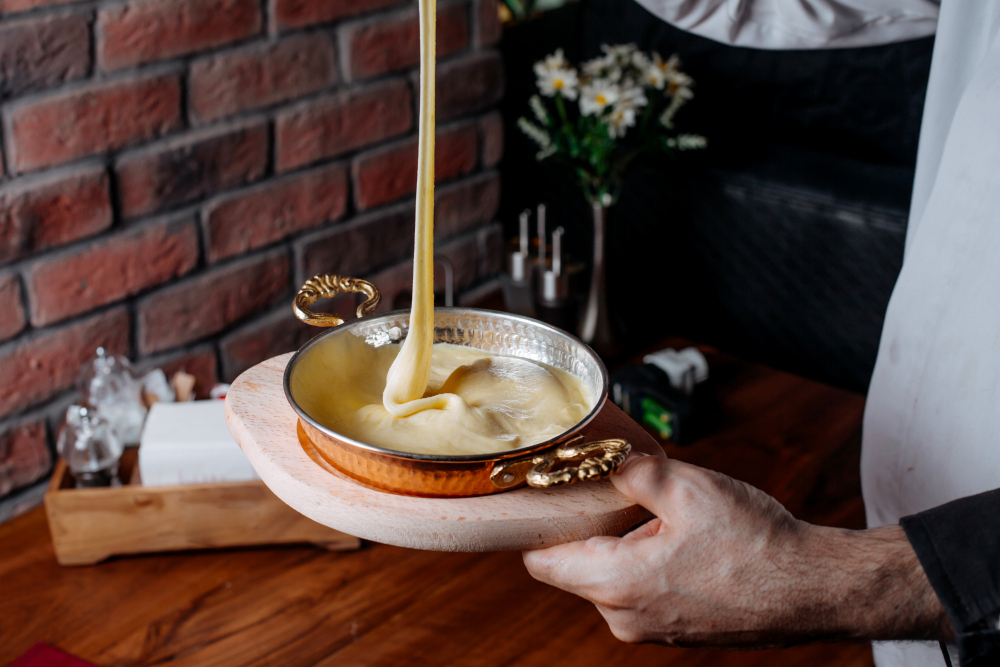
Japan’s food culture is deeply connected with fermentation. From miso and soy sauce to sake, pickles, and koji-based seasonings, fermentation has played an important role in transforming simple ingredients into foods and beverages with complex flavours and distinctive textures. Among these traditional products, amazake occupies a particularly interesting position. Often described as a naturally sweet Japanese fermented drink, amazake combines rice, koji, water, and the remarkable enzymatic activity of fermentation to create a creamy, sweet beverage without requiring the large amounts of added sugar commonly associated with sweet drinks.
The name amazake literally means “sweet sake,” which can initially be confusing because one of the most important modern forms of amazake is non-alcoholic. The distinction comes from the way it is produced. Koji amazake, made from rice koji, obtains much of its sweetness when enzymes produced by Aspergillus oryzae break rice starch into glucose. Another form, known as sakekasu amazake, is made from sake lees and may contain added sugar and traces of alcohol. These two products share a name and cultural history but are not identical beverages.
Amazake is therefore much more than a sweet rice drink. It is an example of how fermentation can transform the chemistry, flavour, texture, and culinary possibilities of an ordinary grain. Its long history in Japan, association with seasonal traditions, nutritional interest, and modern revival have made it increasingly relevant to contemporary food culture.
What Is Amazake?
Amazake is a traditional Japanese beverage generally made by combining rice or cooked rice with rice koji and allowing enzymes to convert starches into simpler sugars. The resulting beverage is naturally sweet and has a thick, creamy consistency compared with ordinary tea or grain infusions.
The most important ingredient in traditional koji amazake is rice koji. Koji is rice that has been cultivated with Aspergillus oryzae, a microorganism that produces enzymes capable of breaking down complex components of food. In amazake production, amylase enzymes act on the starch in rice and generate glucose, which provides much of the drink’s characteristic sweetness. Proteases also break down proteins into peptides and amino acids, contributing to the beverage’s broader composition and flavour.
This is what makes amazake particularly fascinating. Its sweetness does not have to come from simply adding refined sugar. Instead, the fermentation process changes the structure of the rice itself, converting starch into sugars that can be tasted directly.
The Two Main Types of Amazake
The word amazake refers to two related but distinct traditional beverages. The first is koji amazake, which is produced through the enzymatic saccharification of rice starch using rice koji. The second is sakekasu amazake, which is made using sake lees, the solid material remaining after sake production.
Koji amazake is generally non-alcoholic because the process focuses on saccharification rather than alcoholic fermentation. The enzymes from koji break down rice starch into glucose, producing the characteristic sweetness. Japan’s Ministry of Agriculture, Forestry and Fisheries describes this type as a sweet beverage produced by mixing rice koji with water, or rice koji with cooked rice and water, followed by controlled heating.
Sakekasu amazake follows a different route. Sake lees are dissolved in hot water and may be sweetened. Because sake lees can retain some alcohol from the sake-making process, this version can contain traces of alcohol. Unlike koji amazake, its production does not depend on the same saccharification process occurring directly in the finished beverage.
Understanding this difference is important when describing amazake as a “naturally sweet fermented drink.” The phrase most accurately describes koji amazake, whose sweetness develops from enzymatic conversion of rice starch.
The Role of Koji in Amazake
Koji is one of the foundations of Japanese fermentation culture. It is used not only for amazake but also in the production of sake, miso, soy sauce, and several fermented seasonings.
The microorganism Aspergillus oryzae is particularly important because of the enzymes it produces. These enzymes allow large molecules such as starches and proteins to be broken down into smaller compounds. This process changes both the nutritional composition and sensory qualities of the original ingredients.
In amazake, the transformation begins with rice starch. Amylase enzymes break the starch into simpler sugars, especially glucose. The result is a beverage that tastes remarkably sweet even though the basic ingredients may be little more than rice, koji, and water.
Koji also contributes to flavour development. Protein breakdown generates amino acids and peptides, which can add complexity to the drink. Research examining the metabolite profile of koji amazake has identified sugars, amino acids, organic acids, B vitamins, and hundreds of other compounds in the beverage.
This demonstrates why fermentation should not be understood simply as a way of preserving food. It is also a biochemical transformation that can create entirely new sensory characteristics.
A History Connected to Ancient Japan
Amazake has a long history in Japan. Historical references to sweet fermented rice beverages appear in ancient Japanese records, and the drink became increasingly associated with everyday consumption over subsequent centuries.
Japan’s Ministry of Agriculture, Forestry and Fisheries notes that a beverage resembling amazake appears in the Nihon Shoki, a historical chronicle from the Nara period. Amazake later became more widely consumed among ordinary people during the Edo period.
During the Edo period, amazake became associated with street vendors, who sold the drink to people in urban areas. Interestingly, despite its modern reputation as a winter comfort drink, amazake also developed a strong historical connection with summer. Vendors sold it during hot weather, and the drink was valued as a nourishing source of readily available energy.
This historical association challenges the modern assumption that amazake is primarily a winter beverage. Like many traditional Japanese foods, its cultural meaning has changed according to season, location, preparation method, and social context.
Why Amazake Is Naturally Sweet
The sweetness of koji amazake is one of its most remarkable characteristics.
Rice contains large quantities of starch, but starch itself does not taste strongly sweet. During amazake production, enzymes from the koji break the starch molecules into smaller sugars. Glucose becomes an important component of the resulting beverage, creating a naturally sweet flavour.
This process is known as saccharification. It differs from alcoholic fermentation, in which microorganisms convert sugars into ethanol and carbon dioxide. In koji amazake, the key transformation is the conversion of starch into sugar.
Temperature control is therefore crucial. Traditional preparation commonly involves maintaining the mixture at approximately 55–60°C for an extended period, allowing the enzymes to work effectively without destroying their activity through excessive heat.
The result is a thick, sweet beverage whose flavour originates largely from the transformation of the rice itself.
What Does Amazake Taste Like?
Amazake has a distinctive flavour that is difficult to compare directly with ordinary tea, juice, or milk.
Its most obvious characteristic is sweetness. However, the sweetness can be accompanied by soft rice aromas, mild cereal notes, and subtle fermented complexity. The beverage can be creamy or porridge-like depending on the amount of rice solids retained and how it is prepared.
Koji contributes additional depth. The breakdown of proteins and carbohydrates produces compounds that can create a broader flavour profile than plain cooked rice.
Some versions are smooth and drinkable, while others retain visible rice particles. Commercial products may be filtered, blended, diluted, or flavoured, creating significant variation between brands.
This versatility has helped amazake move beyond its traditional presentation and into contemporary cafés, health-food markets, dessert menus, and modern Japanese beverage culture.
Amazake as a Traditional Energy Drink
Amazake has historically been associated with nourishment and energy. During the Edo period, its relatively high carbohydrate content made it a practical beverage during hot weather and periods of physical activity. Japan’s traditional-food documentation even records the historical expression “drinkable intravenous drip” as a description of its perceived nutritional value.
The comparison should not be interpreted literally in modern medical terms. Amazake is a food and beverage, not an intravenous medical treatment. The historical phrase reflects the perception that its easily available carbohydrates and other nutrients made it useful as a sustaining drink.
Its glucose content remains one of its defining nutritional characteristics. Because the sweetness is produced from rice starch, a serving can contain a substantial amount of carbohydrate even when no refined sugar has been added.
For this reason, “naturally sweet” should not automatically be interpreted as “low sugar” or “suitable without limitation for everyone.” The source of the sweetness is important, but so is the total carbohydrate content.
Nutritional Interest in Amazake
Amazake has attracted scientific interest because it contains more than simple sugars.
Koji amazake can contain amino acids, peptides, oligosaccharides, B vitamins, minerals, and other compounds generated or modified during fermentation. Research has also investigated compounds such as ergothioneine and glycosylceramides in relation to amazake’s composition and potential biological effects.
However, nutritional claims surrounding fermented foods need to be interpreted carefully. The presence of potentially interesting compounds does not automatically mean that drinking amazake produces a particular health outcome.
The scientific literature includes human studies investigating specific effects, but the evidence remains much more limited than popular wellness marketing sometimes suggests. Amazake is best understood as a nutrient-containing traditional beverage rather than a miracle health product.
Its most established characteristic remains its role as a fermented rice beverage with naturally developed sweetness and a distinctive nutritional composition.
Amazake and Digestive Health Research
The relationship between amazake and the gut microbiome has attracted particular scientific interest.
A randomized, double-blind, placebo-controlled study investigated the effects of koji amazake consumption on bowel movements in healthy adults. Participants consuming the koji amazake experienced increased weekly defecation frequency compared with the placebo group during several weeks of the study. Changes in the abundance of certain intestinal bacteria were also observed.
These findings are interesting because they suggest that the effects of amazake may extend beyond its basic nutritional content. Components created or retained during koji fermentation may interact with the digestive system in ways that researchers are continuing to investigate.
At the same time, one clinical trial does not establish amazake as a treatment for digestive disorders. More research is needed to determine which components are responsible for observed effects and whether the findings apply broadly to different populations and commercial formulations.
The scientific value of amazake lies partly in the opportunity to study how traditional fermentation products interact with human biology.
Amazake and the Microbiome
Fermented foods have become an important subject in microbiome research, and amazake provides an unusual example because its fermentation history is not identical to that of probiotic drinks containing live bacterial cultures.
Koji amazake is produced using a mold, Aspergillus oryzae, whose enzymes transform the rice substrate. Depending on processing and storage, the final beverage does not necessarily function like a conventional live-culture probiotic beverage.
Nevertheless, fermentation can generate oligosaccharides and other compounds that may influence the gastrointestinal environment. Japan’s Ministry of Agriculture and Forestry discusses the presence of oligosaccharides in amazake and their potential relevance to intestinal bacteria, while emphasizing that the precise health effects of individual fermented-food components can be difficult to establish chemically and clinically.
This distinction is important in an era when fermented foods are frequently marketed using broad microbiome claims. Fermentation, probiotics, prebiotics, and postbiotics are related concepts but should not be treated as interchangeable.
New Research Is Expanding the Amazake Concept
Amazake is no longer being studied only as a traditional rice beverage. Researchers are experimenting with alternative ingredients and fermentation strategies.
A 2026 study investigated amazake made from Mucuna pruriens rather than conventional rice. Researchers found that enzymatic saccharification occurred progressively and that the alternative substrate produced a different sugar composition and higher antioxidant-related measurements than conventional rice amazake in the experimental setting.
Such research demonstrates how the underlying concept of amazake can be adapted. If starch-rich plant materials can be transformed through koji-based enzymatic processes, the traditional beverage becomes a platform for food innovation rather than a fixed recipe.
Earlier research has also explored the use of alternative ingredients such as stale bread, showing how amazake-style fermentation could potentially contribute to food-waste reduction while producing beverages with different nutritional and sensory properties.
These experiments reflect a broader movement in food science toward combining traditional fermentation knowledge with modern sustainability and product-development goals.
Amazake and Modern Japanese Food Culture
Amazake occupies an unusual position between traditional food and modern wellness culture.
In Japan, it can still be encountered in traditional settings, seasonal celebrations, shrines, festivals, and specialty shops. At the same time, modern manufacturers have introduced bottled amazake, refrigerated products, flavoured versions, and convenient ready-to-drink formats.
The drink also fits naturally into the contemporary interest in koji. Chefs, food researchers, fermentation enthusiasts, and home cooks have increasingly explored koji because of its ability to transform grains, proteins, and other ingredients.
Amazake therefore benefits from a cultural revival in which fermentation is being appreciated not simply as an old preservation method but as a sophisticated culinary technique.
Hot or Cold: How Amazake Is Enjoyed
Amazake can be served warm or chilled, and the temperature changes the sensory experience.
Warm amazake emphasizes its soft rice aroma and comforting sweetness. It is particularly appealing during colder months and can be served as a nourishing traditional-style drink.
Chilled amazake offers a different experience. The cold temperature makes the sweetness feel more refreshing, while the creamy texture gives it a character somewhat closer to a modern functional beverage or smoothie.
Contemporary products may also be incorporated into desserts, sauces, dressings, smoothies, and other recipes. Its natural sweetness makes amazake useful as a culinary ingredient as well as a standalone beverage.
This flexibility has helped it move beyond its historical identity without losing its connection to Japanese fermentation traditions.
Amazake in the Global Fermented-Food Movement
The global popularity of fermented foods has created new opportunities for traditional Japanese products.
International consumers are increasingly familiar with kombucha, kefir, kimchi, miso, tempeh, sourdough, and other fermented foods. Amazake introduces another form of fermentation in which sweetness rather than acidity or saltiness becomes the defining characteristic.
This makes it particularly interesting for people exploring alternatives to conventional sweet beverages. Instead of beginning with sugar and adding flavour, amazake begins with rice and uses fermentation to create sweetness.
Its connection with koji also gives it relevance to the broader international interest in Japanese fermentation. As chefs and food producers experiment with koji in new applications, amazake provides a ready example of what enzymatic transformation can achieve.
The Difference Between “Fermented” and “Alcoholic”
A common misunderstanding about amazake comes from its name.
Because “zake” is related to the Japanese word for sake, people may assume that amazake is automatically alcoholic. That is not correct.
Koji amazake is produced primarily through saccharification, meaning that enzymes break starch into sugars. Alcoholic fermentation is not the defining step. Properly prepared koji amazake is therefore generally considered non-alcoholic.
Sakekasu amazake is different because sake lees can retain some alcohol from the brewing process. Consumers who need to avoid alcohol should therefore distinguish between koji amazake and sake-lees-based products and check the product information carefully.
This distinction illustrates why the word “amazake” describes a family of beverages rather than a single standardized recipe.
The Future of Amazake
The future of amazake may lie in the meeting point between tradition, nutrition, food science, and sustainability.
Researchers are investigating how different rice varieties, germinated grains, alternative plant substrates, fermentation conditions, and microbial systems can alter the composition and sensory properties of amazake. Research on germinated rice, for example, has shown that fermentation conditions and the starting rice material can influence compounds such as gamma-aminobutyric acid and gamma-oryzanol.
Food scientists are also examining how amazake can be adapted to new ingredients and modern production systems. The 2026 research using Mucuna pruriens demonstrates that amazake-style saccharification can be explored beyond conventional rice, although such experimental products remain far from replacing traditional amazake.
The future may therefore include both preservation and innovation. Traditional rice-based amazake can remain culturally important while new formulations introduce the underlying fermentation technique to different grains, legumes, and plant-based ingredients.
Why Amazake Matters Beyond Its Sweetness
Amazake is a powerful example of how traditional food knowledge can encode sophisticated biological processes.
To a casual observer, it may appear to be little more than sweet rice in liquid form. Yet its production depends on carefully controlled microbial cultivation, enzyme activity, temperature, starch conversion, and flavour development.
The beverage demonstrates how Japanese fermentation culture has historically used microorganisms not merely to preserve ingredients but to transform them.
This perspective also helps explain why koji has attracted so much attention from contemporary chefs and food scientists. Koji provides a biological toolkit for changing the texture, sweetness, aroma, and flavour of ingredients.
Amazake is one of the clearest demonstrations of this principle because the transformation can be tasted directly. Rice begins primarily as a starchy grain and emerges from the process as a naturally sweet beverage.
Conclusion
Amazake is one of Japan’s most distinctive traditional beverages, combining rice, koji, water, and fermentation-derived enzymatic activity to create a naturally sweet drink with a long cultural history.
Its uniqueness lies in the way its sweetness is produced. In koji amazake, enzymes from Aspergillus oryzae break rice starch into glucose, while other enzymatic processes generate amino acids, peptides, and additional compounds that contribute to its flavour and composition.
The drink also reveals the complexity of Japanese fermentation culture. It connects ancient food traditions with modern research into enzymes, microbiomes, nutrition, alternative plant ingredients, and sustainable food production.
Scientific research has begun to investigate potential digestive, nutritional, and other biological effects of amazake, but these findings should be interpreted carefully rather than converted into exaggerated health claims. Some human studies are promising, while many proposed benefits require further investigation.
At the same time, amazake is evolving. Modern producers are offering convenient formats, while researchers are exploring new substrates and fermentation approaches. This combination of tradition and experimentation gives amazake relevance far beyond its historical identity.
Ultimately, amazake represents a different way of thinking about sweetness. Rather than simply adding sugar to a beverage, Japanese fermentation traditions transform the grain itself. Rice becomes softer, sweeter, more complex, and nutritionally different through the action of koji.
That transformation is what makes amazake so compelling. It is not merely a sweet drink from Japan. It is a living example of how fermentation can turn an everyday ingredient into something culturally meaningful, scientifically fascinating, and remarkably versatile.
Online Internship with Certificate
You may be interested
Pandan: Southeast Asia’s Green, Fragrant Ingredient Taking Over Modern Desserts
Anshika Jain - October 6, 2026Pandan has become one of the most recognizable ingredients associated with Southeast Asian desserts, but its appeal extends far beyond its striking green colour. Known for its…

Medovik: Russia’s Multi-Layered Honey Cake That Looks Like Dessert Architecture
Anshika Jain - October 6, 2026Medovik is one of Russia’s most recognizable honey cakes, celebrated for its delicate layers, soft texture, gentle honey aroma, and distinctive appearance. At first glance, the dessert…
Basbousa: The Syrup-Soaked Semolina Cake With Middle Eastern Character
Anshika Jain - October 6, 2026Basbousa is one of the Middle East’s most recognisable semolina desserts, celebrated for its golden surface, dense yet tender texture, fragrant syrup, and characteristic diamond-shaped pieces. Unlike…
Most from this category

Carrot “Bacon”: Can Vegetables Really Recreate a Breakfast Classic?
Anshika Jain - October 5, 2026



Blue Spirulina Latte: The Ocean-Coloured Beverage Trend
October 6, 2026

Leave a Comment