

Blue Spirulina Latte: The Ocean-Coloured Beverage Trend

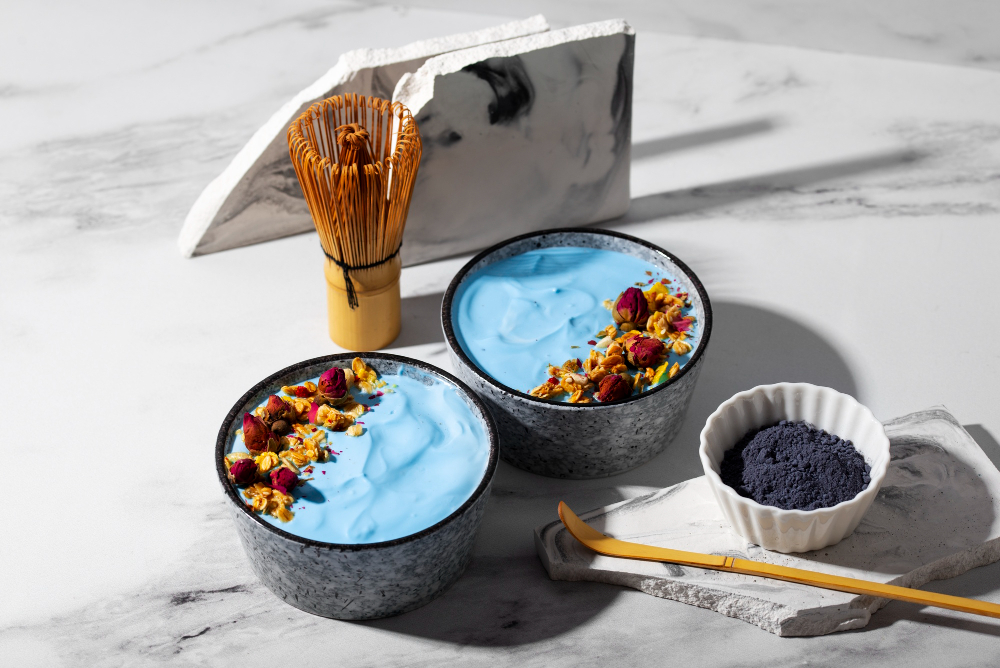
Food and beverage trends are increasingly influenced by visual appeal. In modern cafés, a drink is no longer judged only by its flavour or aroma. Colour, presentation, texture, photography, and social-media visibility can all influence whether a beverage captures consumer attention. Among the most visually distinctive drinks to emerge from this culture is the blue spirulina latte, a creamy beverage characterized by an intense turquoise or ocean-blue colour.
At first glance, the drink may look like something created entirely for social media. Its bright colour certainly makes it highly photogenic, particularly when served in a transparent glass with contrasting white milk, foam, or layered ingredients. However, the colour has a genuine scientific origin. Blue spirulina products generally derive their blue colour from phycocyanin, a blue pigment-protein complex associated with certain cyanobacteria commonly marketed as spirulina.
Phycocyanin has attracted considerable interest from food scientists because it can function both as a natural blue colouring ingredient and as a biologically active pigment-protein that is being investigated for potential antioxidant and other properties. A comprehensive review describes phycocyanin as an increasingly important natural blue pigment while also highlighting challenges related to its stability and processing.
The blue spirulina latte therefore sits at the intersection of several modern food trends: natural colour, plant-based beverages, functional-food marketing, café innovation, and visually distinctive drinks. Yet understanding the beverage requires looking beyond its striking colour. The chemistry of phycocyanin, the sensitivity of the pigment to heat and acidity, the difference between colour and nutrition claims, and the importance of ingredient quality all influence what makes a successful blue spirulina latte.
What Is Blue Spirulina?
The term “blue spirulina” can be somewhat misleading because it does not refer to a separate blue species of spirulina. Instead, the intense blue ingredient used in many beverages is typically a phycocyanin-rich extract derived from spirulina, also known scientifically as Arthrospira.
Spirulina itself is a cyanobacterium rather than a conventional plant or seaweed. It contains several pigments, including chlorophyll and phycocyanin. When phycocyanin is separated and concentrated, its vivid blue colour becomes much more prominent.
This distinction matters because a spoonful of ordinary whole spirulina powder and a small amount of purified or concentrated blue spirulina extract are not necessarily equivalent products. Whole spirulina contains a mixture of pigments, proteins, minerals, and other components and generally has a darker blue-green appearance. Phycocyanin-rich extracts are designed to provide a much cleaner blue colour.
The blue spirulina used in modern lattes is therefore often valued primarily for its colouring ability, although manufacturers and wellness brands may also market it for its nutritional characteristics.
The Science Behind the Blue Colour
The remarkable colour of a blue spirulina latte comes primarily from phycocyanin.
Phycocyanin belongs to a group of light-absorbing proteins called phycobiliproteins. In cyanobacteria, these pigments participate in photosynthetic processes by helping capture light. In food applications, however, their most immediately visible characteristic is their strong blue colour.
When phycocyanin is incorporated into a pale beverage such as milk or a plant-based milk alternative, even a relatively small amount can produce a noticeable blue hue. The intensity depends on the concentration, formulation, lighting, and interactions between the pigment and other ingredients.
This gives cafés a natural route to creating a dramatic blue drink without relying on traditional synthetic blue food dyes. The growing interest in phycocyanin reflects a wider food-industry search for naturally derived colours that can perform well in consumer products.
The pigment is also highly recognizable visually. Unlike many naturally derived food colours that produce muted yellow, red, or brown shades, phycocyanin can generate a striking blue that immediately distinguishes a beverage from ordinary coffee and tea.
Why the Latte Format Works
The latte format provides an ideal visual background for blue spirulina.
Milk is naturally pale, allowing the blue pigment to remain highly visible. When the pigment is mixed evenly, the result can be a soft sky-blue or turquoise beverage. When it is layered carefully with milk or foam, the drink can produce gradients that range from white to pale blue to deeper ocean tones.
This visual quality has made blue spirulina particularly attractive to contemporary cafés and wellness-oriented beverage brands.
The flavour profile also contributes to the appeal. Unlike coffee, matcha, or strongly roasted teas, phycocyanin-rich blue spirulina extracts can be incorporated into beverages without necessarily creating a dominant bitter or roasted flavour. Depending on the product, the resulting drink may have a relatively mild flavour that allows vanilla, coconut, oat milk, honey, fruit, or other ingredients to define the taste.
This makes the ingredient useful as a visual and functional component rather than simply as the primary flavour of the beverage.
What Does a Blue Spirulina Latte Taste Like?
The taste of a blue spirulina latte depends heavily on the ingredient used.
A highly purified phycocyanin extract can contribute relatively little flavour compared with whole spirulina powder. Whole spirulina, by contrast, can have a more noticeable earthy, marine, vegetal, or algae-like character.
This difference explains why commercial blue latte recipes often combine blue spirulina with ingredients such as vanilla, maple syrup, honey, coconut, cinnamon, or plant-based milk. These additions can create a smoother and more familiar café beverage.
The milk also changes the sensory experience. Dairy milk provides creaminess and natural sweetness, while oat milk contributes its own cereal-like character. Coconut milk can introduce a tropical aroma, while almond milk can create a mild nutty background.
The result is generally closer to a flavoured milk or wellness latte than to a conventional tea.
Blue Spirulina Latte Versus Matcha Latte
Blue spirulina lattes are sometimes compared with matcha lattes because both are intensely coloured beverages associated with modern wellness cafés. However, they are fundamentally different.
Matcha is made from finely ground green tea leaves. Its characteristic green colour comes from chlorophyll and other compounds in the tea leaves, and it has a recognizable vegetal, umami-rich flavour. Because the powdered leaf is consumed directly, matcha also contains naturally occurring caffeine.
Blue spirulina latte, by contrast, does not derive its blue colour from tea leaves. Its defining pigment is phycocyanin from cyanobacteria. A blue spirulina beverage therefore does not automatically have the same caffeine characteristics as a matcha latte.
The two drinks also create different visual experiences. Matcha produces green shades ranging from bright jade to deep forest green, while phycocyanin can produce pale blue, turquoise, or vivid blue tones.
Their popularity illustrates how modern café culture continues to reinterpret natural ingredients through familiar latte formats.
Why Blue Spirulina Became a Beverage Trend
The rise of blue spirulina is closely connected with the changing economics and aesthetics of modern food culture.
Consumers increasingly encounter food and drinks through photographs and short-form video before they ever taste them. A beverage with an unusual colour can therefore generate attention simply because it looks different.
Blue spirulina has an advantage in this environment because blue is relatively uncommon in naturally coloured beverages. Coffee is brown, matcha is green, berry drinks are red or purple, and turmeric beverages are yellow. A naturally derived blue drink immediately occupies a different visual category.
The colour also fits the language of contemporary wellness culture. Blue spirulina is often presented alongside words such as natural, plant-based, superfood, antioxidant, and functional. Some of these associations are supported by nutritional research, while others can become exaggerated in marketing.
The result is a beverage that functions simultaneously as a drink, a visual object, and a wellness-oriented product.
Natural Colour Does Not Automatically Mean Healthier
One of the most important distinctions surrounding blue spirulina is the difference between natural colouring and health benefit.
Phycocyanin is a naturally occurring pigment-protein, and food researchers have investigated its antioxidant and other biological activities. However, evidence that an ingredient has biological activity in laboratory or experimental settings does not automatically demonstrate that drinking a blue spirulina latte produces a particular health outcome in humans.
This distinction is especially important because food trends often combine attractive colours with broad wellness claims.
A blue spirulina latte can be an interesting beverage without needing to be described as a medicine or therapeutic product. Its strongest established culinary characteristic is its ability to provide an intense blue colour from a naturally derived ingredient.
Consumers should therefore distinguish between what is known about the ingredient’s composition and what has actually been demonstrated in controlled human studies.
Phycocyanin and Antioxidant Research
Phycocyanin has attracted scientific interest because of its potential biological activities.
Research has investigated antioxidant, anti-inflammatory, and other properties of phycocyanin and spirulina-derived compounds. These findings have made the pigment particularly interesting to food scientists developing functional foods and natural ingredients.
However, laboratory findings should not be automatically translated into consumer health claims. Biological effects observed in cell cultures or animal experiments may not occur at the same magnitude in humans consuming a beverage.
The most responsible way to understand phycocyanin is therefore as a food ingredient with scientifically interesting properties rather than as a proven treatment for disease.
This distinction becomes increasingly important as blue spirulina moves from specialist health-food markets into mainstream cafés and packaged beverages.
Heat Can Change the Blue Colour
One of the biggest technical challenges of creating a blue spirulina latte is that phycocyanin is sensitive to processing conditions.
The pigment’s stability can be affected by temperature, acidity, light, storage conditions, and other components of a food formulation. Research reviews identify stability as one of the central challenges limiting the use of phycocyanin in food applications.
Heat is particularly important for lattes because traditional latte preparation involves warming milk.
Excessive heat can reduce the intensity or stability of phycocyanin’s colour. This means that a beverage designed to be bright blue may become duller if the pigment is exposed to unsuitable temperatures.
For cafés and food manufacturers, this creates a technical balancing act. The drink needs to be warm enough to provide the desired latte experience but not processed in a way that unnecessarily damages the visual quality of the pigment.
Acidity and the Changing Colour of Blue Spirulina
Acidity is another important factor.
Phycocyanin can behave differently under different pH conditions, which means that adding acidic ingredients can alter the appearance and stability of a blue beverage.
This becomes particularly relevant when blue spirulina is combined with fruit juices, citrus, berries, or acidic syrups. A formulation that looks perfectly blue in one recipe may appear different after another ingredient is introduced.
The chemistry explains why blue spirulina is easier to use successfully in some beverages than others. A simple milk-based latte provides a relatively controlled environment, while a highly acidic fruit drink creates additional formulation challenges.
For commercial products, stability testing is therefore important. The objective is not merely to produce a blue beverage immediately after mixing but to ensure that the colour remains reasonably consistent throughout storage and consumption.
Plant-Based Milk and Blue Spirulina
The growth of plant-based milk has expanded the possibilities for blue spirulina lattes.
Oat milk is particularly compatible with the café format because its creamy texture can create a rich beverage while its pale colour provides a suitable background for the blue pigment.
Almond milk offers a lighter, slightly nutty profile, while coconut-based beverages can produce a more tropical interpretation. Soy milk can create additional body and protein.
The choice of milk also influences the final colour. Different plant milks have different levels of whiteness, opacity, fat, and protein, all of which can affect how the blue pigment appears.
This means that a blue spirulina latte is not simply a matter of adding blue powder to any milk. Beverage formulation can influence both flavour and appearance.
The Role of Sweeteners and Flavour Pairings
Because blue spirulina is generally not used as the main flavouring ingredient, sweeteners and complementary flavours play an important role.
Vanilla is one of the most natural pairings because its aroma works well with creamy milk-based beverages. Honey and maple syrup can introduce deeper sweetness, while coconut can create a tropical profile.
Some recipes combine blue spirulina with cinnamon or other spices to make the drink more complex. Others keep the flavour deliberately simple so that the unusual colour remains the central feature.
The objective is generally to balance rather than overpower the beverage. Excessive sweetness can make the drink feel more like a dessert, while too many additional flavours can distract from the clean visual identity of the blue latte.
Is Blue Spirulina the Same as Whole Spirulina?
This is an important question because the terms are sometimes used interchangeably.
Whole spirulina powder contains the cyanobacterial biomass and therefore includes proteins, pigments, minerals, and other components. It has a more pronounced flavour and a darker blue-green appearance.
Blue spirulina ingredients are typically concentrated around phycocyanin. The pigment can be separated from other components to produce a brighter blue colour with a milder sensory profile.
For consumers, this means that two products labeled “spirulina” may behave very differently in a latte.
A product intended specifically for food colouring may have been designed for visual performance, while a whole-spirulina supplement may be intended primarily as a nutritional product. The appropriate use depends on the ingredient’s specifications and labeling.
Food Safety and Ingredient Quality
The phrase “natural” should never replace attention to food safety.
Cyanobacteria can be associated with unwanted contaminants under certain cultivation conditions. The FDA specifically warns that some blue-green algae products can be contaminated with microcystins, toxins produced by certain cyanobacteria that may grow alongside harvested algae.
This does not mean that properly manufactured spirulina-derived food ingredients are inherently unsafe. It means that cultivation, processing, testing, and quality control matter.
Consumers should therefore use food-grade products from reputable manufacturers rather than treating any blue-green algae powder as automatically suitable for beverages.
Regulatory oversight also varies by country and by the specific form and intended use of the ingredient. In the United States, spirulina extract has been approved for specified food-colouring uses, and the FDA expanded certain permitted uses in 2026 while also revising specifications for contaminants such as heavy metals. The agency subsequently delayed the effective date of the 2026 final order while objections were evaluated.
This regulatory history demonstrates that natural food colours still require careful safety assessment and appropriate specifications.
Blue Spirulina and the Natural Food-Colour Movement
The growing popularity of blue spirulina also reflects a broader change in the food industry.
Consumers and manufacturers have shown increasing interest in naturally derived colours that can replace or reduce reliance on synthetic colourants in certain applications. Phycocyanin is particularly valuable because naturally occurring blue pigments are relatively uncommon and can be technically challenging to formulate.
The FDA has recognized the expanding role of spirulina extract as a food colour. In February 2026, the agency approved expanded uses for spirulina extract as a colour additive, although the effective date of that order was subsequently delayed pending evaluation of objections.
The development illustrates the commercial significance of phycocyanin beyond trendy café drinks. The same pigment that creates an attractive blue latte can also be used in broader food applications where manufacturers want naturally derived blue colour.
The Sustainability Question
Spirulina and other microalgae have attracted interest in sustainability discussions because they can be cultivated using comparatively small physical footprints relative to many conventional agricultural systems.
However, sustainability claims need to be evaluated across the entire production system. Water use, energy consumption, cultivation conditions, processing, drying, extraction, packaging, and transportation all influence the environmental footprint of a particular ingredient.
It is therefore too simplistic to label every algae-derived ingredient automatically sustainable.
The more useful perspective is that microalgae provide an alternative biological source of pigments and nutrients, and their production systems can potentially be optimized for resource efficiency. Continued research into cultivation and extraction could determine how competitive these ingredients become compared with other natural colouring systems.
From Social Media Trend to Established Beverage Category
The blue spirulina latte may have started as a visually unusual café creation, but its continued presence suggests that it has become more than a short-lived novelty.
The drink satisfies several characteristics that modern beverage consumers increasingly value. It is visually distinctive, compatible with plant-based milk, adaptable to hot and cold formats, and connected with the broader interest in naturally derived ingredients.
Its strongest commercial advantage may actually be its versatility. The same ingredient can be used in lattes, smoothies, desserts, bowls, frozen products, and other foods.
This gives blue spirulina a broader identity than simply being “the blue latte powder.” It belongs to a growing category of ingredients designed to provide both sensory and visual functionality.
The Future of Blue Spirulina Beverages
Future development will likely focus on improving colour stability, flavour neutrality, ingredient purity, and formulation performance.
Researchers are already studying ways to protect phycocyanin from environmental stresses such as heat, light, oxygen, and changes in acidity. Improved encapsulation and formulation technologies could eventually make the pigment more stable in a wider range of foods and beverages. Reviews of phycocyanin research identify stability as a major area for technological development.
This could expand the range of blue beverages beyond relatively simple milk-based lattes.
Future products may also combine phycocyanin with other naturally derived colours to produce new shades and visual effects. Food manufacturers could potentially use such systems in beverages where colour needs to remain stable under refrigeration, heat treatment, or extended storage.
For cafés, the future may be less about making the brightest possible blue and more about creating sophisticated beverages in which colour, flavour, nutrition, and ingredient transparency work together.
Why the Blue Spirulina Latte Matters
The blue spirulina latte may seem like a minor beverage trend, but it represents several important developments in modern food culture.
It demonstrates the commercial value of natural pigments, the influence of visual media on food choices, the growth of plant-based beverage culture, and the increasing overlap between culinary creativity and food science.
It also illustrates the complexity hidden behind apparently simple foods. A cup of blue milk may look straightforward, but achieving that colour consistently requires an understanding of pigment chemistry, temperature, pH, ingredient interactions, processing, and food safety.
Most importantly, the trend shows how consumers are increasingly interested in beverages that provide an experience as well as refreshment. Colour has become part of the identity of the drink.
Conclusion
Blue spirulina latte is one of the most visually distinctive beverages to emerge from modern café culture. Its striking ocean-blue colour comes primarily from phycocyanin, a pigment-protein associated with spirulina and other cyanobacteria.
The beverage combines this natural blue pigment with milk or plant-based alternatives to create a creamy drink that can be flavoured with vanilla, honey, coconut, maple, spices, or other ingredients. Unlike matcha, it is not fundamentally a tea beverage, and unlike whole spirulina drinks, many blue-latte products are designed primarily around concentrated phycocyanin and its colouring properties.
The science behind the trend is particularly interesting because phycocyanin is sensitive to factors such as heat, light, and acidity. These characteristics create challenges for cafés and food manufacturers attempting to maintain a stable, attractive colour. Research into phycocyanin continues to explore both its potential biological properties and ways of improving its stability in food systems.
The trend also comes with an important lesson about wellness marketing. A natural colour does not automatically make a beverage healthier, and laboratory evidence about a compound’s biological activity should not be confused with proven therapeutic benefits. Likewise, consumers should pay attention to the quality and regulatory status of spirulina-derived ingredients, particularly because certain blue-green algae products can present contamination risks if they are not appropriately controlled.
Ultimately, the blue spirulina latte represents more than a colourful drink. It is an example of how food science, natural ingredients, café culture, social-media aesthetics, and consumer interest in alternative food colours can converge in a single product.
Its future will depend on whether producers can move beyond novelty and create beverages that deliver not only an impressive colour but also good flavour, ingredient transparency, reliable quality, and sound food-safety practices. If they can, the ocean-coloured latte may prove to be more than a passing visual trend. It could become part of a broader movement toward naturally coloured, creatively formulated beverages that make appearance an integral part of the modern food experience.
Online Internship with Certificate
You may be interested
Pandan: Southeast Asia’s Green, Fragrant Ingredient Taking Over Modern Desserts
Anshika Jain - October 6, 2026Pandan has become one of the most recognizable ingredients associated with Southeast Asian desserts, but its appeal extends far beyond its striking green colour. Known for its…
Medovik: Russia’s Multi-Layered Honey Cake That Looks Like Dessert Architecture
Anshika Jain - October 6, 2026Medovik is one of Russia’s most recognizable honey cakes, celebrated for its delicate layers, soft texture, gentle honey aroma, and distinctive appearance. At first glance, the dessert…
Basbousa: The Syrup-Soaked Semolina Cake With Middle Eastern Character
Anshika Jain - October 6, 2026Basbousa is one of the Middle East’s most recognisable semolina desserts, celebrated for its golden surface, dense yet tender texture, fragrant syrup, and characteristic diamond-shaped pieces. Unlike…
Most from this category
Carrot “Bacon”: Can Vegetables Really Recreate a Breakfast Classic?
Anshika Jain - October 5, 2026

Amazake: Japan’s Naturally Sweet Fermented Drink
October 6, 2026

Leave a Comment