

Butterfly Pea Tea: The Naturally Blue Beverage That Changes Colour

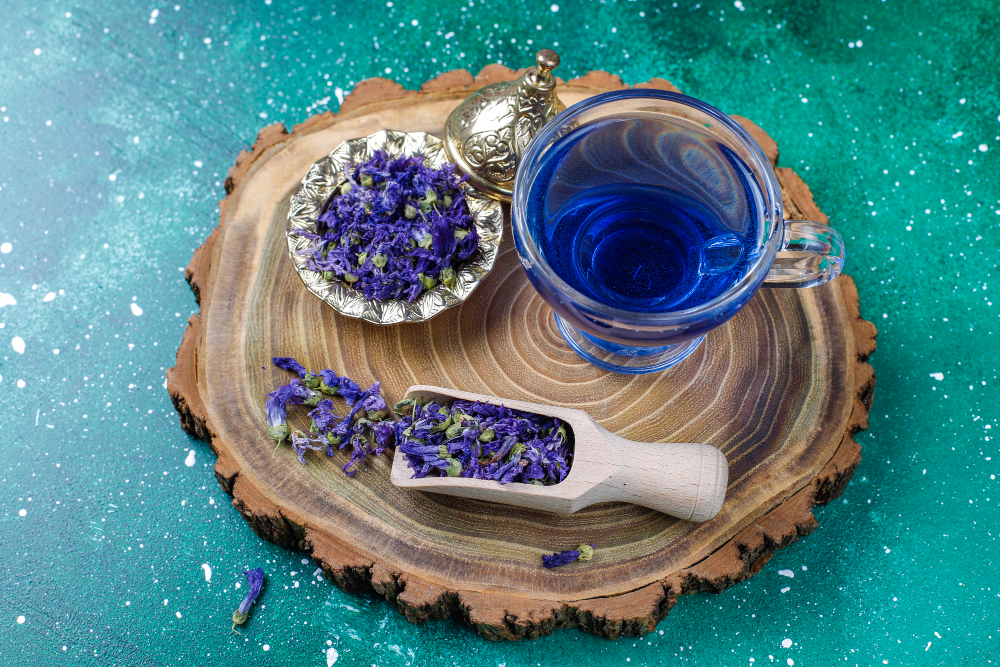
Some beverages become popular because of their distinctive taste, while others attract attention because of their appearance. Butterfly Pea Tea belongs to the second category, although its cultural history, botanical origin, and changing colour make it far more interesting than an ordinary colourful drink. Made from the flowers of the butterfly pea plant, this naturally blue infusion has become increasingly recognizable for its vivid colour and its remarkable ability to shift from blue to purple, pink, or reddish shades when acidic ingredients are introduced.
The visual transformation of Butterfly Pea Tea is not created by artificial food colouring. The blue colour comes naturally from pigments present in the flowers, particularly a group of compounds known as anthocyanins. These water-soluble plant pigments are also responsible for many of the red, purple, and blue colours found naturally in fruits, vegetables, flowers, and other plants. When the acidity of the beverage changes, the pigments respond by producing different visible colours.
This combination of natural colour, simple preparation, and visible transformation has made Butterfly Pea Tea particularly appealing in modern food culture. It can be served as a hot herbal infusion, a chilled beverage, an ingredient in mocktails, or even as part of visually creative desserts. Yet behind its striking appearance lies a traditional beverage with roots in Southeast Asian culinary and botanical practices.
What Is Butterfly Pea Tea?
Butterfly Pea Tea is an herbal infusion prepared from the flowers of the butterfly pea plant, scientifically known as Clitoria ternatea. The plant is a flowering vine belonging to the legume family and is recognized for its vivid blue flowers. Depending on the variety, butterfly pea flowers can also occur in shades such as white or violet, but the intensely blue variety is particularly valued for preparing the famous blue tea.
Unlike traditional tea made from Camellia sinensis, Butterfly Pea Tea is technically an herbal infusion rather than conventional tea. It does not depend on tea leaves and is naturally caffeine-free when prepared solely from butterfly pea flowers. The dried flowers are steeped in hot water, releasing their colour and producing a blue liquid.
The resulting beverage is usually mild in flavour. This makes it different from strongly aromatic teas that have pronounced bitterness or astringency. Its subtle taste allows other ingredients, particularly lemon, lime, honey, ginger, mint, and various herbs, to be incorporated without overwhelming the drink.
Why Is Butterfly Pea Tea Naturally Blue?
The striking blue colour of Butterfly Pea Tea comes from naturally occurring anthocyanin pigments. These compounds are responsible for many of the colours visible in plants and are particularly interesting because their appearance can change depending on environmental conditions such as acidity.
When butterfly pea flowers are steeped in water, their pigments dissolve into the liquid. The concentration and visual intensity depend on factors such as the quantity of flowers used, steeping time, water temperature, and the characteristics of the flowers. A stronger infusion generally produces a deeper blue colour.
The blue appearance is therefore not simply a decorative feature. It is the visible result of plant chemistry. This makes Butterfly Pea Tea an accessible example of how naturally occurring compounds can interact with their surroundings and produce noticeable changes.
The Science Behind the Colour Change
The colour-changing quality of Butterfly Pea Tea is one of its most fascinating characteristics. When an acidic ingredient such as lemon or lime juice is added to the blue infusion, the beverage can gradually shift toward purple, pink, or reddish tones. The change occurs because anthocyanins are sensitive to pH.
In a relatively neutral infusion, the pigments can produce a blue appearance. When the acidity increases, the chemical structure and light-absorption behaviour of these pigments change, causing the colour perceived by the human eye to change as well. The exact shade depends on the concentration of pigments, the amount of acidic ingredient, and other conditions within the beverage.
This makes Butterfly Pea Tea a simple demonstration of a chemical principle that can otherwise seem abstract. A person does not need laboratory equipment to observe the effect. A clear glass, blue butterfly pea infusion, and a small amount of lemon juice can turn a basic drink into a visible chemistry experiment.
Butterfly Pea Tea and Southeast Asian Food Culture
Butterfly pea has a long association with Southeast Asian food traditions. The flowers have been used in different culinary and beverage applications, particularly in Thailand, Malaysia, and neighbouring regions. Traditional uses vary by location, but the plant has become an important source of natural blue colouring for food and drinks.
In Thai cuisine, butterfly pea is known as an ingredient that can contribute both colour and cultural identity to beverages and desserts. The flowers may be used in drinks, rice preparations, sweets, and other foods where a natural blue or purple shade is desirable.
The use of butterfly pea demonstrates how regional food cultures have historically made use of locally available plants. Long before the current interest in naturally coloured foods, communities in Southeast Asia were already incorporating butterfly pea into culinary traditions.
From Traditional Ingredient to Global Beverage Trend
Butterfly Pea Tea has moved beyond its traditional geographic associations and become part of a wider global interest in visually distinctive beverages. Social media has played an important role in this transition. A beverage that changes colour when lemon juice is added naturally lends itself to photographs and videos.
The visual effect has also made Butterfly Pea Tea attractive to cafés, restaurants, beverage creators, and home cooks experimenting with non-alcoholic drinks. The colour transformation can be incorporated into mocktails, iced teas, sparkling drinks, and layered beverages.
This modern popularity illustrates how traditional ingredients can acquire new cultural meanings when they enter global food trends. What was once primarily a regional botanical ingredient can become a recognizable international beverage concept without losing its original connection to plant-based culinary practices.
How Butterfly Pea Tea Is Prepared
Preparing Butterfly Pea Tea is relatively simple. Dried butterfly pea flowers are generally steeped in hot water until the desired colour develops. The flowers can then be removed, leaving behind a blue infusion that may be consumed hot or cooled and served over ice.
The strength of the beverage can be adjusted by changing the amount of flowers used or the steeping time. A longer infusion generally produces a more intense colour, although the desired strength can depend on personal preference and the intended use of the drink.
The beverage can be enjoyed in its simplest form, but many people add sweeteners or flavouring ingredients. Honey can provide gentle sweetness, while ginger or mint can add aromatic complexity. Lemon and lime are particularly popular because they introduce acidity and create the characteristic colour transformation.
The Famous Blue-to-Purple Transformation
One of the most visually appealing ways to serve Butterfly Pea Tea is to present it before and after adding an acidic ingredient. The original infusion typically appears blue. Once lemon or lime juice is introduced, the colour begins changing toward purple or pink.
The transformation can be gradual, allowing people to watch the beverage change as the acidic liquid mixes through it. This makes it particularly suitable for presentation in transparent glasses or as a beverage prepared directly at the table.
The effect is also influenced by the quantity of acid added. A small amount may create a purple shade, while greater acidity can push the colour further toward pink or reddish tones. The exact result is not necessarily identical every time, because the chemistry depends on the concentration of pigments and the overall composition of the drink.
What Does Butterfly Pea Tea Taste Like?
Despite its dramatic colour, Butterfly Pea Tea generally has a relatively mild flavour. Its taste can be described as subtle and earthy, with a delicate botanical character. It is not typically as bitter or astringent as many conventional tea preparations.
This mild flavour makes the infusion versatile. Sweeteners can be added without creating an overwhelming combination, while citrus can provide brightness and balance. Mint, ginger, lemongrass, and other herbs can also be used to build a more complex flavour profile.
The contrast between the beverage’s intense visual appearance and gentle flavour is part of its appeal. People may expect a strongly flavoured drink because of its bright blue colour, only to discover that the taste is comparatively delicate.
Butterfly Pea Tea as a Caffeine-Free Beverage
When prepared solely from butterfly pea flowers, the infusion does not contain the caffeine naturally present in traditional tea leaves. This makes it an option for people who are interested in caffeine-free herbal beverages.
However, the final caffeine content of a commercial or café beverage depends on what other ingredients are included. If Butterfly Pea Tea is combined with conventional tea, coffee-based ingredients, or other caffeinated components, the drink may no longer be caffeine-free.
For this reason, consumers interested in avoiding caffeine should pay attention to the complete ingredient list rather than assuming that every blue beverage containing butterfly pea is automatically caffeine-free.
Butterfly Pea Tea and Natural Food Colouring
The growing interest in natural food colours has increased attention toward butterfly pea. Synthetic food colours have long been used in the food industry because they provide strong and consistent shades, but consumers and food producers have also explored plant-based alternatives.
Butterfly pea offers an unusual advantage because its pigments can provide blue and, under different conditions, purple or pink shades. Blue is comparatively challenging to obtain naturally in many food applications, making butterfly pea particularly interesting.
Its use can extend beyond beverages. Butterfly pea infusion or extract can be incorporated into rice, desserts, noodles, baked goods, sauces, and other culinary creations. The exact intensity depends on the concentration and preparation method.
Butterfly Pea Tea in Modern Mocktails
The colour-changing quality of Butterfly Pea Tea has made it particularly popular in non-alcoholic beverage design. A mocktail can be created using the blue infusion as a base and combining it with citrus, sparkling water, herbs, fruit, or other flavouring ingredients.
The visual sequence can become part of the presentation. A drink may initially appear bright blue and then transition to purple after citrus is added. Layered presentations can create additional visual effects, especially when liquids with different densities are carefully combined.
This demonstrates how beverages can become more than sources of flavour. Colour, transparency, texture, temperature, and presentation can all contribute to the experience of drinking.
The Educational Value of Butterfly Pea Tea
Butterfly Pea Tea also has value as an educational food experiment. Its colour transformation provides an easy way to introduce concepts related to pH, natural pigments, solubility, and chemical changes.
Students can observe the difference between an infusion with little acidity and one containing lemon or lime. They can compare colour changes and discuss why the same plant pigment can appear different under different conditions.
Because the experiment involves a familiar food ingredient, it can make scientific concepts more accessible. It demonstrates that chemistry is not restricted to laboratories and textbooks. Everyday ingredients can provide visible examples of chemical principles.
Butterfly Pea Tea and Wellness Conversations
Butterfly Pea Tea is frequently discussed in wellness and natural-food communities because it is plant-based and naturally coloured. However, it is important to distinguish traditional use and general nutritional interest from scientifically established medical effects.
The flowers contain plant compounds, including anthocyanins, that have attracted scientific interest. Research has investigated various properties of butterfly pea and its compounds, but findings from laboratory or preliminary studies should not automatically be interpreted as proof that drinking the tea treats or prevents a particular disease.
The beverage can certainly be appreciated as a colourful, caffeine-free herbal infusion when prepared without caffeinated ingredients. Its value does not need to depend on exaggerated health claims. Its botanical origin, cultural history, chemistry, and culinary versatility already make it an interesting food.
How Butterfly Pea Tea Fits Into Sustainable Food Culture
The popularity of plant-based ingredients has encouraged greater attention to botanical sources of food colour and flavour. Butterfly pea demonstrates how one plant can serve several culinary purposes while also contributing to regional food traditions.
However, sustainability depends on how plants are cultivated, harvested, processed, packaged, and transported. Growing international demand does not automatically make an ingredient sustainable. Responsible cultivation and supply-chain practices remain important as any traditional ingredient becomes a global commodity.
For consumers, understanding where an ingredient comes from can add another dimension to the experience. Butterfly Pea Tea is not simply a blue beverage; it is the result of a plant, agricultural practice, cultural knowledge, and culinary adaptation coming together.
Why Butterfly Pea Tea Has Become So Popular
The popularity of Butterfly Pea Tea can be understood through several overlapping trends. Modern consumers are increasingly interested in distinctive food experiences, natural ingredients, visually attractive beverages, and caffeine-free alternatives. Butterfly pea happens to combine all of these characteristics.
Its colour creates immediate visual recognition, while the transformation caused by citrus gives the beverage an element of interaction. The drink can be customized with different flavours, served hot or cold, and incorporated into a wide range of recipes.
Social media has amplified these characteristics because the colour-changing effect is easy to demonstrate visually. A beverage that transforms in front of the viewer naturally creates curiosity and encourages experimentation.
The Cultural Significance of a Changing Beverage
The colour change of Butterfly Pea Tea may appear to be a modern novelty, but the ingredient itself represents a much older relationship between people and plants. Traditional food cultures frequently discovered practical ways to use flowers, herbs, spices, and other botanical ingredients for colour, flavour, preservation, and ritual purposes.
What makes Butterfly Pea Tea particularly fascinating is that modern audiences are rediscovering this botanical property through contemporary food culture. The same plant that has been part of regional culinary traditions can now appear in cafés, wellness menus, cooking videos, educational experiments, and modern mocktails.
This creates a bridge between traditional knowledge and contemporary culinary creativity. The beverage demonstrates that food heritage can remain relevant when people find new ways to understand and experience familiar ingredients.
Conclusion
Butterfly Pea Tea is much more than a brightly coloured beverage. Its naturally blue appearance comes from plant pigments, while its ability to shift toward purple and pink when acidity changes provides a simple and visually striking demonstration of food chemistry; Its mild flavour, caffeine-free nature when prepared solely from butterfly pea flowers, and versatility have helped it move from traditional Southeast Asian culinary practices into modern global beverage culture.
Its appeal lies partly in the contrast between simplicity and spectacle. The basic preparation requires little more than butterfly pea flowers and water. Yet the resulting drink can change dramatically with the addition of lemon or lime. That transformation turns an ordinary cup of herbal infusion into an interactive sensory experience.
At the same time, Butterfly Pea Tea offers an opportunity to appreciate the connection between botanical knowledge, regional food traditions, modern culinary innovation, and natural food colouring. Whether served warm, chilled over ice, transformed with citrus, or incorporated into a creative mocktail. Its vivid colour ensures that it remains one of the most visually distinctive herbal beverages available today.
Ultimately, the fascination with Butterfly Pea Tea is not only about its blue colour. It is about the story behind that colour and the remarkable way nature, chemistry, culture, and culinary creativity can come together in a single glass.
Online Internship with Certificate
You may be interested

Sikil Pak: Maya Pumpkin-Seed Dip with Roasted Seeds and Tomato
Anshika Jain - October 22, 2026Traditional foods often reveal how communities transform simple, locally available ingredients into preparations with distinctive flavours and cultural significance. Sikil Pak, also written as Sikil P'aak, is…
Tinutuan: Indonesian Rice Porridge Celebrating Vegetables
Anshika Jain - October 22, 2026Across Indonesia, traditional food reflects the diversity of local agriculture, community customs and everyday eating habits. Among the distinctive dishes of North Sulawesi is Tinutuan, a savoury…
Khorisa-Based Preparations: Fermented Bamboo Shoots
Anshika Jain - October 22, 2026Northeast India is home to a remarkable variety of traditional foods shaped by local agriculture, seasonal ingredients and generations of culinary knowledge. Among the region’s distinctive ingredients…
Most from this category
Jadoh: Khasi Rice Dish That Reflects the Culinary Heritage of Meghalaya
Anshika Jain - October 22, 2026
Anishi Curry: How Fermented Leaf Cakes Create a Distinctive Flavour in Naga Cuisine
Anshika Jain - October 22, 2026
Mammi: The Dark Finnish Easter Dessert Shaped by Rye, Malt and Slow Cooking
Anshika Jain - October 22, 2026
Jadoh: Khasi Rice Dish That Reflects the Culinary Heritage of Meghalaya
Anshika Jain - October 22, 2026Anishi Curry: How Fermented Leaf Cakes Create a Distinctive Flavour in Naga Cuisine
Anshika Jain - October 22, 2026Mammi: The Dark Finnish Easter Dessert Shaped by Rye, Malt and Slow Cooking
Anshika Jain - October 22, 2026
Sikil Pak: Maya Pumpkin-Seed Dip with Roasted Seeds and Tomato
October 22, 2026
Tinutuan: Indonesian Rice Porridge Celebrating Vegetables
October 22, 2026


Leave a Comment