

Ghapama: Armenia’s Festive Stuffed Pumpkin with Rice, Dried Fruits, and Nuts

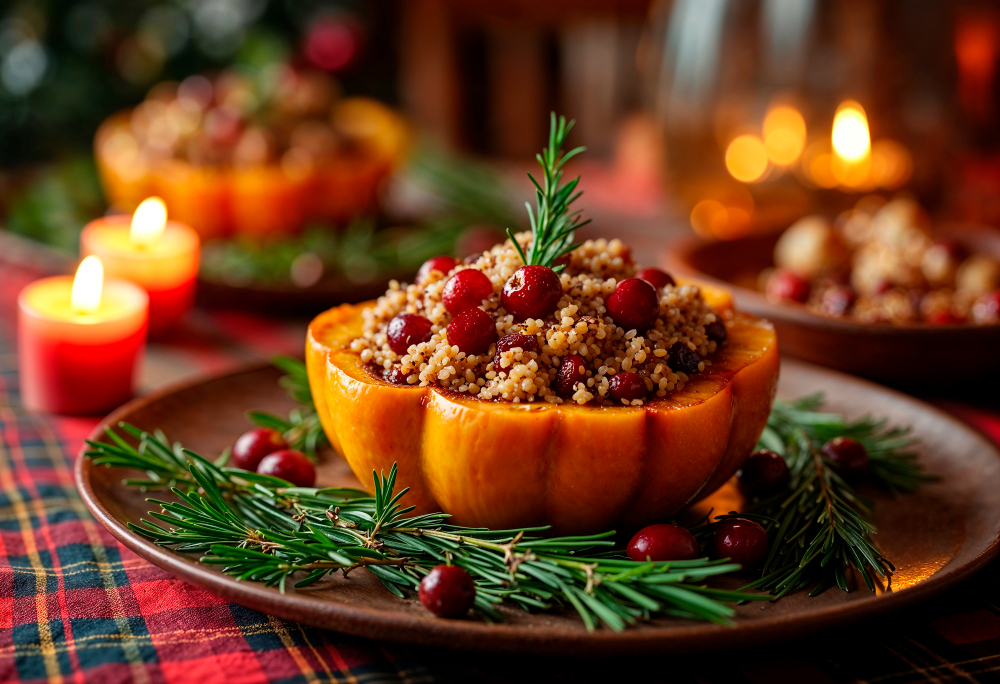
Armenian cuisine is known for its rich culinary heritage, seasonal ingredients, and dishes that bring families together around the table. Among its most distinctive festive preparations is Ghapama, a traditional Armenian dish made by hollowing out a whole pumpkin and filling it with rice, dried fruits, nuts, butter, honey, and aromatic spices. The pumpkin is then baked until its flesh becomes tender and the filling develops a fragrant combination of sweet, nutty, and gently spiced flavours.
Unlike ordinary rice dishes served in a bowl or platter, Ghapama uses the pumpkin itself as both the cooking vessel and the centrepiece of the meal. Its rounded shape, golden exterior, and colourful filling make it especially attractive when brought to the dining table. Once the top is removed and the pumpkin is sliced into wedges, the soft flesh and fragrant rice are revealed together, creating a dish that appeals to the eyes as much as to the palate.
Ghapama is particularly associated with autumn and winter celebrations, including Christmas, New Year gatherings, and other festive occasions. It also appears at family celebrations and weddings in some Armenian traditions. More than a seasonal recipe, it represents the relationship between food, hospitality, family memory, and the celebration of abundance.
The Cultural Significance of Ghapama in Armenia
A Dish Associated with Festivals and Family Gatherings
Ghapama occupies a special place in Armenian food culture because its preparation and presentation are well suited to occasions when relatives and guests gather for a shared meal. Preparing a whole pumpkin requires time and care, while the combination of rice, dried fruit, nuts, and sweeteners makes the dish more elaborate than a simple everyday meal. These qualities have helped establish it as a festive preparation rather than merely another way to cook pumpkin. Although particular customs differ between families and regions, Ghapama remains recognisable as a celebratory dish in Armenian culinary tradition.
The act of bringing the entire baked pumpkin to the table contributes to its festive character. Instead of presenting the filling separately, the cook displays the whole dish before cutting it open. Guests can then see the rice, fruits, and nuts inside the softened pumpkin. This shared moment turns serving into part of the experience and gives the meal a sense of occasion.
The Meaning of Abundance and Generosity
Ghapama is often interpreted through ideas of abundance, prosperity, and togetherness. The pumpkin holds a generous mixture of grains, fruits, and nuts, making it an apt image of a harvest gathered and preserved for a special occasion. Some cultural accounts describe the pumpkin as a symbolic container for the year’s blessings, while other interpretations compare the whole pumpkin to the world and its varied filling to the people within it. These interpretations are best understood as cultural symbolism rather than a single universally fixed explanation.
The symbolism is reinforced by the dish’s ingredients. Rice provides the foundation, dried fruits contribute sweetness, and nuts add richness and texture. When combined inside one pumpkin, these elements become a unified preparation that can be shared among many people. Its generous appearance makes it a natural expression of hospitality, particularly when a host wishes to offer guests something memorable.
In this sense, Ghapama demonstrates how a traditional dish can communicate cultural values without relying on elaborate decoration. Its meaning emerges through the ingredients, the time invested in cooking, the way it is presented, and the people who gather to eat it.
The Folk Song “Hey Jan Ghapama”
Ghapama is also celebrated in Armenian popular culture through the well-known folk song commonly called “Hey Jan Ghapama.” The song praises the dish’s appealing aroma and flavour and is associated with the excitement surrounding its arrival at the table. References to the song appear in cultural presentations of Armenian food, reflecting how a recipe can become part of a community’s shared cultural memory.
The song adds a social dimension to the dish. Ghapama is not only something to cook and eat; it is also something people recognise, discuss, celebrate, and remember. Music, family stories, and festive meals can reinforce one another, helping culinary traditions remain meaningful across generations and among Armenian communities living outside Armenia.
This connection between food and music is one reason Ghapama is such an engaging example of Armenian culinary heritage. It shows how a dish can become a cultural symbol that extends beyond the kitchen.
What Makes Ghapama Different from Other Pumpkin Dishes?
The Pumpkin as a Natural Cooking Vessel
The most striking feature of Ghapama is that the pumpkin is not simply an ingredient mixed into the filling. It becomes the container in which the entire dish is baked. The cook cuts off the top to create a lid, removes the seeds and fibrous interior, and fills the hollow centre with a prepared rice mixture. The pumpkin is then returned to the oven with its lid in place.
As the pumpkin cooks, its flesh gradually softens and develops a naturally sweet flavour. The filling absorbs moisture and aromas from the surrounding pumpkin, while the pumpkin itself becomes tender enough to serve alongside the rice. This creates a relationship between the container and its contents that is absent from ordinary baked rice or pumpkin casserole.
The presentation is equally distinctive. When the pumpkin is brought to the table whole, it resembles a simple seasonal vegetable. Once opened, however, it reveals a colourful mixture of pale rice, golden raisins, dark dried fruit, and chopped nuts. The contrast between the exterior and interior gives Ghapama much of its visual appeal.
A Balance of Sweetness, Richness, and Warm Spices
Ghapama is often described as a sweet or sweet-leaning dish, although its flavour depends on the ingredients and the family’s preferred recipe. Honey and dried fruit provide sweetness, while rice creates a mild base that prevents the fruit from dominating every bite. Butter or clarified butter adds richness, and cinnamon contributes warmth without necessarily making the dish taste like a conventional dessert.
Nuts are important because they introduce a contrasting texture. Walnuts and almonds provide a firm bite against the softness of cooked rice, juicy dried fruit, and tender pumpkin flesh.
Some preparations use a relatively sweet mixture of honey, raisins, apricots, and cinnamon. Others include ingredients such as onion, barberries, or sumac for a more savoury and tangy profile. These variations demonstrate that Ghapama is not limited to a single rigid formula. Its defining features are the whole stuffed pumpkin, baked preparation, and combination of rice with complementary ingredients.
The Traditional Ingredients Used in Ghapama
Pumpkin: The Foundation of the Dish
The choice of pumpkin is central to a successful Ghapama. A suitable pumpkin should be large enough to hold the filling, have a relatively stable base, and possess flesh that becomes tender during baking without collapsing too quickly. Medium-sized baking pumpkins are practical for home preparation because they can be handled more easily than very large varieties.
The pumpkin contributes colour, moisture, and natural sweetness. Its flesh is usually served with the filling rather than discarded after cooking. This is important because the dish is intended to be eaten as a combination of rice and pumpkin, with each component contributing to the overall flavour.
A pumpkin that is too small may not accommodate sufficient filling, while one with an extremely thin wall can soften before the rice is properly cooked. Choosing a firm, unblemished pumpkin and preparing it carefully helps maintain its shape throughout baking.
Rice: The Base of the Filling
Rice gives Ghapama its structure and makes the dish substantial enough to serve as a significant part of a festive meal. Long-grain white rice is commonly used, although individual recipes can differ in their preferred variety and cooking method. The rice is often partially cooked before it is placed inside the pumpkin so that it can finish cooking during baking.
Preparing the rice correctly requires attention to moisture. Rice that is fully cooked and wet before stuffing can become too soft after prolonged baking. On the other hand, completely raw rice may not cook evenly if there is insufficient liquid inside the pumpkin. Partial cooking offers a practical balance, allowing the grains to absorb further moisture and flavour while the pumpkin softens.
When prepared well, the rice should be tender but not reduced to a sticky mass. The grains provide a neutral, mildly nutty foundation for the more intense sweetness of the fruit and the richness of the nuts.
Dried Fruits: Concentrated Flavour and Natural Sweetness
Dried fruits are among the most recognisable components of Ghapama. Raisins, dried apricots, prunes, dried apples, and other locally available fruits may be used depending on the recipe. In one documented regional preparation from Goris in southeastern Armenia, dried apricots and cornelian cherries are highlighted for their distinctive fruity character.
Dried fruit differs from fresh fruit because removing much of its water concentrates its sweetness and flavour. When combined with warm rice and baked inside the pumpkin, it softens and releases some of its juices into the filling. Raisins provide small, sweet bursts, while dried apricots contribute a brighter, slightly tangy taste. Prunes add deeper fruit notes, and dried apples can provide a mild, familiar sweetness.
The combination can be adjusted according to availability and preference. However, maintaining a balance is important. Too much dried fruit can make the filling overwhelmingly sweet, while too little may leave the rice tasting plain. A mixture of different fruits creates more complexity than relying on a single variety.
Nuts and Seeds: Texture and Richness
Walnuts and almonds are frequently used in Ghapama, while some versions also include pumpkin seeds. Nuts contribute crunch, aroma, and a richness that balances the sweetness of honey and dried fruit. They also make the filling more varied in texture, preventing every spoonful from feeling uniformly soft.
Walnuts bring an earthy, slightly bitter edge that works particularly well with dried apricots and honey. Almonds offer a milder, more delicate flavour, while pumpkin seeds reinforce the seasonal character of the dish. For the best texture, nuts should be fresh and free from rancid aromas.
Honey, Butter, and Cinnamon
Honey provides sweetness and helps bring the flavours together. Its floral character can complement the fruit without completely covering the taste of the pumpkin. Some preparations also use sugar or rely more heavily on the natural sweetness of dried fruit. The quantity of honey can therefore vary according to the ingredients and desired result.
Butter or clarified butter contributes a smooth texture and helps the filling remain moist during baking. Ghee is used in some documented recipes, while ordinary butter is suitable for many home kitchens. A small amount of salt is also valuable, even in a sweet preparation. It helps balance the flavours and prevents the filling from tasting one-dimensional.
How Ghapama Is Traditionally Prepared
Preparing the Pumpkin
The preparation begins by washing the pumpkin thoroughly and cutting around the stem to create a removable top. This piece is kept because it will act as a lid during baking and can also be used to present the finished dish.
The seeds and fibrous strands are removed from the centre. The inside should be cleaned sufficiently to create room for the filling, but care must be taken not to scrape away so much flesh that the pumpkin walls become fragile. A sturdy shell is necessary because the pumpkin must hold the filling while becoming tender in the oven.
Some cooks lightly coat the inner surface with butter or another suitable fat. This adds flavour and helps the pumpkin flesh cook attractively. The prepared pumpkin is then ready to be filled.
Preparing the Rice and Fruit Mixture
The rice is partially cooked according to the chosen recipe, then drained. Meanwhile, the dried fruits are chopped where necessary, and the nuts are prepared so they can be distributed evenly. Rice, fruit, nuts, honey, butter, cinnamon, and a small amount of salt are then combined.
The mixture should be moist enough to finish cooking inside the pumpkin but not excessively wet. If the ingredients are very dry, a modest amount of water may be added. If the dried fruits are already soft and the rice contains sufficient moisture, additional liquid may not be needed in large quantities.
The proportions are flexible, but the filling should remain recognisably rice-based rather than becoming a dense mass of fruit and nuts. This balance helps the finished Ghapama retain the character of a baked rice dish while offering the sweetness and aroma associated with its festive identity.
Filling and Baking the Pumpkin
The prepared mixture is spooned into the hollow pumpkin, leaving some room for expansion and movement during cooking. Overfilling can make the filling difficult to cook evenly, particularly if the rice absorbs additional liquid. The pumpkin lid is then replaced, and the whole pumpkin is placed on an oven-safe tray or dish.
Ghapama is baked until the pumpkin flesh becomes tender and the rice filling is fully cooked. The time required depends on the pumpkin’s size, the thickness of its walls, the oven temperature, and how thoroughly the rice was prepared beforehand. Documented recipes use different temperatures and cooking times, so testing the pumpkin with a knife or skewer is more reliable than following a single fixed duration.
Once baked, the dish should rest briefly before serving. This allows the filling to settle and makes the pumpkin easier to cut without losing its shape.
Serving Ghapama and Enjoying Its Flavours
Ghapama is commonly presented as a whole pumpkin before being sliced into portions. The top can be lifted to reveal the filling, and the pumpkin may be cut into wedges following its natural ridges. Each serving can include some rice filling together with a portion of the soft pumpkin flesh.
The dish is substantial enough to be served as a centrepiece at a family gathering. In sweeter versions, it can appear toward the end of a meal or function as a dessert-like course. In less sweet or more savoury variations, it can accompany other dishes as part of a broader festive spread. The precise role depends on the recipe and the customs of the household.
Additional honey, melted butter, or nuts may be offered at the table, but these additions are not essential. A well-prepared Ghapama should already have a balanced combination of sweetness, richness, and the earthy flavour of baked pumpkin.
The contrast between the warm filling and the tender pumpkin is one of its greatest pleasures. The fruit brings concentrated sweetness, the nuts add texture, and the rice absorbs the flavours that develop during baking. Together, they create a dish that feels generous without requiring elaborate plating or complicated serving techniques.
Regional Variations and Modern Interpretations
Different Families, Different Fillings
Like many traditional dishes, Ghapama changes according to regional preferences, family recipes, and the ingredients available to the cook. Some versions emphasise honey, raisins, dried apricots, and cinnamon. Others incorporate dried apples, prunes, pumpkin seeds, or less common fruits. A preparation documented by the Smithsonian Folklife Festival from Goris, for example, uses dried cornelian cherries, which contribute a distinctive tart fruit flavour.
Some regional preparations can also include savoury elements, such as browned onion, and use tangier ingredients to offset the sweetness of the fruit. Certain variations include meat, so Ghapama should not automatically be assumed to be vegetarian in every context. The rice-and-fruit version described here is vegetarian when prepared with suitable ingredients.
These differences are part of the dish’s continuing culinary life. A traditional recipe can maintain its identity while allowing families to adapt it to their preferences, seasonal produce, and local food customs.
Vegetarian and Vegan Adaptations
The classic rice, fruit, and nut filling is naturally suited to a vegetarian preparation, provided that no meat or animal-derived stock is added. For a vegan version, butter or ghee can be replaced with a plant-based alternative, and honey can be substituted with a suitable plant-based sweetener such as maple syrup or date syrup.
These substitutions change the flavour slightly but preserve the dish’s central structure: a whole pumpkin containing a fragrant rice filling enriched with dried fruits and nuts. A vegan version can also rely on the natural sweetness of raisins and apricots, reducing the need for additional sweetener. Modern cooks may experiment with brown rice, different nut varieties, or a smaller amount of fat.
Nutritional Characteristics of Ghapama
Ghapama combines several ingredients that contribute different nutrients. Pumpkin supplies fibre and carotenoids, including beta-carotene, which the body can convert into vitamin A. Rice provides carbohydrates, while dried fruits contribute carbohydrates, fibre, and varying amounts of minerals. Nuts and seeds add unsaturated fats, some protein, and micronutrients.
The final nutritional profile depends heavily on portion size and the quantity of butter, ghee, honey, and dried fruit used. Although pumpkin and nuts offer useful nutrients, a generously sweetened recipe can also be energy-dense. Ghapama is therefore best understood as a substantial festive dish rather than automatically labelled a low-calorie food simply because it contains pumpkin.
The recipe can be adjusted to suit different preferences by reducing added honey, using a moderate amount of butter or plant-based fat, and allowing the natural sweetness of the fruit to play a larger role. Adding a varied selection of nuts can contribute texture and nutritional diversity, while controlling the quantity of rice and sweetener can help manage the overall richness of the dish.
Food traditions often balance pleasure, seasonal ingredients, and social meaning. Ghapama’s nutritional value is one part of its appeal, but its cultural significance and shared presentation are equally important to understanding why it continues to be prepared for special occasions.
Why Ghapama Remains Relevant Today
In an era when many meals are prepared quickly and served individually, Ghapama offers a different kind of culinary experience. Its preparation takes planning, its baking requires patience, and its presentation encourages people to gather around one shared centrepiece. The dish makes time and attention visible: the pumpkin is carefully hollowed, the filling is assembled, and the entire creation is brought to the table as one piece.
Its ingredients are also adaptable to modern kitchens. A home cook does not need a specialised cooking space to prepare Ghapama; a conventional oven and an appropriately sized baking pumpkin are sufficient. Traditional clay ovens, including the tonir used in regional cooking, offer another way of preparing it, but contemporary oven methods make the dish accessible in many places.
For Armenian families living abroad, preparing familiar dishes can also provide a connection to family heritage. The dish’s appeal extends beyond its striking appearance. It demonstrates how a few familiar ingredients can be combined through a distinctive cooking method to create something memorable. Pumpkin, rice, dried fruit, nuts, and spices are found in many food cultures, but their arrangement inside a whole baked pumpkin gives Ghapama its particular identity.
Conclusion: Ghapama as a Celebration of Armenian Culinary Heritage
Ghapama is much more than a pumpkin filled with rice. It is a festive Armenian preparation that brings together seasonal produce, dried fruits, nuts, aromatic spices, and a distinctive method of baking. Its golden exterior conceals a colourful filling, and its presentation as a whole pumpkin transforms an ordinary meal into a shared occasion.
The dish’s association with Christmas, New Year celebrations, family gatherings, and the folk song “Hey Jan Ghapama” reflects its importance in Armenian food culture. Its variations also demonstrate that traditional cuisine remains dynamic, adapting to regional ingredients and individual preferences while preserving its defining features.
Online Internship with Certificate
You may be interested
Sopa Paraguaya: Paraguay’s Traditional Savoury Cornmeal Cake
Anshika Jain - October 29, 2026Paraguayan cuisine reflects a rich combination of Indigenous Guaraní food traditions and influences introduced during the colonial period. Corn, cassava, cheese, milk, and onions feature prominently in…
Kasespatzle: Cheese Noodles of Austria and Southern Germany
Anshika Jain - October 29, 2026European comfort food often finds its greatest appeal in the thoughtful combination of simple ingredients. Across Austria and southern Germany, few dishes illustrate this principle as effectively…
Kroppkakor: Sweden’s Traditional Potato Dumplings with a Vegetarian Twist
Anshika Jain - October 29, 2026Swedish cuisine is often associated with hearty comfort foods, seasonal ingredients, and traditional recipes that have been passed down through generations. Among its distinctive dishes, Kroppkakor holds…
Most from this category
Kuku Sabzi — Iran’s Fragrant Herb Frittata and a Celebration of Persian Tradition
Anshika Jain - October 29, 2026
Nachni Ambil: Maharashtra’s Traditional Finger Millet Drink and Porridge
Anshika Jain - October 28, 2026Kuku Sabzi — Iran’s Fragrant Herb Frittata and a Celebration of Persian Tradition
Anshika Jain - October 29, 2026Talkkuna: The Traditional Roasted-Grain Flour of Finland and Estonia
Anshika Jain - October 28, 2026
Sopa Paraguaya: Paraguay’s Traditional Savoury Cornmeal Cake
October 29, 2026
Kasespatzle: Cheese Noodles of Austria and Southern Germany
October 29, 2026

Leave a Comment