

Khanom Chan: Thailand’s Traditional Colourful Layered Coconut Dessert

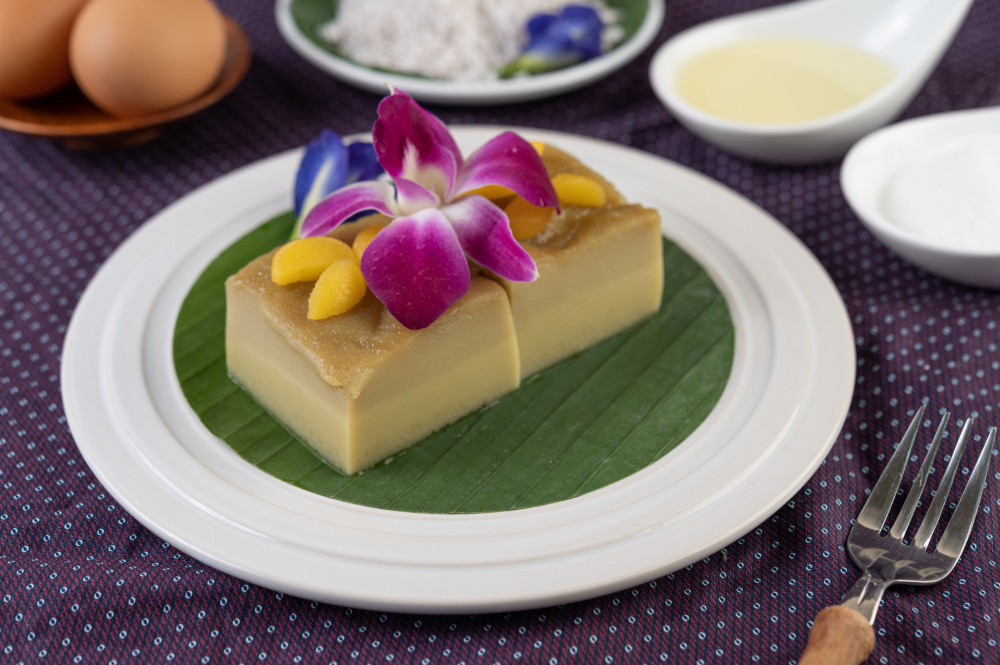
Thai cuisine is celebrated for its ability to combine delicate flavours, attractive presentation and carefully developed textures. Among its traditional sweets, Khanom Chan stands out for its beautiful layers, gentle coconut flavour and soft, chewy consistency. This distinctive Thai dessert is prepared using coconut milk, rice flour, tapioca starch and sugar. Its colourful appearance, often created by alternating white and green layers, makes it instantly recognisable in traditional Thai dessert collections.
Unlike conventional cakes that are baked in an oven, Khanom Chan is prepared by steaming thin layers of batter one at a time. Each layer is allowed to set before another is added, gradually creating a soft, structured dessert that can be cut into small squares, diamonds or decorative shapes. Pandan leaves are commonly used to produce the characteristic green colour and a pleasant herbal fragrance, while the uncoloured layers retain the natural creamy appearance of coconut milk.
Khanom Chan is more than an attractive sweet. Its name, appearance and preparation are connected with Thai cultural traditions. The word chan means layer or level, and the dessert is traditionally associated with progress, advancement and good fortune. It is particularly recognised as one of Thailand’s auspicious desserts, sometimes prepared with nine layers for celebrations and special occasions.
The Cultural Heritage of Khanom Chan in Thailand
Traditional Thai desserts, collectively known as khanom Thai, reflect the country’s agricultural resources, regional cooking practices and cultural history. Coconut, rice, sugar and tropical flavourings have long been important ingredients in Thai sweet-making. These ingredients are used in a wide range of preparations, from steamed cakes and coconut puddings to sticky rice desserts and delicate confectionery.
Khanom Chan belongs to this traditional collection of sweets and is especially appreciated for its carefully constructed appearance. Unlike desserts that rely on decorative toppings or elaborate fillings, its visual appeal comes from the arrangement of coloured layers. The process requires patience and attention because every layer must be steamed until sufficiently set before the next portion of batter is added.
The dessert is traditionally associated with auspicious occasions, including weddings, housewarming celebrations and other important ceremonies. Its cultural meaning is connected with the Thai word chan, which refers to a layer or level. The idea of moving upward through successive layers is associated with progress and advancement in life. This symbolic interpretation helps explain why Khanom Chan is included among Thailand’s nine auspicious desserts.
Thai food traditions place importance on the appearance and meaning of ceremonial foods, not just their taste. The use of particular colours, shapes and numbers can communicate wishes for prosperity, happiness and success. Khanom Chan expresses these ideas through its layered structure, making it both a dessert and a meaningful part of celebratory food culture.
What Makes Khanom Chan Different from Other Thai Desserts?
Khanom Chan has a distinctive identity because of its combination of texture, appearance and preparation technique. Many traditional Thai sweets are based on coconut milk and rice flour, but the addition of tapioca starch gives this dessert its characteristic elasticity. The result is soft, slightly sticky and pleasantly chewy rather than crumbly or spongy.
Its layered structure is another defining feature. Instead of preparing the entire mixture in one step, the batter is divided into portions and steamed in stages. Different colours are alternated to create visible lines throughout the dessert. When cut, these layers form a striped pattern that gives Khanom Chan its distinctive appearance.
The dessert is also usually less dependent on strong flavourings than some modern cakes and confectionery. Coconut milk provides a rich but gentle taste, while pandan contributes a subtle fragrance. Sugar gives sweetness without necessarily overpowering the coconut. The overall flavour is delicate, allowing the texture and aroma to remain important parts of the eating experience.
Another unusual feature is the way it is eaten. Some people prefer to separate the layers and enjoy them one at a time, while others eat the entire piece together. This playful quality adds to its appeal and makes the dessert particularly memorable.
The Main Ingredients That Give Khanom Chan Its Character
Khanom Chan is made from a carefully balanced combination of rice flour, tapioca starch, coconut milk and sugar. Some traditional recipes also include arrowroot starch, which contributes to the texture and helps create a smoother, more delicate finish. Each ingredient performs a different function, and the final quality depends on how these components work together during steaming.
Rice flour provides structure and helps the dessert hold its shape. It gives the layers a softer, more cake-like quality and prevents the finished sweet from becoming excessively elastic. The flour should be finely milled so that it combines smoothly with the liquid ingredients. Coarse or uneven flour can produce a less uniform batter and affect the appearance of the layers.
Tapioca starch is responsible for much of Khanom Chan’s characteristic chewiness. When heated with liquid, tapioca starch absorbs moisture and forms a thick, elastic structure. This allows the finished dessert to remain flexible and slightly translucent. The proportion of tapioca starch is important because too much can make the dessert excessively sticky, while too little may result in layers that lack their familiar springy texture.
Coconut milk gives Khanom Chan its rich flavour and smooth mouthfeel. Full-fat coconut milk is often preferred because it provides a fuller taste and helps create a tender consistency. It also gives the white layers their natural creamy appearance. The coconut flavour should remain noticeable but balanced, allowing the pandan fragrance and sweetness to complement it.
The Importance of Pandan in Thai Layered Desserts
Pandan leaves are widely used in Southeast Asian cooking, particularly in Thailand, where they are valued for their sweet, grassy and slightly vanilla-like fragrance. They are used in rice dishes, coconut sweets, drinks and steamed desserts. In Khanom Chan, pandan has both a culinary and visual purpose.
The leaves are generally washed, cut into smaller pieces and blended with water. The resulting mixture is strained to remove the fibres, leaving a concentrated green liquid. This extract is then mixed into a portion of the dessert batter. The intensity of the colour depends on the quantity and concentration of the pandan extract.
The natural green shade creates a striking contrast with the white coconut layers. This simple colour combination is one of the most familiar presentations of Khanom Chan, although regional and contemporary versions may use different colours. Butterfly pea flower can create blue or purple shades, while other plant-based ingredients may be used to produce additional variations.
Pandan also contributes to the dessert’s aroma. Its fragrance complements coconut milk and gives the finished layers a fresh, distinctive character. Unlike strong flavourings that dominate a recipe, pandan usually provides a subtle background note that becomes more noticeable as the dessert is eaten.
The use of natural plant extracts also reflects the broader approach of traditional Thai sweet-making, where ingredients are selected for their flavour, colour and visual appeal. Although commercial food colours are sometimes used today, fresh pandan remains an important choice for people who want a more traditional preparation.
Traditional Vegetarian and Vegan Preparation of Khanom Chan
One of the appealing features of Khanom Chan is that its traditional ingredients are naturally compatible with vegetarian and vegan diets. Rice flour, tapioca starch, coconut milk, sugar and pandan are plant-derived ingredients. The recipe does not require eggs, dairy milk, gelatin or animal-based shortening. However, anyone following a strict vegan diet should check that the sugar and any commercial flavourings or colourings meet their dietary requirements.
A home-style preparation can use approximately 150 grams of tapioca starch, 50 grams of rice flour, 50 grams of arrowroot starch, 250 grams of sugar, 500 millilitres of coconut milk and a small quantity of salt. Pandan leaves and water are needed to prepare the green colouring. A little neutral vegetable oil can be used to grease the steaming tray.
The first stage involves preparing the pandan extract. Fresh leaves are washed and chopped before being blended with a small amount of water. The mixture is then strained through a fine sieve or clean cloth to separate the liquid from the fibrous material. The resulting extract should have a clear green colour and a fresh aroma.
The dry ingredients are combined in a large bowl before coconut milk is gradually added. The mixture is whisked until the flour and starch dissolve and a smooth batter develops. It is important to remove lumps at this stage because they can create an uneven texture in the finished dessert. The batter can be strained to produce a smoother consistency.
Why the Layering and Steaming Technique Matters
The most distinctive part of preparing Khanom Chan is the repeated layering process. Unlike a conventional cake, where all the batter is poured into a mould before baking, this dessert is assembled gradually through separate steaming stages. Each layer must become sufficiently firm to support the next one without losing its shape.
The thickness of each layer affects the final appearance and texture. Thin layers create a delicate striped pattern, while thicker layers produce a more pronounced structure. Consistency is important because uneven pouring can result in a dessert where some layers are noticeably larger than others.
Steaming time also needs careful control. If a layer is not cooked enough before the next portion is added, the two mixtures may blend together and the stripes may become less distinct. On the other hand, steaming each layer for too long can make the process unnecessarily slow and may affect the moisture of the finished dessert.
The batter should be stirred before each pour because starch can gradually settle at the bottom of the bowl. If the mixture is not kept uniform, later layers may have a different proportion of flour and liquid from the earlier ones. This can produce inconsistent firmness across the dessert.
Why Nine Layers Are Considered Auspicious in Thailand
The number of layers is more than a decorative choice in traditional Khanom Chan. Nine is regarded as an auspicious number in Thai cultural traditions and is associated with advancement, progress and good fortune. The Thai word for nine, kao, is associated in sound and cultural interpretation with moving forward or progressing.
The name khanom chan itself refers to a layered sweet. When the dessert is prepared with nine distinct layers, its structure becomes a symbolic expression of rising through successive levels. This makes it particularly appropriate for occasions when families wish someone success in a new stage of life.
Khanom Chan is included among Thailand’s nine auspicious desserts, a group of traditional sweets that may be offered during weddings, housewarmings and other important celebrations. These desserts are valued not only for their flavour but also for the positive meanings attached to their names, shapes and ingredients.
The symbolic meaning of Khanom Chan illustrates how food can communicate wishes and cultural values. A carefully prepared dessert becomes a way to express hopes for professional achievement, personal development, prosperity and a successful future. The nine-layer version is therefore particularly meaningful when shared or presented as a gift during auspicious occasions.
Understanding the Texture and Flavour of Khanom Chan
A well-prepared Khanom Chan has a soft, smooth and slightly elastic texture. It should be firm enough to hold its shape when cut, yet flexible enough for the layers to be separated gently. This balance is created through the interaction of rice flour and tapioca starch, supported by the moisture and fat content of coconut milk.
The flavour is generally mild and gently sweet. Coconut milk provides richness, while pandan adds a fresh herbal fragrance. The dessert is not traditionally designed to have an intense flavour or heavy filling. Instead, its appeal comes from the combination of subtle sweetness, coconut aroma and a distinctive chewy texture.
The layers should remain clearly visible after cutting. In the familiar white-and-green version, the contrast between the coconut-coloured batter and pandan-coloured batter creates an attractive striped appearance. The surface is often smooth and slightly glossy because of the moisture retained during steaming.
A good piece should not feel excessively rubbery or watery. If the tapioca starch is too dominant, the dessert may become overly elastic. If the rice flour proportion is too high, it may lose some of its characteristic flexibility. The right balance produces layers that are cohesive without becoming difficult to bite or separate.
Modern Variations and Creative Presentations
Although the traditional green-and-white version remains widely recognised, modern Khanom Chan is sometimes prepared in a variety of colours and flavours. Contemporary dessert makers experiment with natural ingredients to create different shades while maintaining the layered structure that defines the sweet.
Butterfly pea flower is one option for producing blue or purple tones. Its extract can be added to a portion of the batter to create a different colour from the familiar pandan green. Other natural ingredients may be used to produce pink, yellow or orange shades, depending on the desired presentation. The Thailand Foundation notes that modern versions may also use food colouring to create brighter or occasion-specific appearances.
Flavour variations can include a more pronounced pandan taste, jasmine-scented water or a different balance of coconut and sugar. Some contemporary recipes use palm sugar to introduce a deeper sweetness. However, the choice of sweetener can change the colour of the layers, so it should be considered when maintaining a bright white appearance is important.
Presentation has also evolved. Instead of serving the dessert only as a rectangular block cut into squares, some makers shape it into flowers or other decorative forms. Small individual portions can be arranged in patterned trays for celebrations, while modern dessert shops may use multiple colours to create visually striking displays.
Despite these changes, the essential preparation remains recognisable. The batter is steamed in stages, and the finished sweet retains its soft, chewy structure. These adaptations demonstrate how traditional Thai desserts can evolve while maintaining their cultural identity.
Serving and Enjoying Khanom Chan
Khanom Chan is generally served at room temperature after it has cooled and set. It is cut into small squares, rectangles, diamonds or decorative shapes and arranged on a serving plate. Its naturally colourful layers make it attractive without requiring additional decoration.
The dessert is often enjoyed on its own because its coconut flavour and chewy texture provide a complete eating experience. It can also be served alongside other traditional Thai sweets during celebrations. A selection of differently coloured desserts creates an attractive presentation and allows guests to experience a variety of flavours and textures.
Unlike many Western cakes, Khanom Chan is not usually served with thick frosting, cream fillings or elaborate toppings. Its appeal lies in the structure of the layers themselves. Some people gently peel the layers apart before eating, enjoying them individually, while others prefer to take a bite containing several layers together.
For home preparation, it is important to allow the dessert to cool completely before storing it in an airtight container. Because coconut milk is a perishable ingredient, Khanom Chan should be refrigerated if it will not be consumed within a short period. It is best served after allowing refrigerated portions to lose some of their chill, as this can make the texture more pleasant.
Nutritional Value of Khanom Chan
Khanom Chan is a coconut-based dessert containing carbohydrates from rice flour, tapioca starch and sugar, along with fat from coconut milk. Its nutritional composition depends on the recipe, the proportions of the ingredients and the size of each serving.
Rice flour and tapioca starch provide most of the carbohydrate content. Tapioca starch is primarily composed of carbohydrates and contributes energy as well as the dessert’s elastic texture. Rice flour adds further carbohydrates and helps give the layers their structure.
Coconut milk contributes fat and a small amount of protein, along with its characteristic flavour and creamy consistency. The fat content can vary depending on whether thick or diluted coconut milk is used. Full-fat coconut milk produces a richer dessert, while a lighter preparation may use a mixture of coconut milk and water.
Sugar is responsible for much of the dessert’s sweetness and also influences the texture of the steamed layers. Since traditional recipes can contain considerable added sugar, portion size is worth considering. A homemade version allows the sweetness to be adjusted, although substantial reductions may affect the consistency and overall quality of the finished dessert.
Khanom Chan is naturally free from meat, fish, eggs and dairy when prepared using its basic plant-based ingredients. It can therefore be suitable for vegetarian and vegan diets. However, it should be enjoyed as a traditional sweet rather than considered a nutritionally complete food. Its main value lies in its flavour, cultural significance and distinctive preparation.
Preserving the Tradition of Thai Layered Desserts
Traditional desserts such as Khanom Chan represent an important part of Thailand’s culinary heritage. Their preparation requires knowledge of ingredients, cooking temperatures, texture and presentation. Unlike recipes that can be completed through a single cooking process, Khanom Chan requires repeated attention to individual layers. This makes it an example of how traditional food preparation can involve both technical skill and artistic expression.
The dessert also demonstrates the importance of locally familiar ingredients. Coconut, rice and tropical plants such as pandan are widely used in Thai cooking, and their combination creates a sweet that is recognisable without depending on imported ingredients or elaborate flavourings. Its layered appearance further shows how presentation can be built directly into a recipe rather than added afterwards.
As contemporary food trends introduce new colours, shapes and flavour combinations, Khanom Chan continues to provide a foundation for creative experimentation. Modern cooks can adapt the recipe while retaining its characteristic texture and traditional symbolism. At the same time, preparing the classic nine-layer version helps preserve the techniques and meanings associated with the dessert.
Interest in regional Asian sweets also creates opportunities for more people to discover traditional Thai food beyond familiar dishes such as mango sticky rice. Khanom Chan offers a different experience through its soft layers, coconut flavour and distinctive steaming method. Its continued presence in celebrations and dessert collections demonstrates the lasting importance of traditional recipes in modern food culture.
Conclusion
Khanom Chan is a beautiful example of Thailand’s traditional dessert-making heritage. Prepared with coconut milk, rice flour, tapioca starch and sugar, it combines a gentle coconut flavour with a soft, chewy texture and colourful layered appearance. Pandan gives the familiar green layers their natural fragrance and colour, while the white layers highlight the richness of coconut milk.
Its cultural significance makes the dessert especially meaningful. The traditional nine-layer version symbolises progress, advancement and good fortune, making it a familiar choice for weddings, housewarmings and other auspicious occasions. The careful steaming process also distinguishes Khanom Chan from ordinary cakes, requiring patience and precision to create clearly separated layers.
The basic recipe is naturally vegetarian and can be prepared without eggs or dairy products. Although modern variations introduce different colours, flavours and shapes, the essential combination of coconut, starch and gradual steaming remains central to its identity. Khanom Chan therefore represents more than a colourful Thai sweet: it is a traditional food that brings together culinary technique, cultural symbolism and the simple pleasure of carefully prepared ingredients.
You may be interested
Sago Gula Melaka: Malaysia’s Traditional Tapioca Pearl Dessert with Coconut Milk and Palm Sugar
Anshika Jain - November 17, 2026Sago Gula Melaka is a much-loved Malaysian dessert that brings together three simple ingredients to create a distinctive combination of textures and flavours: soft, translucent sago pearls,…
Cocada: Brazil’s Traditional Coconut Sweet Made with Grated Coconut and Sugar
Anshika Jain - November 17, 2026Brazilian cuisine is known for its colourful ingredients, tropical flavours and desserts that reflect the country's diverse cultural heritage. Among its most recognisable traditional sweets is Cocada,…
Sutlijaš: The Traditional Balkan Rice Pudding Made with Milk, Sugar and Cinnamon
Anshika Jain - November 17, 2026Across the Balkans, traditional desserts often reflect the beauty of simple ingredients prepared with patience and care. Sutlijaš is one such dessert, loved for its creamy consistency,…
Most from this category
Nadru Yakhni: Kashmir’s Traditional Lotus Stem Curry in a Fragrant Yoghurt Sauce
Anshika Jain - November 17, 2026
Nachni Ambil: A traditional fermented finger-millet drink or thin porridge.
Anshika Jain - November 17, 2026
Mocha Ghonto: Bengal’s Banana Blossom Curry with Potatoes and Bengali Spices
Anshika Jain - November 13, 2026Nadru Yakhni: Kashmir’s Traditional Lotus Stem Curry in a Fragrant Yoghurt Sauce
Anshika Jain - November 17, 2026Nachni Ambil: A traditional fermented finger-millet drink or thin porridge.
Anshika Jain - November 17, 2026Fara: Traditional Steamed Rice-Flour Dumplings of Chhattisgarh
Anshika Jain - November 13, 2026


Leave a Comment