

Khao Tom Mat: Traditional Thai Sticky Rice and Banana Dessert

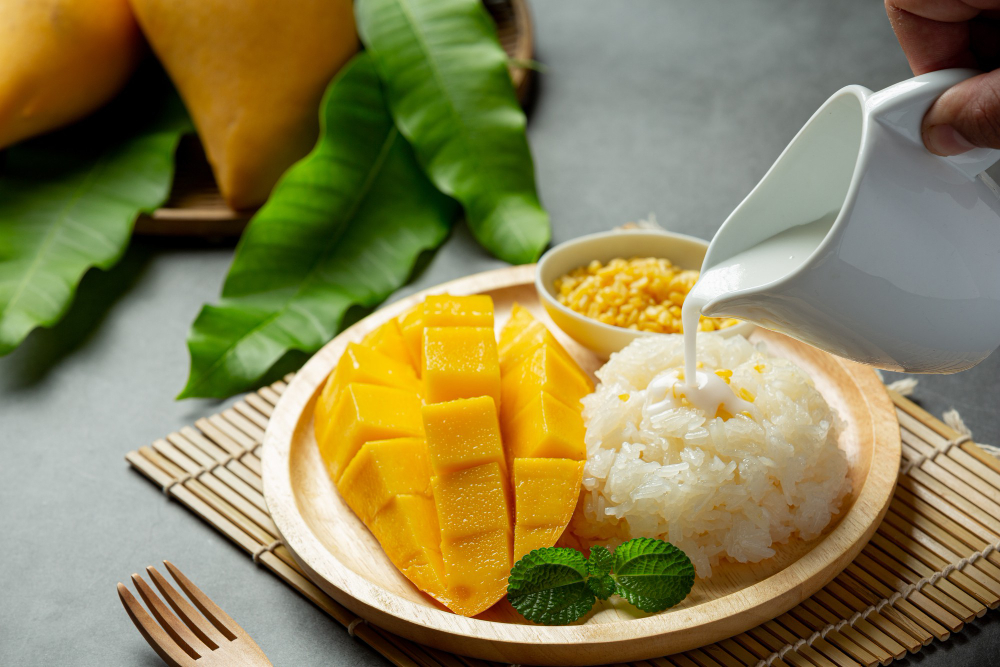
Thailand is known for a diverse food culture in which rice, coconut, tropical fruits and aromatic ingredients play an important role. Among its traditional sweet preparations, Khao Tom Mat holds a special place because of its simplicity, distinctive presentation and comforting combination of flavours. This popular Thai dessert is prepared using sticky rice, ripe banana and coconut milk, which are wrapped in banana leaves and steamed until the ingredients become soft, fragrant and naturally sweet. The result is a compact parcel with a tender texture, a gentle coconut aroma and the familiar sweetness of banana.
Unlike elaborate desserts that depend on complicated decorations or multiple layers, Khao Tom Mat is appreciated for the way a few everyday ingredients come together. Sticky rice provides a chewy and satisfying foundation, coconut milk adds richness, and banana contributes natural sweetness. Banana leaves hold the ingredients together during steaming and lend a subtle fragrance to the finished dish. In some traditional preparations, two banana pieces are placed inside the rice mixture before the parcel is folded and cooked.
Khao Tom Mat is traditionally enjoyed as a snack, breakfast food or sweet treat in Thailand. It can be found at local markets, food stalls, community gatherings and religious festivals. Its preparation reflects the importance of rice and seasonal ingredients in Thai cooking, while its banana-leaf wrapping demonstrates a traditional approach to food preparation that uses natural materials. Since the basic recipe can be made with plant-based ingredients, Khao Tom Mat is naturally suitable for vegetarian and vegan diets when prepared without animal-derived additions.
Understanding the Name and Traditional Identity
The name Khao Tom Mat is associated with a traditional Thai preparation of sticky rice wrapped in banana leaves and cooked through steaming. The word “Khao” refers to rice, while “Tom” is commonly associated with boiling or cooking in liquid. The term “Mat” is connected with the traditional wrapped form of the preparation. Together, the name reflects the dish’s essential ingredients and cooking style.
Khao Tom Mat is also sometimes referred to as Khao Tom Mad or Khao Tom Mud, depending on regional pronunciation and transliteration. Different spellings may appear in English-language menus, food writing and recipes, but they generally refer to closely related preparations. The dish is recognised by its distinctive banana-leaf parcel, which protects the rice filling and allows it to cook evenly.
Although the dessert is often described as Thai sticky rice with banana, its identity goes beyond that simple description. The wrapping method, coconut-infused rice and gentle steaming process are central to its traditional character. The banana leaf is not merely decorative packaging; it is part of the cooking technique and contributes to the aroma and presentation. This combination of ingredients and method makes Khao Tom Mat different from ordinary sweet rice pudding or mango sticky rice.
Historical and Cultural Background of Khao Tom Mat
Rice has been central to Thai food culture for centuries. It is a major agricultural crop, an everyday source of nourishment and an important part of social and religious traditions. Different varieties of rice are used for different preparations, with glutinous rice particularly valued in many northern and northeastern Thai dishes as well as sweet snacks. Its sticky consistency makes it suitable for shaping, wrapping and steaming, which helps explain its use in traditional foods such as Khao Tom Mat.
Bananas and coconuts are also widely used in Thai cooking. Tropical growing conditions make bananas readily available in many parts of the country, while coconut palms provide milk, cream and other ingredients used in both savoury and sweet preparations. Combining sticky rice with coconut milk and banana creates a practical way to transform familiar agricultural products into a satisfying dish. These ingredients can be prepared using relatively simple household equipment, making the dessert suitable for home kitchens as well as market stalls.
What Makes Khao Tom Mat Special?
The distinctive appeal of Khao Tom Mat comes from its balance of texture, flavour and aroma. Sticky rice becomes soft and tender during cooking while retaining a characteristic chewiness. Coconut milk gives the grains a creamy coating, creating a rich flavour without requiring dairy products. When ripe banana is placed inside the rice, it softens further during steaming and develops a naturally sweet, almost custard-like consistency.
The banana leaves contribute another layer to the experience. As the parcels steam, the leaves become warm and release a gentle grassy aroma that blends with the fragrance of coconut and banana. They also help maintain moisture, preventing the rice from drying out during cooking. Once the parcel is opened, the contrast between the green outer wrapping and the pale rice surrounding the banana creates an attractive presentation.
Khao Tom Mat is also valued because it can be eaten conveniently without complicated serving arrangements. The compact parcels are easy to carry, store for a short period and share with others. They can be enjoyed warm, at room temperature or gently reheated. This practical quality has helped the dessert remain popular as a market snack and homemade treat.
Traditional Vegetarian Ingredients Used in Khao Tom Mat
The main ingredient in Khao Tom Mat is glutinous rice, commonly known as sticky rice or sweet rice. Despite the name, glutinous rice does not contain gluten. It is a variety of rice that becomes particularly sticky when cooked because of its starch composition. Its texture allows the grains to hold together and form a soft filling that can be wrapped around a banana.
Ripe bananas provide the dessert’s natural sweetness and soft centre. Traditionally, smaller varieties of banana may be used where available, although other ripe cooking or dessert bananas can also work. The fruit should be mature enough to taste sweet but firm enough to remain intact during preparation. Very overripe bananas may become excessively soft and release too much moisture.
Coconut milk is another essential ingredient. It gives the rice a creamy texture and a rich tropical aroma. Full-fat coconut milk produces a more traditional, indulgent result, while lighter coconut milk creates a less rich preparation. Sugar is added according to taste, and a small amount of salt helps balance the sweetness and bring out the flavour of the coconut.
Banana leaves are used to wrap the rice and fruit. Fresh leaves are generally preferred because they are flexible and aromatic, but frozen banana leaves can also be used after thawing. A little vegetable oil may be applied to the leaves if needed to prevent sticking, although this is not always necessary. All these ingredients are plant-based, making the basic preparation suitable for both vegetarians and vegans.
How Khao Tom Mat Is Traditionally Prepared
Preparing Khao Tom Mat begins with washing the sticky rice thoroughly. The rice is rinsed several times until the water becomes less cloudy, helping remove excess surface starch. It is then soaked in clean water for several hours, or preferably overnight, so that the grains absorb moisture and cook more evenly. Soaking is particularly important because glutinous rice is dense and requires sufficient hydration to achieve its characteristic soft texture.
After soaking, the rice is drained and placed in a saucepan with coconut milk, sugar and a small amount of salt. The mixture is heated gently while being stirred so that the grains absorb the coconut flavour without sticking excessively to the bottom of the pan. The rice does not need to become completely soft at this stage if it will undergo further steaming inside the banana leaves. The aim is to partially cook it until the grains have absorbed much of the coconut mixture and become sticky.
While the rice is cooling slightly, the banana leaves are prepared. Fresh leaves should be wiped clean and cut into manageable rectangular pieces. They can be briefly passed over low heat or dipped in hot water to make them more flexible. This step helps prevent the leaves from cracking when folded. If frozen leaves are used, they should be completely thawed and gently wiped dry before wrapping.
The Role of Sticky Rice in Thai Cuisine
Sticky rice is an important ingredient in several regions of Thailand, particularly in the north and northeast. It is eaten in both savoury and sweet preparations and is often served in small baskets or shaped into portions that can be picked up by hand. Its distinctive texture makes it different from the long-grain jasmine rice commonly used in many central Thai meals.
In sweet dishes, sticky rice works particularly well because it absorbs coconut milk and other flavourings while maintaining a cohesive structure. It can be combined with tropical fruits, sweet sauces or steamed fillings to create a wide range of desserts. Khao Tom Mat demonstrates how sticky rice can serve as both the main structure and the carrier of other ingredients.
The use of glutinous rice also reflects the regional diversity of Thai cuisine. Different communities have developed their own ways of preparing and serving rice according to local agricultural conditions and food preferences. While the ingredients may be familiar across the country, the cooking methods and accompanying flavours can differ considerably. Khao Tom Mat is one example of how a simple rice preparation can become a distinctive traditional food through its combination with fruit, coconut and banana-leaf wrapping.
Why Banana Leaves Are Important in the Preparation
Banana leaves play a practical and sensory role in Khao Tom Mat. Their broad, flexible surface makes them suitable for wrapping sticky rice and fruit without requiring artificial packaging. When warmed, the leaves become easier to fold and less likely to tear. This flexibility is particularly useful when forming compact parcels that need to remain secure during steaming.
During cooking, the leaves help retain moisture around the rice. This creates a gentle steaming environment that allows the filling to cook evenly while protecting it from direct contact with water. The leaves also contribute a subtle plant-like aroma that complements coconut milk and banana. Although they are not eaten, they influence the final fragrance and presentation.
Their use also connects the dessert to traditional food practices across Southeast Asia. Banana leaves are used in numerous dishes, including steamed rice cakes, savoury parcels and grilled preparations. They offer a locally available alternative to disposable wrappers and help preserve traditional cooking techniques. In Khao Tom Mat, the leaf is an essential part of the dish’s visual identity and preparation method.
Popular Variations of Khao Tom Mat
Although the traditional version combines sticky rice, coconut milk and banana, different households and vendors may adjust the ingredients according to regional preferences. Some preparations use more coconut milk to create a richer filling, while others keep the rice mixture relatively light so that the banana remains the dominant flavour. The amount of sugar can also vary depending on the sweetness of the fruit.
Black sticky rice is used in some modern or regional interpretations. It produces a darker colour, a slightly different texture and a more pronounced grain flavour. When combined with coconut milk and banana, it creates a visually striking dessert while retaining the basic character of the original preparation. Some versions combine white and black sticky rice to create contrasting colours.
Other variations may include black beans, mung beans or additional fillings. These ingredients can introduce a more substantial texture and a mild savoury contrast to the sweet coconut rice. Sesame seeds may also be incorporated for a nutty flavour. However, the simplest banana-filled version remains one of the most recognisable forms of Khao Tom Mat.
Modern dessert makers sometimes experiment with fillings such as taro or other tropical fruits. These adaptations demonstrate the flexibility of banana-leaf steaming, but they should be understood as variations rather than replacements for the classic banana and coconut combination.
Khao Tom Mat in Thai Markets and Celebrations
Khao Tom Mat is commonly associated with traditional Thai food markets, where vendors display banana-leaf parcels alongside other steamed snacks and sweets. Its compact form makes it convenient for customers who want an inexpensive and filling treat. Unlike desserts that require refrigeration or elaborate decoration, it can be prepared in batches and sold in individual portions.
The dessert is also connected with home cooking and community celebrations. Families may prepare it for religious occasions, festivals or gatherings where food is shared among relatives and neighbours. The process of washing rice, preparing banana leaves, filling parcels and arranging them in a steamer can become a shared household activity. These practices help preserve culinary knowledge and allow traditional recipes to pass between generations.
Food traditions often carry meaning beyond taste, and Khao Tom Mat is a good example of this relationship. Its use of familiar agricultural ingredients reflects the connection between Thai cooking and the country’s tropical environment. Its wrapped form also demonstrates how presentation, convenience and cooking technique can become closely connected in a traditional dish.
Serving Khao Tom Mat for the Best Experience
Khao Tom Mat can be served warm, when the coconut aroma is particularly noticeable and the banana filling is soft. It can also be allowed to cool, which makes the sticky rice firmer and easier to handle. Many people enjoy it at room temperature because the flavours become more settled after steaming.
The banana leaf is usually opened just before eating, allowing the fragrance of the cooked rice and fruit to emerge. The dessert can be served as an individual snack or arranged on a platter for a family gathering. Since it already contains coconut milk and banana, it generally does not require an additional sauce or topping.
For a slightly richer presentation, a small amount of thick coconut cream can be served alongside it. Toasted sesame seeds may also be sprinkled over the rice, although these additions are optional. The traditional version is best appreciated without too many extra ingredients because its appeal lies in the natural combination of sticky rice, banana and coconut.
Nutritional Characteristics and Dietary Considerations
Khao Tom Mat contains ingredients that provide carbohydrates, natural fruit sugars and plant-based fats. Sticky rice is the primary source of carbohydrates and provides energy, while banana contributes natural sugars, fibre and minerals such as potassium. Coconut milk supplies fat and gives the dessert its creamy consistency. The nutritional value varies according to the size of each parcel. The type of coconut milk used and the amount of added sugar.
Although the dessert contains fruit and plant-based ingredients. It is still an energy-dense sweet preparation because of the sticky rice and coconut milk. Portion size is therefore worth considering, particularly for people who are monitoring their overall energy or sugar intake. Using ripe bananas can provide sufficient sweetness to reduce the quantity of added sugar, while a lighter coconut milk can make the preparation less rich.
The traditional-style recipe described here is suitable for vegetarian and vegan diets because it uses rice, banana, coconut milk, sugar, salt and banana leaves. However, commercially prepared versions should be checked because recipes can differ, and additional ingredients may be used. People with coconut allergies should avoid the dish or seek an appropriate alternative.
Tips for Preparing Khao Tom Mat at Home
The quality of Khao Tom Mat depends on selecting the right rice and preparing it correctly. Glutinous rice is essential because ordinary long-grain rice will not produce the same cohesive texture. Soaking the rice for several hours helps the grains cook evenly and prevents the centre from remaining hard. It is also important to drain the rice properly before combining it with coconut milk so that the mixture does not become excessively watery.
Bananas should be ripe but not overly soft. Firm, sweet bananas hold their shape better during steaming and provide a pleasant contrast to the sticky rice. If the fruit is too unripe, it may lack sweetness. While overripe bananas can become mushy and release excess moisture into the filling.
Preparing the banana leaves carefully makes wrapping easier. If the leaves crack when folded, they should be warmed briefly to make them more flexible. The parcels should be secured firmly enough to prevent the filling from escaping. But the wrapping should not be excessively tight. Leaving a little space for the rice to expand helps maintain an even texture.
Finally, steaming should be gentle and consistent. The parcels should not be placed directly in water, as the aim is to cook them using steam rather than boil them. Allowing the finished parcels to rest briefly before opening also helps the rice settle and makes the dessert easier to handle.
Conclusion
Khao Tom Mat is a beautiful example of traditional Thai cooking. Where simple ingredients are transformed into a distinctive and satisfying dessert. Its combination of sticky rice, ripe banana and coconut milk. Creates a naturally sweet filling with a soft, chewy texture and a rich tropical aroma. The use of banana leaves adds fragrance, protects the ingredients during steaming and connects the dish with long-standing food traditions across Southeast Asia.
<p>More than just a sweet snack, Khao Tom Mat reflects the importance of rice, fruit and coconut in Thai culinary culture. Its presence in markets, homes and community celebrations demonstrates how traditional foods continue to bring people together. The recipe is also naturally suitable for vegetarian and vegan diets when prepared with its basic plant-based ingredients. Whether enjoyed warm from the steamer or cooled and served later. Khao Tom Mat offers a simple yet memorable taste of Thailand’s traditional dessert heritage.
Online Internship with Certificate
You may be interested
Kanelbullar – Traditional Swedish Egg-Free Cinnamon Buns
Anshika Jain - November 24, 2026Kanelbullar, commonly known as Swedish cinnamon buns, are among the most recognisable and cherished pastries in Sweden. These soft, golden-brown buns are prepared with enriched wheat dough…
Sfenj – Traditional Moroccan Yeast Doughnuts with Sugar or Honey
Anshika Jain - November 24, 2026Moroccan cuisine is celebrated for its aromatic spices, colourful ingredients, traditional breads and delicious sweet preparations. From delicate pastries filled with almonds to honey-coated treats and freshly…
Kransekake – Norway’s Traditional Almond Ring Tower Cake
Anshika Jain - November 24, 2026Norwegian cuisine is known for its comforting traditional dishes, distinctive baked goods and desserts prepared for important celebrations. Among its most recognisable sweet creations is Kransekake, an…
Most from this category
Mchadi –Georgian Cornbread and a Taste of Vegetarian Georgian Cuisine
Anshika Jain - November 20, 2026Picarones – Traditional Peruvian Pumpkin and Sweet Potato Fritters
Anshika Jain - November 24, 2026Bánh Xèo Chay: Vietnam’s Crispy Vegetarian Turmeric Rice Pancake
Anshika Jain - November 24, 2026
Kanelbullar – Traditional Swedish Egg-Free Cinnamon Buns
November 24, 2026
Sfenj – Traditional Moroccan Yeast Doughnuts with Sugar or Honey
November 24, 2026
Kransekake – Norway’s Traditional Almond Ring Tower Cake
November 24, 2026
Dolmeh Barge Mo: Persian Vegetarian Stuffed Grape Leaves
November 24, 2026

Leave a Comment