

Kozhukattai: South India’s Steamed Rice Dumpling With Sweet Fillings

Kozhukattai is one of the most distinctive traditional sweets associated with South Indian cuisine. Made primarily from rice flour and commonly filled with a mixture of coconut and jaggery, this soft steamed dumpling represents a style of cooking in which simple ingredients are transformed into a delicate and deeply comforting food. Its smooth outer covering, fragrant filling, and gentle sweetness make it very different from many fried Indian sweets.
Although kozhukattai is strongly associated with Tamil cuisine, variations of rice-flour dumplings and similar preparations can be found across South India. The dish is particularly connected with festive and religious occasions, family traditions, and home cooking. For many people, its appeal is not limited to taste. The process of preparing the rice-flour dough, shaping each dumpling, filling it, and steaming it reflects a culinary tradition often passed from one generation to another.
Kozhukattai also demonstrates the versatility of rice as a foundational ingredient in South Indian cooking. Rice is transformed into flour, shaped into a soft dough, combined with coconut and jaggery, and cooked through steam rather than deep frying. The result is a naturally aromatic sweet with a distinctive texture and a strong connection to regional food heritage.
What Is Kozhukattai?
Kozhukattai is essentially a steamed rice-flour dumpling that can be prepared with either sweet or savoury fillings. The sweet version is among the most recognizable forms and is typically made with a filling of grated coconut, jaggery, and cardamom.
The outer layer is prepared from rice flour and water. The mixture is heated and kneaded until it develops a smooth, pliable consistency. The dough is then divided into portions and shaped into small cups or flattened discs. A prepared filling is placed inside before the dough is carefully closed and shaped.
The completed dumplings are steamed until the rice-flour covering becomes soft and cooked. Unlike sweets that depend on caramelization, deep frying, or elaborate sugar syrups, kozhukattai relies largely on steaming to achieve its characteristic texture.
This simplicity is part of its appeal. The ingredients are familiar, but the preparation requires attention to proportion and technique. The quality of the dough determines how easily the dumpling can be shaped, while the consistency of the filling influences both taste and texture.
The Traditional Sweet Filling
The most classic sweet filling combines coconut and jaggery. Freshly grated coconut contributes natural richness and a pleasant texture, while jaggery provides a deep sweetness with a characteristic earthy flavour.
Jaggery is particularly important to the traditional character of the sweet because its flavour differs from refined white sugar. Depending on the variety and preparation, jaggery can contribute caramel-like, mineral, and molasses-like notes. When combined with coconut, it produces a filling that is sweet without being entirely dominated by sugar.
Cardamom is commonly added to the filling for fragrance. Its warm aroma complements both coconut and jaggery and gives the finished dumpling a recognizable festive character.
Some variations may incorporate roasted sesame seeds, nuts, or other ingredients. The precise recipe can differ between families and regions, demonstrating how traditional foods evolve through household practices rather than following one universally fixed formula.
Why Steaming Defines Kozhukattai
One of the most important characteristics of kozhukattai is its cooking method. The dumplings are steamed rather than fried.
Steaming allows the rice-flour covering to cook gradually while retaining moisture. The finished exterior is soft and slightly chewy rather than crisp. This creates a contrast with the textured coconut filling inside.
The steaming process also contributes to the visual character of the dish. Properly cooked kozhukattai typically has a smooth, soft outer surface that holds its shape while remaining tender enough to bite easily.
This cooking technique reflects a wider pattern in South Indian cuisine, where steaming is used for a variety of preparations. From breakfast foods to festive dishes, steam cooking allows ingredients to be transformed without requiring large quantities of oil.
Kozhukattai and South Indian Festivals
Kozhukattai is strongly associated with religious and festive traditions, particularly in Tamil households. One of its most widely recognized associations is with Vinayaka Chaturthi, a festival dedicated to Lord Ganesha.
In many Tamil homes, kozhukattai is prepared as a traditional offering during the festival. Its association with the occasion has helped preserve the recipe across generations.
The connection between food and festivals is an important feature of Indian culinary culture. Traditional dishes are often prepared not simply because they are delicious but because they carry cultural meaning. Preparing a particular food at a particular time can connect contemporary families with practices followed by earlier generations.
For families making kozhukattai during festivals, the cooking process can therefore become part of the celebration itself. Multiple generations may participate, with experienced family members teaching younger cooks how to prepare the dough, filling, and shapes.
The Cultural Importance of Rice Flour
Rice has long been central to the food traditions of South India, and rice flour appears in numerous regional preparations. Kozhukattai demonstrates how this basic ingredient can be used to create a delicate sweet with very few additional components.
Rice flour gives the dumpling its characteristic structure. When combined with hot water and handled correctly, it develops a dough that can be shaped around the filling. The dough must be soft enough to fold without cracking while firm enough to hold the filling during steaming.
This balance is an important part of the cooking technique. Traditional cooks often develop an intuitive understanding of dough consistency through experience. Modern recipes may provide measurements, but practical preparation still requires attention to texture.
The use of rice flour also makes kozhukattai distinct from many sweets made primarily from wheat flour, gram flour, milk solids, or semolina.
The Art of Preparing the Dough
The outer covering may look simple, but preparing it correctly is one of the most important stages in making kozhukattai.
Rice flour is generally mixed with water and cooked until it begins to form a cohesive mixture. The dough is then kneaded while warm enough to remain workable. The objective is to create a smooth texture without excessive dryness.
If the dough becomes too dry, it can crack when shaped, allowing the filling to escape during steaming. If it contains too much water, it may become difficult to handle and may not form a stable covering.
Traditional cooks often rely on touch to determine whether the dough has reached the correct consistency. This is one reason why homemade kozhukattai can have subtle differences in texture from one household to another.
Once the dough is ready, portions are shaped into small cups or discs. The filling is placed in the centre and the edges are brought together carefully.
Shaping Kozhukattai
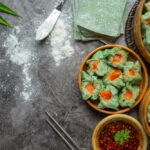
The shape of kozhukattai can vary according to regional and family traditions. Some versions resemble small rounded dumplings, while others have a more decorative, ridged or pleated appearance.
The familiar modak-like form associated with certain festive preparations is particularly recognizable, although not every kozhukattai follows the same shape.
Hand shaping gives the dish much of its traditional character. Decorative folds can require practice, and experienced cooks may produce uniform dumplings quickly. The shaping process also gives families an opportunity to preserve distinctive methods.
In many traditional kitchens, food preparation is a form of informal education. Younger family members learn by observing and assisting older relatives. Over time, techniques that are difficult to capture completely in written recipes become part of practical culinary knowledge.
Flavour and Texture: What Makes Kozhukattai Different?
The appeal of sweet kozhukattai comes largely from its contrast of textures and flavours. The rice-flour exterior is mild, soft, and slightly chewy, allowing the filling to become the main source of sweetness.
The coconut contributes a gentle richness and fibrous texture, while jaggery provides sweetness with greater depth than refined sugar. Cardamom adds fragrance without overwhelming the primary ingredients.
Because the dumpling is steamed, the overall flavour remains relatively clean. There is no strong fried aroma or heavy syrup coating. Instead, the dish depends on the natural combination of rice, coconut, jaggery, and spice.
This makes kozhukattai particularly appealing to people who enjoy traditional sweets that are relatively simple in composition.
Regional and Household Variations
Like many Indian traditional foods, kozhukattai does not exist as a single standardized recipe. Different households and regions can prepare it differently.
Some versions emphasize coconut and jaggery, while others may use different sweet fillings. Variations can include roasted sesame, nuts, lentils, or other ingredients. The outer covering may also differ slightly depending on the rice flour used and the cooking technique.
There are also savoury varieties of kozhukattai. These may contain fillings based on lentils, spices, coconut, or other savoury ingredients. Such variations demonstrate that the basic rice-flour dumpling is not limited to dessert.
This diversity is characteristic of Indian regional cuisine. A traditional dish often serves as a culinary framework rather than a rigid formula, allowing households to adapt ingredients according to availability, taste, season, and cultural practice.
Kozhukattai as a Home-Cooked Food
Although traditional sweets can be purchased commercially, kozhukattai has a particularly strong connection with home preparation. Its ingredients are relatively accessible, and the recipe does not require sophisticated equipment.
The process can nevertheless be time-consuming because the dough and filling must be prepared separately and each dumpling shaped before steaming. This makes the dish different from sweets that can be produced quickly in large batches.
The time involved is part of its cultural value. Preparing kozhukattai can become a shared household activity, particularly during festivals. The kitchen becomes a place where recipes, techniques, memories, and family traditions are exchanged.
In this sense, the dish represents more than a combination of ingredients. It is also an example of how food preserves intangible cultural heritage.
Kozhukattai in Modern Food Culture
Traditional foods are increasingly receiving renewed attention as consumers explore regional cuisines and heritage recipes. Social media, food blogs, cooking channels, and culinary publications have made it easier for people outside South India to discover dishes such as kozhukattai.
Modern cooks are also experimenting with presentation and fillings while retaining the basic concept of the steamed rice-flour dumpling. Contemporary interpretations may use different nuts, spices, sweeteners, or decorative shapes.
This evolution can introduce traditional foods to new audiences while keeping their central identity intact. At the same time, it is important to recognize that a modern variation and a traditional preparation are not necessarily the same thing.
The continued popularity of kozhukattai demonstrates that traditional dishes can remain relevant even as eating habits change.
A Naturally Distinctive Alternative to Fried Sweets
Kozhukattai’s steamed preparation distinguishes it from many popular Indian sweets that are deep-fried. This does not automatically make every version nutritionally superior, because the overall composition still depends on ingredients and portion size. However, the cooking method means that the dish does not require deep frying.
The basic sweet version also uses a relatively short ingredient list. Rice flour, coconut, jaggery, and cardamom can create a complete dessert without requiring elaborate ingredients.
This simplicity reflects an important principle found in many traditional food cultures: flavour does not always require complexity. Carefully prepared basic ingredients can produce dishes with considerable sensory and cultural appeal.
Preserving the Tradition of Kozhukattai
Traditional foods survive when knowledge about them continues to move between generations. Kozhukattai offers a clear example of this process.
The recipe can be written down, but some aspects of preparation are best learned through practice. Understanding dough consistency, shaping the dumplings without cracking them, balancing the filling, and steaming them properly all become easier with experience.
Food documentation, regional cooking programmes, culinary education, and digital recipe archives can help preserve such knowledge. However, home kitchens remain particularly important because they provide the environment in which traditional preparation methods are actually practiced.
Preserving kozhukattai therefore involves more than preserving a recipe. It involves preserving the skills, occasions, memories, and cultural contexts associated with the food.
Conclusion: More Than a Steamed Rice Dumpling
Kozhukattai represents one of the enduring strengths of South Indian culinary tradition: the ability to transform simple ingredients into food with distinctive flavour, texture, cultural meaning, and visual identity. Its rice-flour covering, coconut-and-jaggery filling, and gentle steaming process create a sweet that is both delicate and deeply rooted in regional food culture.
Its association with festivals such as Vinayaka Chaturthi has helped maintain its cultural relevance, while its relatively simple ingredients and adaptable preparation allow it to remain part of contemporary home cooking. Different families may prepare it in different shapes and with different fillings, but the central idea remains recognizable.
In an era when food is increasingly influenced by global trends and rapidly changing lifestyles, traditional dishes such as kozhukattai provide a connection to regional culinary history. They remind us that food can preserve stories as effectively as written records. Every carefully shaped dumpling carries not only rice, coconut, and jaggery, but also techniques and traditions passed from one generation to another.
Kozhukattai is therefore more than South India’s steamed rice dumpling with a sweet filling. It is an example of how regional cuisine can combine simplicity and craftsmanship while continuing to hold a meaningful place on the modern Indian table.
Online Internship with Certificate
You may be interested
Sikil Pak: Maya Pumpkin-Seed Dip with Roasted Seeds and Tomato
Anshika Jain - October 22, 2026Traditional foods often reveal how communities transform simple, locally available ingredients into preparations with distinctive flavours and cultural significance. Sikil Pak, also written as Sikil P'aak, is…
Tinutuan: Indonesian Rice Porridge Celebrating Vegetables
Anshika Jain - October 22, 2026Across Indonesia, traditional food reflects the diversity of local agriculture, community customs and everyday eating habits. Among the distinctive dishes of North Sulawesi is Tinutuan, a savoury…
Khorisa-Based Preparations: Fermented Bamboo Shoots
Anshika Jain - October 22, 2026Northeast India is home to a remarkable variety of traditional foods shaped by local agriculture, seasonal ingredients and generations of culinary knowledge. Among the region’s distinctive ingredients…
Most from this category
Jadoh: Khasi Rice Dish That Reflects the Culinary Heritage of Meghalaya
Anshika Jain - October 22, 2026
Anishi Curry: How Fermented Leaf Cakes Create a Distinctive Flavour in Naga Cuisine
Anshika Jain - October 22, 2026
Mammi: The Dark Finnish Easter Dessert Shaped by Rye, Malt and Slow Cooking
Anshika Jain - October 22, 2026
Jadoh: Khasi Rice Dish That Reflects the Culinary Heritage of Meghalaya
Anshika Jain - October 22, 2026Anishi Curry: How Fermented Leaf Cakes Create a Distinctive Flavour in Naga Cuisine
Anshika Jain - October 22, 2026Mammi: The Dark Finnish Easter Dessert Shaped by Rye, Malt and Slow Cooking
Anshika Jain - October 22, 2026
Sikil Pak: Maya Pumpkin-Seed Dip with Roasted Seeds and Tomato
October 22, 2026
Tinutuan: Indonesian Rice Porridge Celebrating Vegetables
October 22, 2026

Leave a Comment