

Kothimbir Vadi: Maharashtra’s Coriander-Based Snack With a Unique Texture

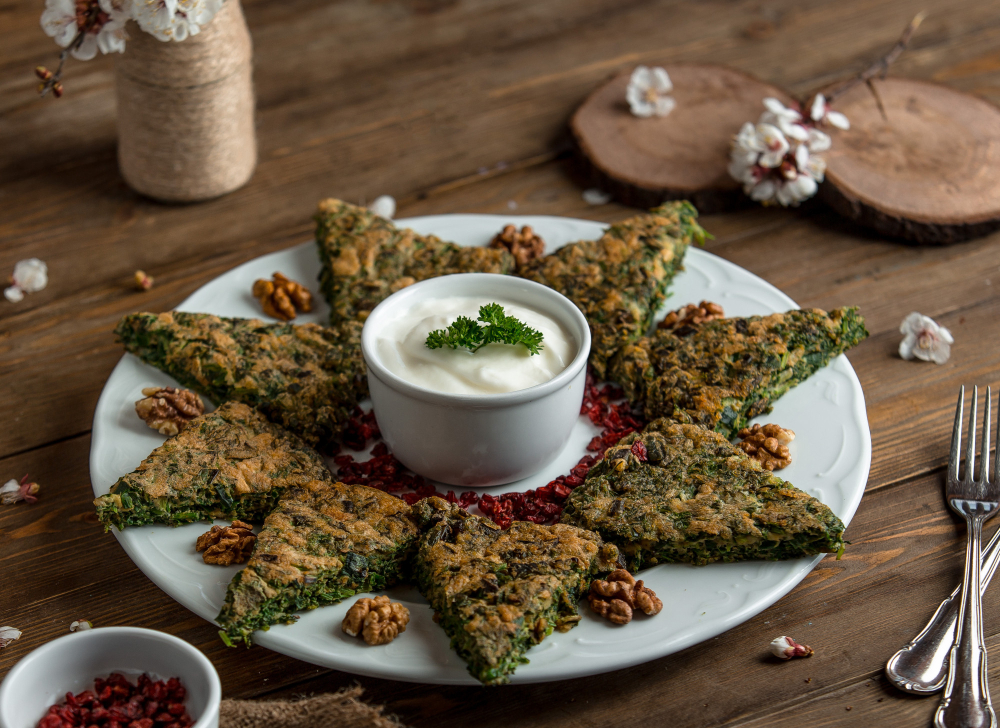
Maharashtra’s culinary identity is built around an extraordinary variety of foods that balance grains, pulses, vegetables, herbs and spices in practical yet deeply flavourful combinations. Among its many traditional snacks, Kothimbir Vadi occupies a distinctive place. Made primarily with fresh coriander leaves, gram flour and aromatic spices, the snack is known for its unusual two-stage texture: a soft, steamed interior followed by a crisp outer layer when the pieces are shallow-fried or deep-fried. This transformation is one of the reasons Kothimbir Vadi has remained popular in Maharashtrian households while also finding its way into restaurants and contemporary snack menus.
The word “kothimbir” refers to coriander in Marathi, making the name of the dish almost a direct description of its defining ingredient. Unlike many snacks in which coriander appears only as a garnish, Kothimbir Vadi places the herb at the centre of the preparation. Fresh coriander is combined with besan, spices and other ingredients to create a thick mixture that is shaped, steamed and then cut into pieces. These pieces can be eaten as they are or cooked further to develop a crisp exterior.
Kothimbir Vadi is particularly interesting in the context of contemporary Indian food culture because traditional snacks are increasingly being examined not only as cultural foods but also as products with commercial and technological potential. The Bhabha Atomic Research Centre has developed a preservation technology for Kothimbir Vadi and Aluvadi designed to extend their shelf life to three months under ambient conditions while retaining their colour, texture and original taste.
What Is Kothimbir Vadi?
Kothimbir Vadi is a traditional Maharashtrian savoury snack made predominantly from coriander leaves and gram flour. The mixture is usually seasoned with spices and formed into a thick dough or batter before being steamed. Once the steamed preparation firms up, it is cut into slices or pieces and cooked again in oil until the exterior becomes crisp.
The dish therefore involves two contrasting stages of preparation. Steaming creates a soft, dense and cohesive interior, while frying introduces crispness and a roasted flavour. This combination produces the characteristic texture for which Kothimbir Vadi is known.
Fresh coriander contributes far more than colour. It gives the snack its distinctive herbal aroma and fresh flavour, which balances the earthiness of gram flour and the warmth of spices. Sesame seeds may also be incorporated into some versions, adding a subtle nuttiness and additional texture.
The recipe can vary from household to household. Some cooks prefer a softer steamed centre, while others aim for a firmer texture that can withstand longer frying. The level of coriander, chilli, sesame and other spices can also be adjusted according to preference.
The Meaning of Kothimbir in Maharashtrian Cuisine
Coriander is one of the most widely used culinary herbs in India, but its role differs across regional cuisines. In many dishes, coriander is added at the end as a garnish. Kothimbir Vadi takes the opposite approach by making the herb one of the principal ingredients.
This reflects a broader characteristic of Maharashtrian food culture: the ability to turn accessible ingredients into dishes with strong culinary identities. Gram flour, coriander, spices and oil are relatively familiar ingredients, but their combination and preparation technique create something substantially different from the individual components.
The dish also demonstrates how regional cuisines can transform everyday ingredients into foods associated with particular places and communities. For many people, Kothimbir Vadi is not simply a snack but a recognisable expression of Maharashtrian cooking.
The Unique Texture of Kothimbir Vadi
Texture is central to the identity of Kothimbir Vadi. The snack is not defined solely by its flavour. Its appeal comes from the contrast between the soft interior and the crisp exterior.
The steaming process allows the gram-flour mixture to set into a cohesive cake-like structure. Once cooled slightly, it can be sliced without falling apart. Frying then creates a golden outer surface while leaving the inside comparatively soft.
This combination makes Kothimbir Vadi different from ordinary fritters. A pakora, for example, generally develops its structure directly during frying. Kothimbir Vadi develops its internal structure through steaming before frying becomes the finishing stage.
This two-step preparation also creates opportunities for different interpretations. Pieces can be shallow-fried for a lighter crust, deep-fried for greater crispness, or sometimes served after steaming for a softer version.
Why Coriander Is More Than a Garnish
The prominence of coriander gives Kothimbir Vadi its distinctive identity. Fresh coriander contributes a complex mixture of herbal, citrus-like and slightly peppery aromas, depending on the variety and freshness of the leaves.
Because coriander forms such an important part of the mixture, its quality can influence the final snack considerably. Fresh leaves provide stronger aroma and colour, while wilted coriander may produce a less vibrant result.
This emphasis on an herb also illustrates the diversity of Indian cooking. Ingredients that may be considered secondary in one cuisine can become central to another. Kothimbir Vadi transforms coriander from a finishing ingredient into the foundation of a complete snack.
Kothimbir Vadi and Maharashtra’s Farsan Culture
It belongs to the broader world of Maharashtrian snacks and farsan. The term farsan is commonly associated with savoury snack preparations that may be eaten during breakfast, tea time, festive occasions or as part of larger meals.
Maharashtrian food culture includes numerous preparations that combine gram flour, vegetables, spices and grains. Kothimbir Vadi fits naturally within this tradition because it can be served as a snack while also functioning as part of a larger meal.
Its popularity also reflects the importance of tea-time food in Indian households. The contrast between crisp exterior and soft centre makes it particularly suitable for serving alongside chutneys and hot beverages.
Recent food coverage in September 2026 again highlighted Kothimbir Vadi as a traditional Maharashtrian snack, describing its combination of fresh coriander, besan and spices and its preparation through steaming followed by frying.
From Home Kitchens to Restaurant Menus
Traditional snacks often begin as household preparations before gradually entering commercial food environments. Kothimbir Vadi has followed this broader pattern.
BARC notes that Kothimbir Vadi and Aluvadi are increasingly appearing on hotel menus and being served as starters. However, the institution also identifies an important commercial challenge: traditionally prepared steamed vadis are highly perishable and can be difficult to store without compromising texture.
This creates a significant difference between preparing Kothimbir Vadi for immediate household consumption and producing it for a restaurant or packaged-food market.
At home, a cook can steam the mixture, cut it and fry it shortly before serving. A commercial producer must consider transportation, storage, shelf life, packaging and food safety while attempting to preserve the qualities that consumers expect.
This challenge is particularly important for a snack whose texture is central to its identity.
BARC’s Food-Technology Innovation
One of the most interesting recent developments surrounding Kothimbir Vadi is BARC’s work on extending the shelf life of traditional Maharashtrian snacks.
According to BARC, conventionally prepared Kothimbir Vadi has a short refrigerated shelf life. The frozen versions can present problems when they are cut and fried. The institution developed a preservation process using radiation processing and vacuum packaging that allows the prepared product to remain shelf-stable for three months at ambient conditions.
The technology is designed to preserve the colour, texture and original taste of the snack without adding preservatives. BARC describes the resulting product as a ready-to-fry convenience food that does not require thawing before preparation.
This development is significant because it demonstrates how food technology can support regional culinary traditions rather than simply replacing them. The goal is not to create an entirely new snack but to solve a practical problem associated with commercialising an existing one.
Traditional Food Meets Modern Convenience
Consumer behaviour has changed considerably with the growth of urban lifestyles, online food delivery and convenience foods. People increasingly want traditional flavours without spending substantial time preparing them.
Kothimbir Vadi presents an interesting opportunity in this environment because its preparation involves multiple stages. Steaming, cooling, slicing and frying require more time than many ready-to-cook snacks.
A shelf-stable or ready-to-fry version could therefore make the traditional snack more accessible to consumers who value regional foods but have limited time for preparation.
BARC explicitly identifies convenient-food marketing and hotel-industry applications as potential areas for its Kothimbir Vadi technology.
This creates an interesting intersection between heritage food and modern convenience. Instead of allowing traditional recipes to disappear because they are labour-intensive. It technology can potentially make them easier to produce and distribute.
Food Safety and the Modern Farsan Industry
The expansion of traditional snacks into commercial markets also increases the importance of food-safety standards. A snack prepared for a family has a different production scale from one manufactured in a commercial kitchen for hundreds of customers.
Maharashtra’s 2026 festive-season food-safety operations demonstrate the scale of this challenge. In September, the Maharashtra FDA conducted inspections across several areas and seized nearly 29 tonnes of food products and raw materials from 11 establishments in Thane after citing alleged adulteration, poor quality and unhygienic production conditions. The seized materials included farsan, sev, wafers, banana chips and other snack products.
Later in September, a statewide crackdown reportedly resulted in the seizure of more than 50 tonnes of food products worth nearly ₹1.20 crore, with action involving sweets, farsan, namkeen, edible oils and other food categories. The FDA also suspended licences or registrations of 30 establishments.
These actions do not specifically establish a problem with Kothimbir Vadi. Rather, they illustrate the wider regulatory environment in which Maharashtrian snacks are produced and sold.
For traditional snacks to expand commercially, cultural authenticity needs to coexist with hygiene, proper storage, appropriate ingredient handling and regulatory compliance.
Kothimbir Vadi and the Importance of Ingredient Quality
The simplicity of Kothimbir Vadi makes ingredient quality particularly important. Coriander, gram flour, spices and cooking oil all contribute directly to the final flavour and texture.
Fresh coriander needs to be properly cleaned because it is typically used in substantial quantities. Gram flour needs to be stored correctly to maintain freshness. Spices need to be free from contamination, while frying oil must be managed carefully to prevent deterioration.
These considerations become even more important in commercial production, where ingredients may be stored for longer periods and used across multiple batches.
Modern food safety therefore adds a new layer to traditional culinary knowledge. A cook needs to know not only how to achieve the right taste but also how to maintain safe handling practices.
The Nutritional Dimension of Kothimbir Vadi
Kothimbir Vadi can contribute ingredients such as coriander and gram flour to the diet, but it should not automatically be categorised as a health food simply because it contains an herb.
Gram flour provides plant-based protein and other nutrients, while coriander contributes micronutrients and phytochemicals. However, the nutritional profile of the finished snack also depends on the amount of oil used during frying and the portion consumed.
Preparation method therefore matters. Steaming before frying means that the snack can be crisped using shallow frying rather than necessarily requiring deep frying. Some modern recipes deliberately reduce the amount of oil while attempting to preserve the characteristic texture.
Recent recipe coverage has specifically highlighted versions prepared with less oil while retaining the crisp exterior and soft interior that define Kothimbir Vadi.
This reflects a broader trend in Indian cooking, where traditional recipes are increasingly being adapted to contemporary preferences without completely abandoning their original identity.
Why Regional Snacks Are Gaining Attention
Indian food culture is becoming increasingly interested in regional dishes that were once known primarily within specific communities. Digital media has played an important role in this shift.
A dish can now move from a household recipe to a widely viewed social-media post within hours. Photographs, recipe videos and food blogs allow consumers to discover regional snacks without travelling to their place of origin.
Kothimbir Vadi benefits from this environment because its preparation is visually distinctive. The transition from a coriander-rich steamed mixture to golden fried slices creates an appealing cooking narrative.
At the same time, growing interest in regional food creates opportunities for restaurants and packaged-food companies to introduce traditional snacks to new audiences.
Preserving Authenticity While Encouraging Innovation
Commercialisation can help traditional foods reach wider markets, but it can also change the foods themselves. When recipes are adapted for mass production, ingredients may be substituted, preparation methods may be simplified and textures may change.
Kothimbir Vadi presents a particular challenge because texture is central to its identity. A product that loses the contrast between crisp exterior and soft centre. It still contain coriander and gram flour but no longer provide the experience consumers associate with the traditional snack.
This is why BARC’s work is particularly interesting. Its stated objective is to extend shelf life while retaining colour, texture and original taste.
Such technology demonstrates that innovation does not necessarily have to mean abandoning traditional characteristics. Instead, technology can be directed toward preserving them under new production and distribution conditions.
Kothimbir Vadi as a Representation of Maharashtrian Food Heritage
Food heritage is not limited to famous restaurant dishes. Everyday snacks can carry equally important cultural information.
Kothimbir Vadi reflects the Maharashtrian practice of using gram flour, fresh herbs and spices to create filling and flavourful preparations. Its name itself preserves the Marathi identity of its central ingredient.
The dish also illustrates the importance of technique. Steaming and frying are not merely cooking steps but the processes responsible for its defining texture.
Its association with home cooking, tea-time snacks, festive meals and farsan culture. It allows Kothimbir Vadi to occupy multiple places within Maharashtrian food traditions.
The Commercial Future of Kothimbir Vadi
The development of shelf-stable Kothimbir Vadi technology suggests that the snack has potential beyond local consumption. Ready-to-fry products could potentially reach consumers in other Indian states and, with appropriate food-safety and packaging systems, international markets interested in regional Indian cuisine.
The challenge will be maintaining the qualities that make the snack distinctive while adapting it to modern supply chains.
Packaging will need to protect the product from environmental conditions, while production systems will need to maintain consistency between batches. Food businesses will also need to communicate preparation instructions clearly to consumers.
If these challenges are managed effectively, Kothimbir Vadi could become an example of how regional Indian snacks can move into the convenience-food market without losing their culinary identity.
A Snack That Connects Tradition and Technology
Kothimbir Vadi offers an unusual combination of old and new. Its roots lie in household cooking traditions, yet its future may involve advanced food-processing and packaging technologies.
The BARC preservation technology demonstrates this transition particularly clearly. A traditional snack that was once difficult to store commercially. It can potentially become a ready-to-fry product with a significantly extended shelf life.
At the same time, current food-safety enforcement reminds producers that commercial expansion must be accompanied by stronger hygiene and quality controls. The Maharashtra FDA’s 2026 festive-season inspections demonstrate the regulatory attention being given to the broader snack and farsan sector.
Together, these developments suggest that the future of regional Indian food will depend on both preservation and innovation.
Conclusion
Kothimbir Vadi is much more than a coriander-based snack. Its distinctive combination of fresh coriander, gram flour, spices and a two-stage cooking process gives it a unique texture and a strong place within Maharashtrian culinary culture.
The snack’s journey from home kitchens to restaurant menus demonstrates the continuing popularity of regional Indian foods. Its unusual preparation, particularly the combination of steaming and frying. It creates the crisp exterior and soft interior that distinguish it from ordinary fritters.
Its contemporary story is equally interesting. BARC has developed technology designed to extend the shelf life of Kothimbir Vadi to three months at ambient conditions while retaining its sensory characteristics, opening possibilities for convenient-food marketing and wider distribution.
At the same time, Maharashtra’s intensified food-safety enforcement during the 2026 festive season. It highlights the responsibilities that accompany commercial food production. Large-scale inspections and seizures involving snacks and farsan show why hygiene, ingredient quality, storage and regulatory compliance must remain central as traditional foods enter larger markets.
Kothimbir Vadi ultimately represents the evolving relationship between culinary heritage and modern food technology. Its identity comes from a traditional Maharashtrian recipe, but its future may depend on innovations that allow it to be stored, transported and prepared for new generations of consumers.
As interest in regional Indian cuisine continues to grow, Kothimbir Vadi demonstrates how a humble household snack can become a bridge between cultural heritage, contemporary food entrepreneurship and modern food technology without losing the distinctive texture and flavour that made it memorable in the first place.
Online Internship with Certificate
You may be interested
Undhiyu: Gujarat’s Seasonal Vegetable Dish and Its Festival Tradition
Anshika Jain - October 1, 2026Few Indian dishes represent the relationship between season, agriculture, celebration and community as vividly as Undhiyu. A celebrated Gujarati preparation associated particularly with the winter months, Undhiyu…
Sukhdi: Gujarat’s Simple Jaggery and Wheat Flour Sweet
Anshika Jain - October 1, 2026Indian sweets are often associated with elaborate preparation, rich milk solids, elaborate garnishing and festive presentation. Yet some of the country’s most enduring traditional desserts are built…
Kootu: South India’s Comforting Combination of Vegetables and Lentils
Anshika Jain - October 1, 2026South Indian cuisine is often celebrated for its remarkable balance of grains, lentils, vegetables, coconut, spices and fermented foods. Within this diverse culinary landscape, Kootu occupies a…
Most from this category
Knafeh: The Middle Eastern Dessert With Crispy Layers and Creamy Filling
Anshika Jain - October 1, 2026


Date-Based Desserts: How an Ancient Fruit Is Being Reimagined in Modern Sweets
Anshika Jain - September 30, 2026Knafeh: The Middle Eastern Dessert With Crispy Layers and Creamy Filling
Anshika Jain - October 1, 2026Kobbari Mithai: Exploring Coconut-Based Regional Indian Sweets
Anshika Jain - October 1, 2026Maamoul: Middle Eastern Stuffed Cookies Made for Celebrations
Anshika Jain - September 30, 2026




Leave a Comment