

Rupjmaizes Kartojums: Latvia’s Layered Rye Bread Dessert

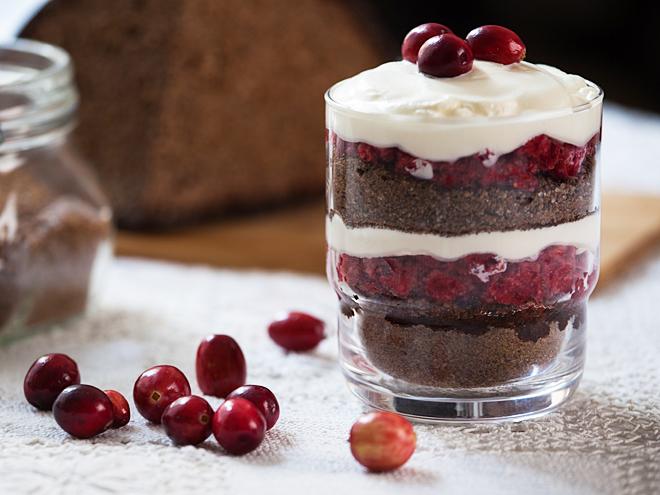
Rupjmaizes kārtojums is a traditional Latvian dessert that transforms dark rye bread into a layered combination of toasted crumbs, whipped cream, and fruit preserves. Often compared with a trifle, it brings together ingredients with contrasting flavours and textures: the deep, slightly sour character of rye bread, the smooth richness of cream, and the sharp sweetness of berries. The dessert is generally assembled in a transparent glass dish or individual serving glasses, allowing its layers to remain visible, and chilled before serving so that the flavours can settle together.
The Latvian name offers a clue to its construction. Rupjmaize refers to dark rye bread, while kārtojums conveys the idea of an arrangement or layering. The result is a dessert that does not require an elaborate cake base or complicated pastry work. Instead, it relies on the flavour already present in a staple food and enhances it through toasting, sweetening, layering, and chilling.
According to Latvia’s official tourism website, rupjmaizes kārtojums is a familiar part of the country’s culinary identity, traditionally made with crumbled rye bread, whipped cream, and lingonberry jam. Its appeal extends beyond its sweetness. The dessert demonstrates how an everyday ingredient can be repurposed without losing the qualities that make it distinctive. Rye remains recognisable throughout the dish, providing a darker, earthier flavour than the sponge cake or biscuits used in many other layered desserts.
The Cultural Importance of Rye Bread in Latvia
To understand rupjmaizes kārtojums, it helps to understand the importance of rye bread in Latvian food culture. Dark rye bread, known as rupjmaize, has a long-standing place in everyday meals and is widely regarded as an important national food. Its dense texture, dark colour, and characteristic sourness distinguish it from lighter wheat breads. Depending on the recipe, Latvian rye bread may be prepared with sourdough fermentation and can contain flavours developed through long fermentation and baking.
Rye has historically been important in northern and northeastern European food traditions, where climate and agricultural conditions influenced the grains that communities cultivated and consumed. In Latvia, bread became more than a practical source of nourishment. Baking and sharing it acquired cultural significance, and traditional bread-making practices were passed down through generations. The Latvian Culture Canon’s account of rye bread discusses the importance of bread-making traditions and notes that leftover rye bread can be used to prepare desserts such as rupjmaizes kārtojums and maizes zupa, a sweet rye-bread soup.
This culinary background helps explain why rye bread works so naturally in a dessert. Rather than treating bread as an ingredient that must be hidden beneath sugar and cream, the Latvian preparation makes its flavour central to the experience. The bread’s natural acidity and roasted notes provide a counterpoint to dairy richness and fruit preserves. In this way, the dessert expresses a broader principle found in traditional cuisines: familiar staple ingredients can take on new roles through changes in texture, seasoning, and presentation.
Dark Rye Bread: The Foundation of the Dessert
The most important ingredient in rupjmaizes kārtojums is dark rye bread. Its flavour is more complex than that of a neutral sponge cake or sweet biscuit because rye bread can have a distinctive graininess, sourness, and deep baked aroma. The exact profile depends on the flour, fermentation process, baking conditions, and any additional ingredients used by the baker. A dense, robust loaf gives the dessert a stronger rye character, while a milder loaf produces a softer and less pronounced flavour.
The bread is generally grated or crumbled before being used. Some recipes produce fine crumbs, while others retain a slightly coarse texture. The size of the crumbs affects how the dessert feels when eaten. Fine crumbs blend more readily with cream and jam, creating a relatively uniform spoonful. Coarser crumbs preserve more of the bread’s identity and offer a contrast with the smooth layers around them.
The goal is not necessarily to turn the bread into a hard, dry biscuit. Instead, the crumbs should develop enough toasted flavour to remain distinctive when layered with moist ingredients. If they are under-toasted, their flavour may be muted. If they become excessively dark, they can taste burnt or bitter. Careful heating helps retain the characteristic rye flavour while adding another layer of complexity.
This preparation also explains why the choice of bread matters. Soft, mild white bread would produce a substantially different dessert, even if the same cream and berry jam were used. Rupjmaizes kārtojums depends on the grain’s robust flavour to balance the sweetness of the other ingredients.
Berries and Jam: The Sweet-and-Sour Counterpoint
The fruit layer is essential to the character of rupjmaizes kārtojums. Traditional versions often use lingonberry or cranberry preserves, whose acidity offsets the richness of whipped cream and the dense flavour of rye. Blackcurrant and other berry jams can also be used, depending on availability and household preference. The choice of fruit changes the balance of the dessert without altering its fundamental structure.
Lingonberries are particularly well suited to this preparation because their sharp, tangy flavour creates contrast rather than adding sweetness alone. Cranberries offer a similarly tart character, while blackcurrants contribute a darker fruitiness. A very sweet preserve may make the dessert taste heavier, especially when combined with sweetened cream and sugar-coated crumbs. Tart jam, by comparison, helps keep the overall flavour lively and prevents the bread and dairy from dominating every bite.
The fruit component can be incorporated as a layer of jam or as a mixture of preserves and fresh or cooked berries. Jam creates a consistent texture and distributes its flavour evenly through the dessert. Whole berries introduce small bursts of acidity and a more varied mouthfeel. Some modern interpretations use different fruit preserves, reflecting changing preferences and the availability of ingredients beyond Latvia.
The interaction between berries and rye is particularly interesting because both can have sharp, complex flavour profiles. Rye bread may taste slightly sour and earthy, while berries provide fruity acidity. Together, they create a contrast that feels more balanced than a combination of bread and sugar alone. The fruit also gives the dessert colour, making the dark crumbs, pale cream, and red or purple preserve visually distinct.
Whipped Cream: Creating Lightness and Contrast
Whipped cream provides the soft, airy component that balances the density of rye bread. When cream is whipped, air is incorporated into its fat-and-water structure, increasing its volume and creating a lighter texture. This gives the dessert a contrast between the compact crumbs and the delicate cream. The cream also softens the intensity of the rye flavour and helps connect the separate layers into a unified dessert.
In many recipes, the cream is lightly sweetened with sugar or vanilla. The amount of sweetness matters because the bread and jam already contribute flavour. Excessively sweet cream can make the finished dessert cloying, while lightly sweetened cream allows the rye and berries to remain prominent. The ideal balance depends on the acidity of the jam and the flavour of the bread.
The cream must also be whipped to an appropriate consistency. If it is under-whipped, it may become too loose and spread unevenly between the layers. If it is over-whipped, it can lose its smooth texture and begin to resemble butter. Soft to medium-firm peaks generally provide enough structure for layering while retaining a pleasant mouthfeel. The cream should remain cold during preparation to help it hold its shape.
Some variations use a combination of whipped cream and a tangy dairy ingredient, such as quark or sour cream. This creates a slightly more acidic layer that can complement the fruit and bread. Other recipes rely entirely on whipped cream for a more traditional, straightforward contrast. These adaptations demonstrate that the dessert’s structure is flexible, even though its core combination of rye crumbs, dairy, and fruit remains recognisable.
Layering the Dessert: How Texture Develops
Rupjmaizes kārtojums is assembled by arranging rye crumbs, cream, and jam in successive layers. The process can be carried out in a large glass serving bowl or in individual glasses. Transparent containers are especially effective because they reveal the alternating dark, pale, and colourful layers. The dessert’s visual appeal is therefore closely linked to the way it is assembled.
The order of layering can vary between recipes. Some begin with rye crumbs, followed by jam and cream, while others place cream between the bread and fruit. Repeating the layers creates a more complex spoonful, allowing the diner to experience several textures at once. A final topping of cream, rye crumbs, cinnamon, chocolate shavings, or fresh berries may be added, depending on the recipe.
Layering serves a purpose beyond appearance. The crumbs absorb some moisture from the cream and jam as the dessert rests, gradually softening while retaining a degree of structure. The cream cushions the texture of the bread, and the jam distributes fruit flavour throughout the serving. After chilling, the layers become more integrated, but a well-prepared dessert should still preserve enough distinction for the rye to remain noticeable.
The resting period also matters. Chilling the assembled dessert for a few hours allows the flavours to settle and gives the crumbs time to absorb moisture. If it is served immediately, the layers may taste more separate and the bread may feel comparatively dry. If it rests for too long, particularly when made with very fine crumbs and a moist filling, the texture may become overly soft. The preferred balance depends on the bread’s density, the moisture in the jam, and the size of the crumbs.
The Science Behind Toasted Rye and Creamy Layers
The sensory appeal of rupjmaizes kārtojums comes from the interaction of different textures, flavours, and moisture levels. Toasted rye crumbs provide a firm, grainy foundation; whipped cream adds softness and airiness; and jam supplies moisture, sweetness, and acidity. Each component contributes something the others lack, which is why the combination feels more complete than any ingredient on its own.
Toasting changes the bread’s flavour through several heat-driven reactions. Browning reactions involving sugars and amino compounds generate new aroma molecules that contribute roasted, nutty, and caramel-like notes. The precise flavours depend on the bread’s composition and the intensity of heating. Sugar and cinnamon can enhance the impression of warmth and sweetness, but the rye’s original flavour remains important.
Moisture migration is another significant part of the dessert’s transformation. The dry crumbs gradually absorb liquid from the jam and cream, becoming softer over time. This is not the same as the bread dissolving completely. Instead, moisture changes the crumbs’ texture, allowing them to become tender while retaining some grain structure. The amount of absorption depends on how finely the bread has been grated and how long the dessert is chilled.
The whipped cream behaves differently. Its air-filled structure provides lightness, but it can gradually lose volume if stored for too long or mixed with excessive moisture. The jam also influences the stability of the layers: a thick preserve is easier to contain than a very runny fruit sauce. These practical factors explain why the choice of ingredients and the timing of assembly influence the final result.
Rupjmaizes kārtojums is therefore a useful example of how traditional desserts rely on more than sweetness. Its appeal comes from the controlled interaction of dry and moist ingredients, dense and airy textures, and bitter-sour grain notes with sweet fruit and dairy richness.
Regional Variations and Modern Interpretations
Although the classic combination of rye bread, whipped cream, and berry jam remains central to rupjmaizes kārtojums, the dessert has room for variation. Some versions use cranberry preserves, while others feature lingonberries or blackcurrants. Cinnamon may be added to the crumbs, and grated chocolate or fresh berries can provide a finishing touch. These additions change the flavour and appearance while preserving the recognisable layered format.
The dessert can also be adapted for different serving occasions. Individual glasses offer neat portions for dinner parties and restaurant menus, while a large glass bowl is suitable for family gatherings. The transparent presentation makes the layers part of the experience, turning an uncomplicated combination of ingredients into an attractive centrepiece.
Modern cooks outside Latvia may find it difficult to obtain the exact dark rye bread traditionally used. A dense, strongly flavoured rye loaf can serve as an alternative, although breads with a high proportion of wheat flour may produce a milder result. The objective is to retain the characteristic grain flavour and enough structure for the crumbs to remain distinct after chilling. Choosing a suitable bread is more important than reproducing every regional detail exactly.
These adaptations demonstrate how traditional dishes can travel without losing their identity. The precise jam, cream, or garnish may change, but the central idea remains: a staple grain is transformed into a dessert through toasting, layering, and the contrast of flavours. The result is still recognisably Latvian because rye bread remains the defining ingredient rather than a neutral base.
Nutritional Considerations and Serving
The nutritional profile of rupjmaizes kārtojums depends on the type of rye bread, the quantity of cream and jam, and the amount of added sugar or butter. Rye bread contributes carbohydrates and dietary fibre, with the amount depending on the flour and recipe. Cream adds fat and energy, while berry preserves contribute sugars and fruit-derived compounds. The dessert can therefore be rich, and portion size is relevant when considering it as part of a balanced diet.
The use of whole-grain rye bread may contribute more fibre than a preparation made with refined flour, but this does not automatically make the dessert low in sugar or energy. Similarly, berries in the jam do not make the finished dish equivalent to a serving of fresh fruit. It is more accurate to appreciate rupjmaizes kārtojums as a traditional dessert whose ingredients each contribute distinct culinary qualities. Because whipped cream is a perishable dairy product, the assembled dessert should be refrigerated and kept cold until serving.
Conclusion: A Latvian Dessert That Celebrates Rye
Rupjmaizes kārtojums illustrates how a staple food can be transformed into a dessert without losing its original character. Dark rye bread provides an earthy, slightly sour foundation, toasted crumbs contribute roasted aromas, berry preserves add sweetness and acidity, and whipped cream supplies a light, smooth contrast. The result is a layered dessert in which each ingredient remains recognisable while contributing to a balanced whole.
Its importance also extends beyond flavour. Rye bread has a longstanding place in Latvian food culture, and the dessert reflects the creativity with which traditional cooks have incorporated familiar ingredients into different meals. By grating and toasting bread, then combining it with fruit and cream, they created a preparation that is both practical and distinctive.
The dish’s enduring appeal lies in this simplicity. It does not depend on elaborate pastry techniques or an extensive list of ingredients. Instead, it uses the natural characteristics of rye, dairy, and berries to create contrast in taste, texture, and appearance.
Online Internship with Certificate
You may be interested
Gamja Ongsimi Small dumplings made primarily from potato
Anshika Jain - October 23, 2026Gamja Ongsimi is particularly associated with Gangwon Province in northeastern South Korea, a region known for its mountainous landscapes and long-standing potato-growing traditions. Potatoes became an important…

Bharli Karli Bitter gourds stuffed with a spiced mixture
Anshika Jain - October 23, 2026Maharashtrian cuisine is known for its thoughtful use of spices, roasted ingredients, pulses, coconut, and seasonal vegetables. Bharli Karli fits naturally into this culinary tradition, particularly because…
Pathrode: Layered Colocasia Leaves Become a Traditional Steamed Delicacy
Anshika Jain - October 23, 2026Pathrode, also known by regional spellings such as Patrode and Pathrado, is associated particularly with the coastal cuisines of Karnataka and the wider Konkan region. It is…
Most from this category

Taikilo Bhaji: Exploring Goa’s Seasonal Wild Greens and Konkani Food Traditions
Anshika Jain - October 23, 2026
Taikilo Bhaji: Exploring Goa’s Seasonal Wild Greens and Konkani Food Traditions
Anshika Jain - October 23, 2026Kachnar Kali Curry: Unopened Flower Buds into a Savoury Delicacy
Anshika Jain - October 23, 2026Sikil Pak: Maya Pumpkin-Seed Dip with Roasted Seeds and Tomato
Anshika Jain - October 22, 2026
Gamja Ongsimi Small dumplings made primarily from potato
October 23, 2026
Bharli Karli Bitter gourds stuffed with a spiced mixture
October 23, 2026



Leave a Comment