

Pathrode: Layered Colocasia Leaves Become a Traditional Steamed Delicacy

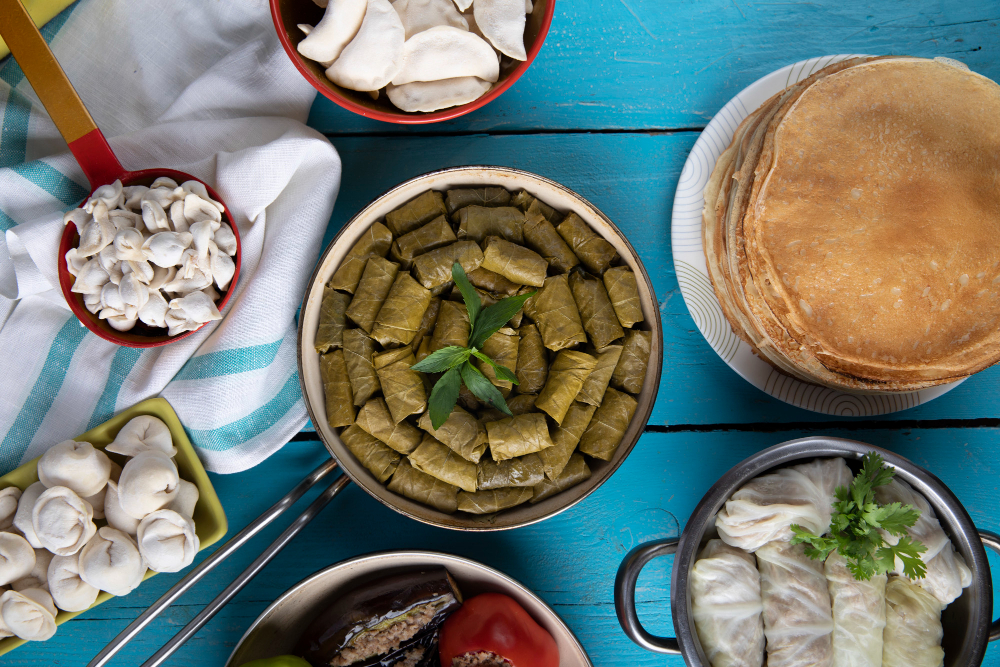
Pathrode, also known by regional spellings such as Patrode and Pathrado, is associated particularly with the coastal cuisines of Karnataka and the wider Konkan region. It is prepared by coating colocasia leaves with a thick, spiced paste made from ingredients such as rice, lentils, coconut, chillies, tamarind, and selected spices. The coated leaves are stacked, rolled into a compact bundle, and steamed until the ingredients form a cohesive structure. The roll can then be sliced and served as it is or lightly fried to develop a crisp exterior. Regional recipes differ in their proportions and seasoning, reflecting the adaptability of this traditional preparation. Karnataka Tourism describes Patrode as a distinctive coastal Karnataka dish made from colocasia leaves, while culinary accounts from the Mangalorean region highlight its place in local food traditions.
What makes Pathrode especially interesting is the way it transforms separate ingredients into a unified food. The leaves are not simply wrapped around a filling; instead, the paste is spread between successive leaves, creating multiple layers that cook together. The finished slices reveal these layers, offering a visual record of the preparation process. This combination of plant structure, moisture, starch, and heat makes Pathrode an excellent example of how traditional cooking techniques can produce distinctive textures without requiring complicated equipment.
The Regional Roots of Pathrode
Pathrode belongs to a family of leaf-based preparations found across different parts of India. In coastal Karnataka, it is closely connected with Mangalorean and Konkani food traditions, while related preparations appear in other regional cuisines under names such as Patra and Alu Vadi. Although these dishes share the basic idea of coating leafy vegetables with a seasoned mixture, their ingredients and cooking methods can differ considerably. Some use rice and coconut-based pastes, while others rely more heavily on gram flour or different combinations of pulses and spices.
In coastal Karnataka, colocasia leaves are traditionally associated with the monsoon season, when suitable leaves may be available in abundance. The availability of seasonal ingredients has influenced many regional food practices, encouraging households to prepare dishes that make use of what grows locally. Pathrode reflects this relationship between environment and cooking: the leaves supply the structure, while rice, pulses, coconut, and spices create the flavour and substance of the dish.
Pathrode is not defined by one universally fixed recipe. Household traditions may vary in the quantity of rice, the type of dal used, the amount of coconut, and the balance between sourness, heat, and sweetness. Tamarind may contribute a pronounced tang, while jaggery can soften the sharpness of the spices. Some cooks prefer a more substantial paste, whereas others aim for a finer consistency that spreads smoothly over the leaves. These differences are part of the dish’s regional character rather than evidence that one version is necessarily more authentic than another.
Colocasia Leaves: The Foundation of the Dish
Colocasia, commonly associated with taro and arbi, is a tropical plant whose leaves are used in a variety of traditional foods. For Pathrode, the leaves are important not only because they contribute a mild, earthy flavour but also because their broad surfaces make layering possible. A suitable leaf can hold a coating of paste, overlap with the next leaf, and bend around the filling when rolled. This physical role distinguishes Pathrode from dishes in which leafy vegetables are chopped and mixed directly into a batter or curry.
Selecting and preparing the leaves requires care. They need to be suitable for culinary use, intact enough to handle, and large enough to overlap effectively. Thick central ribs can make the leaves difficult to flatten, so traditional preparation often involves trimming or thinning these raised sections. The leaves are then washed thoroughly and handled according to an established, reliable recipe. Good preparation helps the layers sit closely together and reduces the chance of tearing during rolling.
An important safety consideration is that colocasia leaves may contain calcium oxalate crystals, which can cause an unpleasant itching or irritation sensation in the mouth and throat if the leaves are not properly prepared and cooked. The intensity of this problem can vary with the plant and the specific leaves used. Karnataka Tourism’s Patrode guide specifically cautions against eating untreated colocasia leaves raw and notes that irritation can sometimes remain a concern even in prepared dishes. Therefore, leaves should be sourced from a reliable supplier, identified correctly, and cooked thoroughly using a trusted regional method. Tamarind and other acidic ingredients are common in recipes, but they should not be treated as a substitute for safe leaf selection and adequate cooking.
The Spiced Paste: Binding Flavour and Texture
The paste used in Pathrode is central to its identity. In many coastal Karnataka and Konkani versions, soaked rice is ground with lentils, coconut, chillies, and spices. Tamarind adds acidity, while jaggery may introduce a gentle sweetness. Coriander and cumin are common flavouring ingredients, although the exact combination varies by household and region. The resulting mixture is thick enough to remain on the surface of a leaf rather than running off immediately.
Rice and pulses help give the paste its body. Once exposed to heat and moisture, the starch in the rice changes in texture. While the pulse ingredients contribute solids and a more substantial mouthfeel. Coconut contributes richness and flavour, and the spices distribute their aromas throughout the mixture. Tamarind and jaggery create a sweet-and-sour balance that can complement the earthy taste of the leaves. The precise proportions influence whether the finished Pathrode tastes sharper, sweeter, hotter, or more mellow.
The consistency of the paste is just as important as its ingredients. A mixture that is too watery may escape from the sides as the roll is formed or steamed, leaving the layers unevenly coated. A paste that is excessively dry or coarse may be difficult to spread, especially across the raised veins of the leaves. The ideal texture is sufficiently thick to cling to the leaf while remaining pliable enough for an even coating. This balance supports the structure of the roll and helps create consistent slices after cooking.
Layering: The Technique That Gives Pathrode Its Structure
Layering is the defining step in Pathrode preparation. A large colocasia leaf is placed on a work surface, usually with the side that allows the paste to be spread evenly facing upwards. The paste is applied across the leaf, and another leaf is positioned over it. The process is repeated, alternating leaves and paste until a layered stack has formed. The number of leaves depends on their size, the thickness of the paste, and the preferred size of the finished roll.
The paste performs several functions during this process. It seasons the leaves, fills the spaces between their surfaces, and helps the separate layers adhere to one another as they cook. Even coverage matters because exposed areas can produce gaps, while thick patches can create uneven sections in the finished roll. Careful spreading also makes the slices more visually consistent, revealing alternating layers of green leaf and cooked paste.
This method can be understood as a form of edible construction. The leaves provide flexible sheets, while the paste acts as a binding layer. When the stack is rolled, the arrangement becomes compact and the ingredients are held close together. During steaming, the leaves soften and the paste sets into a firmer mass. The result is a structured food whose form depends on the interaction between the ingredients and the sequence in which they are assembled.
The technique also demonstrates why Pathrode cannot be reduced to a simple mixture of leaves and spices. If the leaves were chopped and mixed with the paste, the final texture would be different. Layering preserves the identity of each leaf while allowing the paste to bind the preparation into a cohesive whole. The visible cross-section after slicing is therefore not merely decorative; it reflects the dish’s method of construction.
Rolling and Steaming: How Heat Changes the Ingredients
After the leaves have been layered with paste, the stack is folded along its sides and rolled into a compact cylinder. The ends and edges need to be secured sufficiently to prevent the paste from escaping. Rolling too loosely may allow gaps to form, while excessive pressure can tear the leaves or push out the filling. A carefully formed roll maintains contact between the layers and gives the finished dish its characteristic shape.
Steaming is the next crucial stage. Unlike deep-frying, steaming transfers heat through hot water vapour, allowing the roll to cook in a moist environment. As the temperature rises, the leaves soften and become more flexible, while the starch in the rice-based paste absorbs moisture and thickens. The pulse ingredients also cook, helping the mixture develop a firmer consistency. Together, these changes transform a pliable stack into a cohesive roll that can be sliced without immediately falling apart.
Cooking time depends on the thickness of the roll, the composition of the paste, the number of layers, and the steaming equipment. Traditional recipes commonly describe steaming the rolls for approximately 30 minutes, although methods and timings vary. These timings are useful references rather than universal guarantees. The roll should be cooked thoroughly throughout, and the centre should not retain raw paste.
Allowing the roll to cool slightly before slicing is equally important. Immediately after steaming, the paste may still be delicate and the leaves very soft. A short resting period helps the structure settle, making it easier to cut clean slices that reveal the alternating layers. This demonstrates that the final texture depends not only on ingredients and heat but also on how the food is handled after cooking.
Why Layering Produces a Distinctive Texture
The structure of Pathrode comes from several ingredients behaving differently under heat. Colocasia leaves begin as flexible but relatively firm sheets. The paste is softer and more spreadable before cooking, but it becomes more cohesive as its starches absorb water and heat. Once rolled together, these components form a layered structure in which the leaves and paste support one another.
The leaves help maintain the roll’s shape, while the paste fills the spaces between them. As the roll cooks, the ingredients become more closely integrated, but the individual layers remain visible. This creates a texture that is different from a uniform dumpling, a vegetable fritter, or a simple cooked leafy-green dish. Each slice combines the softness of the cooked leaves with the more substantial texture of the rice-and-pulse mixture.
Moisture management is essential to this transformation. Too much water in the paste can make it runny and weaken the finished structure. Too little moisture can make spreading difficult and may contribute to an uneven texture. The condition of the leaves also matters: torn or excessively thick leaves can make it harder to form a consistent roll. Traditional cooking experience helps cooks judge these variables without relying on precise measurements alone.
The technique is a reminder that food texture is not determined exclusively by the ingredients selected. The order in which ingredients are assembled, the thickness of each layer, the pressure applied during rolling, and the cooking method all influence the result. Pathrode turns these practical decisions into a recognisable culinary identity.
From Steamed Roll to Sliced Snack
Once Pathrode has been steamed and allowed to settle, it can be sliced into rounds or thicker pieces. The cross-section often reveals a repeating pattern of green leaves and the darker, spiced paste. This appearance makes the dish visually distinctive and highlights the careful work involved in assembling it.
Some households serve the steamed slices directly, sometimes with a small amount of coconut oil or another accompaniment. Other preparations lightly pan-fry the slices after steaming. This additional step creates a browned exterior and introduces a contrast between the firmer surface and the softer interior. The frying stage is not essential to the basic identity of Pathrode. It is one of several ways the cooked roll can be finished.
Pathrode can be served as a snack, a side dish, or part of a larger meal. Its combination of rice, pulses, and leaves makes it more substantial than a dish consisting only of cooked greens. The balance of tanginess, spice, and mild sweetness also means that it can be enjoyed without elaborate accompaniments. Serving traditions vary, however, and there is no single presentation that applies to every household or region.
The ability to prepare the roll in advance and slice it later can also make the dish practical for family meals. The important consideration is to cool, store. Reheat it safely rather than leaving cooked food at room temperature for extended periods. When prepared in larger quantities, prompt refrigeration and thorough reheating help maintain food quality and reduce food-safety risks.
Nutritional Value and the Importance of Balanced Preparation
Pathrode combines leafy vegetables with rice, pulses, and, in many versions, coconut. Colocasia leaves contribute plant-based nutrients, while pulses provide protein and dietary fibre. Rice supplies carbohydrates, and coconut contributes fat and flavour. The overall nutritional profile depends on the quantities used, the exact recipe, portion size, and whether the slices are served steamed or fried.
The inclusion of pulses is particularly relevant because they add substance to a dish built around leafy vegetables. Different recipes use different combinations of lentils or beans, so their contribution will vary. Likewise, coconut, jaggery, and cooking oil influence the energy content and flavour balance. A steamed version and a heavily fried version should not be assumed to have identical nutritional profiles.
It is also important not to treat traditional foods as automatically healthy or unhealthy simply because of their ingredients or cooking methods. Pathrode can form part of a varied diet, but its nutritional contribution depends on the broader meal and the way it is prepared. Portion size, accompanying foods, individual dietary requirements, and cooking practices all matter.
Food safety is especially important with colocasia leaves. The natural calcium oxalate crystals associated with these leaves can cause irritation if the leaves are incorrectly identified, inadequately prepared, or insufficiently cooked. Choose leaves intended for culinary use and follow a reliable regional recipe that includes appropriate preparation and thorough cooking. Do not taste raw colocasia leaves to determine whether they are safe, and do not rely on tamarind or other ingredients alone to eliminate the risk of irritation. If a prepared dish causes persistent mouth or throat discomfort, stop eating it.
Pathrode and the Preservation of Regional Food Knowledge
Traditional dishes such as Pathrode preserve more than recipes. They also reflect knowledge about seasonal ingredients, leaf selection, preparation methods, and the relationship between local environments and everyday cooking. In regions where colocasia grows readily during the rainy season. The dish offers a way to incorporate a locally available plant into a substantial meal.
Much of this knowledge is passed from one generation to another through observation and practice. A cook learns how to spread the paste evenly, how much pressure to apply when rolling, and how to recognise when the centre has cooked properly. These judgements may seem simple when viewed after the fact. But they depend on repeated experience with ingredients whose size, moisture, and texture can vary.
Family recipes also help maintain regional distinctions. One household may prefer a pronounced sour flavour. Another may use more coconut, and a third may favour a spicier paste. These variations allow Pathrode to remain recognisable while adapting to different tastes and local traditions. As with many regional dishes, preserving it does not require every cook to follow a single standardised recipe. It requires retaining the knowledge that makes the preparation work and understanding the ingredients that give it its identity.
Documenting traditional cooking methods can also help younger generations understand why certain steps matter. Explaining the purpose of trimming thick veins, controlling paste consistency, layering leaves, and steaming the roll makes the recipe more than a list of instructions. It reveals the practical reasoning behind the technique and helps ensure that the dish can be prepared safely and consistently.
Conclusion: A Culinary Lesson in Structure and Transformation
Pathrode demonstrates how a traditional cooking method can turn leaves, rice, pulses, and spices into a cohesive and distinctive food. Its character emerges from the combination of suitable colocasia leaves, a well-balanced paste, careful layering, compact rolling, and thorough steaming. Each stage contributes to the final texture, from the flexibility of the leaves to the firmness of the cooked paste and the visible pattern created by slicing.
Beyond its flavour, Pathrode offers a useful example of how cooking transforms ingredients through physical structure and heat. Layering gives the dish its internal design, steaming changes the texture of its components. Resting allows the roll to become easier to slice. Its continued presence in coastal Karnataka and Konkani food traditions also illustrates how regional dishes preserve knowledge about seasonal ingredients and established household techniques.
Pathrode is therefore more than a preparation made from colocasia leaves. It is an example of how practical cooking knowledge, local ingredients. A carefully developed process can create a food that is both culturally meaningful and technically interesting. Understanding the method helps explain why the dish has endured. Why its layered structure remains one of its most distinctive features.
Online Internship with Certificate
You may be interested

Rupjmaizes Kartojums: Latvia’s Layered Rye Bread Dessert
Anshika Jain - October 23, 2026Rupjmaizes kārtojums is a traditional Latvian dessert that transforms dark rye bread into a layered combination of toasted crumbs, whipped cream, and fruit preserves. Often compared with…
Gamja Ongsimi Small dumplings made primarily from potato
Anshika Jain - October 23, 2026Gamja Ongsimi is particularly associated with Gangwon Province in northeastern South Korea, a region known for its mountainous landscapes and long-standing potato-growing traditions. Potatoes became an important…
Bharli Karli Bitter gourds stuffed with a spiced mixture
Anshika Jain - October 23, 2026Maharashtrian cuisine is known for its thoughtful use of spices, roasted ingredients, pulses, coconut, and seasonal vegetables. Bharli Karli fits naturally into this culinary tradition, particularly because…
Most from this category
Taikilo Bhaji: Exploring Goa’s Seasonal Wild Greens and Konkani Food Traditions
Anshika Jain - October 23, 2026
Taikilo Bhaji: Exploring Goa’s Seasonal Wild Greens and Konkani Food Traditions
Anshika Jain - October 23, 2026Kachnar Kali Curry: Unopened Flower Buds into a Savoury Delicacy
Anshika Jain - October 23, 2026Sikil Pak: Maya Pumpkin-Seed Dip with Roasted Seeds and Tomato
Anshika Jain - October 22, 2026
Rupjmaizes Kartojums: Latvia’s Layered Rye Bread Dessert
October 23, 2026
Gamja Ongsimi Small dumplings made primarily from potato
October 23, 2026
Bharli Karli Bitter gourds stuffed with a spiced mixture
October 23, 2026

Leave a Comment