

Haitian Legim: A Traditional Thick Vegetable Stew with Eggplant, Cabbage and Spinach

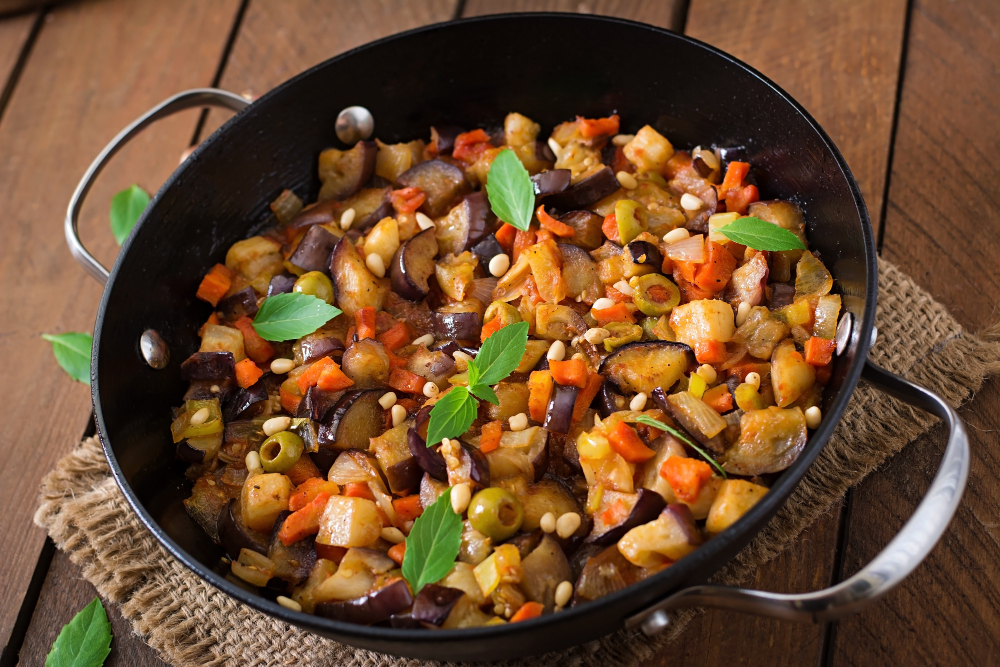
Haitian cuisine is known for its vibrant seasonings, fresh vegetables, aromatic herbs and slow-cooked dishes that bring together different ingredients to create rich, comforting flavours. One of its distinctive preparations is Haitian Legim, also written as Legim or Légume. This traditional Haitian stew is made with a variety of vegetables, including eggplant, cabbage, carrots, chayote and leafy greens. The ingredients are slowly cooked with herbs, spices and a flavourful seasoning mixture until they become tender and develop a thick, cohesive consistency.
Unlike many vegetable stews in which individual ingredients remain completely separate, Haitian Legim is often partially mashed after cooking. Eggplant and other soft vegetables create a thick base, while ingredients such as carrots, cabbage and green beans provide texture. The resulting dish is deeply savoury, aromatic and satisfying.
Traditional Haitian Legim is prepared in different ways across households, and some versions include beef, crab or other meat and seafood. However, it can also be prepared as a completely vegetarian dish by using vegetable stock instead of meat-based broth. This vegetable-based adaptation retains the characteristic ingredients, seasoning techniques and thick consistency while making the preparation suitable for vegetarian and vegan diets.
One of the most important elements of the dish is epis, a Haitian seasoning mixture commonly made with garlic, parsley, scallions, thyme, peppers and other aromatics. It gives the stew its distinctive flavour and demonstrates how Haitian cooking uses fresh ingredients to build depth without relying exclusively on dried spices.
The Cultural Origins of Haitian Legim
Legim is closely associated with Haiti’s home-cooking traditions and is considered one of the country’s familiar vegetable-based preparations. Its name comes from the French word légume, meaning vegetable, reflecting the influence of French language and colonial history on Haitian food vocabulary.
Haitian cuisine developed through the interaction of African, French, Indigenous Taíno and other Caribbean influences. These culinary traditions contributed to the country’s use of vegetables, tropical produce, herbs, peppers and slow-cooking methods. Local ingredients such as eggplant, chayote, cabbage and leafy greens became important components of everyday meals.
Legim is particularly interesting because it demonstrates how vegetables can form the foundation of a substantial main dish. Although meat or seafood is included in many traditional household recipes, the vegetables remain central to the preparation. Eggplant, cabbage and chayote are often cooked until very soft and combined with a seasoned sauce, producing the characteristic thick consistency.
The exact preparation varies according to family preferences and regional traditions. Some cooks prefer a smoother stew, while others leave more recognisable pieces of vegetables. The seasoning may also differ, particularly in the quantity of Scotch bonnet pepper, garlic, thyme and other aromatic ingredients.
For Haitian families, dishes such as Legim are more than everyday meals. They are connected with home cooking, family gatherings and the preservation of culinary knowledge passed between generations. Preparing the stew requires patience because its flavour develops gradually as the vegetables soften and absorb the seasoning.
What Makes Haitian Legim Different from Other Vegetable Stews?
Haitian Legim stands apart from many vegetable stews because of its distinctive texture and seasoning base. Instead of simply simmering vegetables in a watery broth, the ingredients are cooked until they become extremely tender and are then partially mashed or combined into a thick mixture.
Eggplant plays an especially important role. As it cooks, its flesh softens and helps create a naturally thick consistency. Cabbage contributes a mild sweetness, while carrots provide colour and a slightly sweet flavour. Chayote adds a delicate texture, and spinach or watercress introduces freshness towards the end of cooking.
Another defining feature is the use of epis. This fresh seasoning mixture brings together garlic, parsley, scallions, thyme and peppers. Unlike a seasoning blend made entirely from powdered spices, epis is generally prepared by blending or finely processing fresh ingredients. It creates an aromatic foundation that can be used in many Haitian preparations.
The cooking process also contributes to the dish’s identity. Vegetables are commonly simmered for an extended period, allowing their flavours to combine. The mixture is then incorporated into a seasoned sauce containing ingredients such as onion, tomato paste and herbs. This creates a rich vegetable stew rather than a collection of separately cooked vegetables.
Essential Ingredients Used in Vegetarian Haitian Legim
The character of vegetarian Haitian Legim depends on the combination of vegetables, herbs and seasonings. Although the exact ingredients can change according to availability, eggplant, cabbage, carrots and leafy greens are particularly suitable for the preparation.
Eggplant
Eggplant is one of the most important ingredients in Haitian Legim. Its soft flesh breaks down during slow cooking and contributes to the stew’s thick consistency. It also absorbs the flavour of the seasoning mixture, making it particularly suitable for a dish that relies on gradual cooking.
Medium-sized eggplants can be peeled or left with their skin, depending on the desired texture. Cutting them into moderately sized pieces allows them to cook evenly and become soft without requiring excessive preparation.
Cabbage
Cabbage adds body and a mild natural sweetness. As it cooks, its leaves soften and blend with the eggplant, helping create the characteristic consistency of the stew. Green cabbage is commonly used because it is readily available and holds up well during extended cooking.
Carrots
Carrots introduce colour, natural sweetness and texture. They are usually cut into slices or small pieces and cooked until tender. Some cooks prefer to retain a portion of the carrots as visible pieces after mashing the softer vegetables, creating a more varied texture.
Chayote
Chayote, also called mirliton in Haitian Creole, is a mild-flavoured vegetable widely used in Caribbean cooking. It has a crisp texture when raw but becomes tender during cooking. Its relatively neutral flavour allows it to absorb the seasoning and complement the stronger taste of eggplant and garlic.
If chayote is unavailable, a suitable squash can be used as a practical substitute, although the flavour and texture will not be exactly the same.
Spinach and Other Leafy Greens
Spinach is often added towards the end of cooking because it softens quickly. It contributes colour, freshness and a slightly earthy flavour. Watercress is another option found in Haitian vegetable preparations and provides a more pronounced, peppery taste.
Vegetable Stock
For this vegetarian preparation, vegetable stock replaces meat-based broth or chicken stock. It provides additional flavour while keeping the dish entirely plant-based. A homemade stock prepared with onions, carrots, celery and herbs is particularly suitable because it complements the vegetables without overpowering their natural flavours.
Epis and Other Seasonings
Epis is essential to developing the characteristic Haitian flavour. Garlic, parsley, scallions, thyme, bell peppers and chilli can be blended together with a little oil and lime juice to create a fragrant seasoning mixture.
Onion, tomato paste, black pepper and a Scotch bonnet pepper can also be used. The Scotch bonnet may be added whole for aroma or incorporated in smaller quantities for a hotter preparation. Its amount should be adjusted according to personal preference.
How to Prepare Vegetarian Haitian Legim at Home
Vegetarian Haitian Legim requires slow cooking rather than complicated techniques. The key is to soften the vegetables thoroughly, develop the flavour of the epis seasoning and allow the vegetable stock to combine with the ingredients until the mixture becomes thick and cohesive.
Preparing the Vegetables
Begin by washing all the vegetables thoroughly. Peel the eggplant if preferred and cut it into medium-sized cubes. Peel the carrots and slice them into moderately thick pieces. Remove the outer leaves of the cabbage, wash the remaining portion and chop it into strips or small sections.
Peel the chayote, remove its central seed and cut the flesh into cubes. Prepare the spinach by washing and roughly chopping it. If using watercress, remove any tough stems and rinse the leaves carefully.
The vegetables should not all be cut into extremely small pieces. Larger pieces are easier to handle during cooking and can be mashed gradually when they become soft. Keeping some carrots and other vegetables intact also creates a more interesting final texture.
Preparing the Haitian Epis Seasoning
Epis is an important part of the preparation because it provides the aromatic foundation of the stew. To make a vegetarian version, combine fresh parsley, scallions, garlic, thyme, green or red bell pepper and a small amount of chilli in a blender or food processor.
Add a little olive oil and lime juice to help the ingredients blend. Process until the mixture becomes a coarse paste. It does not need to be completely smooth; a slightly textured seasoning mixture works well.
The quantity of Scotch bonnet or other hot pepper can be adjusted according to the preferred spice level. For a milder preparation, use a small amount of chilli or leave it out of the epis and add a whole pepper to the cooking pot later.
Freshly prepared epis can be used immediately. Any remaining mixture can be stored separately in a clean, airtight container in the refrigerator for short-term use.
Cooking the Vegetables
Heat vegetable oil in a large, heavy-bottomed cooking pot over medium heat. Add chopped onion and cook until it becomes soft and translucent. Stir in the prepared epis and allow it to cook for a few minutes until its fresh aroma becomes noticeable.
Add the carrots, eggplant, chayote and cabbage. Stir gently so that the vegetables become coated with the seasoning mixture. Cook for several minutes, allowing the ingredients to absorb the flavour of the herbs and garlic.
Pour in enough vegetable stock to help the vegetables simmer without making the mixture excessively watery. Add tomato paste, thyme and black pepper, then stir to distribute the seasoning evenly.
Cover the pot and cook over low to medium-low heat. Stir occasionally to prevent the vegetables from sticking to the bottom. As the vegetables soften, they will release moisture and gradually form a thicker mixture.
Developing the Thick Legim Texture
After the vegetables have cooked until very tender, use a potato masher or the back of a sturdy wooden spoon to mash part of the mixture. Eggplant and cabbage should break down easily, creating a thick base.
Avoid mashing everything into a completely smooth purée. Retaining some pieces of carrots, chayote and cabbage gives the stew a more traditional, varied texture. If the mixture appears too thick, add a little more warm vegetable stock and stir gently.
Add the chopped spinach towards the end of cooking. Allow it to wilt into the stew while preserving its colour and freshness. If using watercress, it can be added at a similar stage.
Taste the preparation and adjust the salt, black pepper and chilli. A small squeeze of fresh lime juice at the end can brighten the flavours and balance the richness of the cooked vegetables.
The finished Legim should be thick enough to hold its shape on a serving spoon, with the vegetables and seasoning thoroughly combined.
Important Cooking Tips for Better Haitian Legim
The most important factor in preparing good Haitian Legim is allowing the vegetables enough time to soften. Cooking them too quickly over high heat can cause the bottom of the pot to burn before the eggplant and cabbage have reached the desired consistency. A steady, gentle simmer is more effective.
The quantity of vegetable stock also needs attention. Legim is not intended to have the thin consistency of an ordinary vegetable soup. Begin with a moderate amount of stock and add more only when necessary. The vegetables release moisture as they cook, so adding too much liquid at the beginning can make the final preparation watery.
Epis should be cooked briefly in oil before the vegetables and stock are added. This helps release its aroma and allows the seasoning to become part of the base rather than remaining raw and sharply flavoured.
Another useful technique is to add spinach and watercress towards the end. These greens cook much faster than eggplant, carrots and cabbage. Adding them too early can cause them to lose their colour and become excessively soft.
Finally, allow the finished stew to rest briefly before serving. This gives the flavours time to settle and makes the consistency more cohesive.
Popular Variations of Haitian Legim
Haitian Legim has several variations because households use different combinations of vegetables and seasonings. The vegetarian version can also be adapted according to seasonal produce and personal preferences.
A classic eggplant and cabbage version places greater emphasis on the two vegetables that contribute most to the stew’s thick consistency. Carrots and spinach provide additional colour, while epis creates the characteristic aromatic flavour.
A chayote-rich version uses a larger quantity of mirliton alongside eggplant, cabbage and carrots. This creates a slightly lighter texture while retaining the traditional seasoning profile. Chayote is particularly useful for people who enjoy vegetables that soften without becoming completely mushy.
Another variation includes green beans, celery and watercress. Green beans provide a firmer texture, celery introduces a fresh aromatic flavour and watercress gives the stew a distinctive peppery finish. These ingredients can be combined with the basic vegetables without changing the overall cooking method.
For a more substantial plant-based preparation, cooked beans or chickpeas can be incorporated. They are not essential to every traditional version, but they provide additional protein and make the stew more filling. They should be added after the vegetables have softened so that they retain their shape.
Some Haitian preparations also include coconut milk, although it is not necessary for the basic vegetable-stock version. If used, it produces a creamier variation with a slightly different flavour profile. The vegetable-stock preparation, however, allows the taste of the vegetables and epis to remain central.
Nutritional Characteristics of Vegetarian Legim
Vegetarian Haitian Legim combines several vegetables that contribute different nutrients to the meal. Eggplant provides dietary fibre and plant compounds, while carrots contribute beta-carotene, which the body can convert into vitamin A. Cabbage and spinach add fibre and a range of vitamins and minerals.
Chayote provides water, fibre and several micronutrients while contributing relatively few calories. Spinach also contributes folate and other nutrients, making leafy greens a useful addition to the stew.
The use of vegetable stock keeps the preparation free from meat-derived ingredients. Its nutritional composition will depend on the stock used, the quantity of cooking oil and the vegetables selected. Homemade vegetable stock can be prepared with fresh ingredients and adjusted to control the amount of added salt.
Legim is naturally plant-based when prepared with vegetable oil, vegetable stock and no animal-derived seasonings. However, packaged stock cubes and seasoning products should be checked because some contain chicken extract, meat flavouring or other animal-derived ingredients.
Although the stew contains several nutritious vegetables, it may benefit from being served with a protein-rich accompaniment such as beans or lentils. This can make the overall meal more balanced and satisfying.
What to Serve with Haitian Legim
Haitian Legim is commonly served with rice, which provides a mild accompaniment to the richly seasoned vegetables. Plain white rice is particularly suitable because it absorbs the thick sauce without competing with the flavours of the stew.
Rice and beans are another excellent option. The beans contribute additional plant protein and create a more substantial meal. Their texture complements the soft vegetables, while the rice provides a familiar base.
Boiled plantains can also accompany the stew. Their mild sweetness contrasts with the savoury seasoning and chilli, creating a pleasant balance. Cornmeal is another suitable accompaniment, particularly for people who prefer a different alternative to rice.
For a lighter serving, Legim can be enjoyed on its own or alongside a fresh vegetable salad. The choice depends on whether the stew is intended as a main course or as one component of a larger meal.
Haitian Legim and the Importance of Epis in Caribbean Cooking
The flavour of Haitian Legim is closely connected with epis, which is widely used in Haitian home cooking. This fresh seasoning mixture is not limited to vegetable stews. It is also used to prepare rice, beans, marinades, soups and other savoury dishes.
Epis demonstrates the importance of fresh aromatics in Haitian cuisine. Garlic, parsley, scallions, thyme and peppers create a combination that is both fragrant and versatile. Rather than depending on one dominant spice, the mixture develops flavour through the interaction of several ingredients.
Its preparation also allows households to adjust the balance according to personal taste. Some versions contain more garlic and thyme, while others include additional peppers, celery or citrus. This flexibility makes epis an important part of everyday cooking.
In vegetarian Legim, epis performs the role that a deeply seasoned cooking base would play in other stews. It helps the vegetables absorb flavour during slow cooking and gives the dish its recognisable Haitian character.
Serving, Storage and Reheating
Haitian Legim can be prepared ahead of time because its flavour often becomes more developed after resting. Once the stew has cooled, transfer it into a clean, airtight container and refrigerate it promptly.
For best quality and food safety, consume refrigerated leftovers within three to four days. Reheat only the portion required, using a saucepan over low to medium heat. Stir occasionally and add a small amount of vegetable stock or water if the stew has become too thick during refrigeration.
The stew can also be frozen in suitable airtight containers. Divide it into individual portions before freezing to make later serving easier. Thaw it safely in the refrigerator and reheat until thoroughly hot.
Because the vegetables become very soft during cooking, the texture may change slightly after freezing. A gentle stir while reheating can help bring the mixture together again.
Conclusion
Haitian Legim is a comforting and flavourful representation of Haiti’s rich culinary traditions. Its combination of eggplant, cabbage, carrots, chayote and leafy greens creates a thick vegetable stew that is both satisfying and versatile. The slow-cooking process allows the ingredients to soften and blend, while the Haitian epis seasoning gives the preparation its distinctive aromatic character.
Preparing Legim with vegetable stock instead of meat-based broth offers a completely vegetarian interpretation without losing the essential qualities of the dish. The addition of spinach, fresh herbs and carefully balanced spices makes it suitable for anyone interested in exploring Caribbean vegetable-based cooking.
Served with rice, beans, boiled plantains or cornmeal, vegetarian Haitian Legim can become a substantial main meal. It also demonstrates how traditional cooking techniques, fresh ingredients and regional seasonings can transform everyday vegetables into a dish with a strong cultural identity.
Online Internship with Certificate
You may be interested

Poffertjes: Traditional Dutch Mini Pancakes with Butter and Powdered Sugar
Anshika Jain - November 18, 2026Dutch cuisine has a wonderful collection of traditional sweet treats, and Poffertjes are among the most recognisable. These small, fluffy pancakes from the Netherlands are loved for…
Tirokafteri: The Creamy and Spicy Feta Cheese Spread with Roasted Peppers
Anshika Jain - November 18, 2026Greek cuisine is famous for its vibrant Mediterranean flavours, fresh vegetables, olive oil, aromatic herbs and traditional cheese preparations. Among its popular appetisers and spreads, Tirokafteri holds…
Cecina: Tuscan Chickpea Pancake That Is Naturally Vegetarian and Gluten-Free
Anshika Jain - November 18, 2026Italian cuisine is internationally recognised for its pasta, pizza, focaccia and regional specialities, but some of its most interesting dishes are made with remarkably simple ingredients. Cecina…
Most from this category
Kuku Paka – East Africa: A Rich Coconut Curry Reimagined with Vegetables
Anshika Jain - November 18, 2026
Sago Gula Melaka: Malaysia’s Traditional Tapioca Pearl Dessert with Coconut Milk and Palm Sugar
Anshika Jain - November 17, 2026
Khanom Chan: Thailand’s Traditional Colourful Layered Coconut Dessert
Anshika Jain - November 17, 2026Kuku Paka – East Africa: A Rich Coconut Curry Reimagined with Vegetables
Anshika Jain - November 18, 2026Sago Gula Melaka: Malaysia’s Traditional Tapioca Pearl Dessert with Coconut Milk and Palm Sugar
Anshika Jain - November 17, 2026



Leave a Comment