

Klepon: Indonesia’s Green Rice Cakes With a Surprise Jaggery Centre

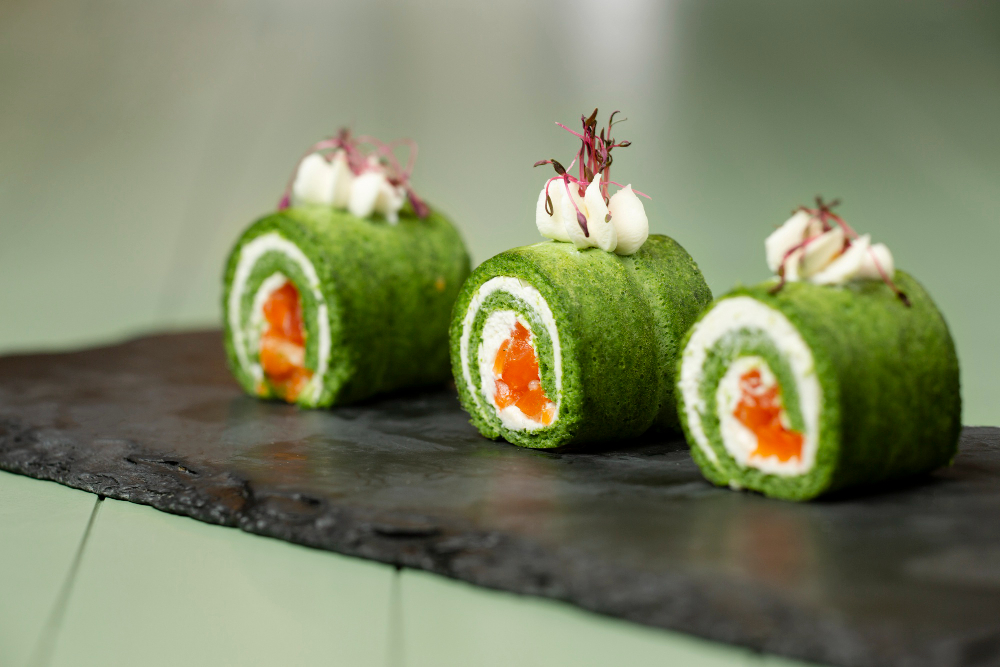
Indonesian cuisine is known for its remarkable variety, and its traditional desserts offer an especially interesting combination of colour, texture, aroma, and natural sweetness. Among these desserts, Klepon stands out because of its simple appearance and surprising centre. These small, round green rice cakes are soft and chewy on the outside, coated with freshly grated coconut, and filled with palm sugar that melts when the cakes are cooked. When bitten into, the sweet filling creates a warm burst of syrup that makes Klepon different from many other rice-based sweets.
Klepon is commonly associated with Indonesian traditional markets, local food stalls, family kitchens, and festive occasions. Its bright green colour traditionally comes from pandan or other natural colouring ingredients, while glutinous rice flour provides its characteristic chewy texture. The combination of coconut and palm sugar creates a flavour profile that is both familiar and distinctive, particularly for people who enjoy desserts that are not overwhelmingly sweet.
The appeal of Klepon lies in the contrast between its exterior and interior. The outside is soft, slightly elastic, and covered in fragrant coconut, while the centre contains melted palm sugar. This contrast has helped Klepon remain popular across generations. Although modern desserts continue to introduce new ingredients and presentation styles, traditional foods such as Klepon continue to represent the culinary identity of Indonesia.
What Is Klepon?
Klepon is a traditional Indonesian sweet made primarily from glutinous rice flour. The flour is combined with water to create a soft dough, which is then shaped into small balls. A piece of palm sugar is placed inside each ball before the dough is carefully sealed around it. The filled balls are boiled until they become cooked and begin to float. After cooking, they are rolled in freshly grated coconut before being served.
The basic preparation may appear straightforward, but the process requires attention because the palm sugar filling needs to remain completely enclosed within the dough. If the dough is not sealed properly, the sugar can escape during boiling. When prepared successfully, however, the result is a small rice cake with a liquid centre that releases its sweetness when the cake is bitten.
The green colour is one of Klepon’s most recognizable characteristics. Traditionally, pandan leaves or pandan extract can provide both colour and fragrance. Pandan is widely used in Southeast Asian cooking and contributes a subtle aroma that complements the sweetness of palm sugar and the richness of coconut.
Klepon is sometimes described in English as Indonesian green rice cakes or sweet rice balls. Although these descriptions help explain the dish to people unfamiliar with it, they do not completely capture the experience of eating it. Its chewy texture, coconut coating, and molten filling are central to its identity.
The Traditional Ingredients Behind Klepon
One of the most interesting aspects of Klepon is that its ingredients are relatively simple. Glutinous rice flour forms the foundation of the dessert. Unlike ordinary rice flour, glutinous rice flour produces a sticky and elastic texture when cooked. This gives Klepon its characteristic chewiness.
Palm sugar provides the centre. Depending on the regional ingredient available, different forms of palm sugar may be used. In Indonesia, gula aren and other palm-derived sugars are important traditional sweeteners. Their deeper caramel-like flavour distinguishes them from refined white sugar.
Pandan is another important ingredient because of its fragrance and natural green colour. The leaves are commonly used in Indonesian and broader Southeast Asian cuisine to flavour rice dishes, desserts, drinks, and other preparations. In Klepon, pandan contributes a gentle aroma rather than an overpowering flavour.
Freshly grated coconut completes the dessert. After the rice balls are cooked, they are coated with coconut, giving the surface a soft, slightly moist texture. Coconut also balances the sweetness of the palm sugar. The result is a dessert in which each ingredient has a clear role without requiring a complicated list of components.
Why Does Klepon Have a Surprise Centre?
The palm sugar centre is perhaps the most memorable feature of Klepon. Before cooking, small pieces of palm sugar are placed inside the dough. As the rice balls are boiled, the sugar heats up and begins to melt. The surrounding glutinous rice dough keeps the syrup enclosed.
This creates an interesting difference between the appearance of the dessert and the experience of eating it. From the outside, Klepon looks like a simple green ball covered in coconut. There is no obvious indication that it contains a sweet filling. Once the rice cake is bitten, however, the melted sugar can flow out from the centre.
The filling is also one reason why Klepon is traditionally eaten carefully. Freshly cooked pieces can contain very hot melted sugar. Allowing them to cool slightly before eating helps make the experience more comfortable while allowing the flavours to develop.
The surprise filling also gives Klepon a playful quality. It is a traditional dessert, but it creates the kind of small culinary discovery that can make a simple food memorable.
The Role of Pandan in Indonesian Cuisine
Pandan is closely associated with many Southeast Asian desserts and is particularly important in Indonesian cooking. Its long green leaves are valued for their fragrance and are often used to flavour rice, cakes, puddings, drinks, and sweets.
In Klepon, pandan helps create the dessert’s recognizable green appearance. More importantly, it contributes an aromatic quality that works well with palm sugar and coconut. The combination produces a flavour that is fragrant, earthy, creamy, and sweet without relying entirely on refined sugar.
The use of pandan also demonstrates a broader characteristic of traditional Indonesian cuisine: the use of locally familiar plants and ingredients to create flavour and colour. Before artificial food colours became common, natural ingredients such as pandan provided practical ways to make traditional foods visually distinctive.
Today, some modern versions of Klepon may use food colouring or pandan flavouring, while traditional preparations may rely more directly on pandan leaves or extract. The exact method can vary according to household, region, and availability.
A Dessert Connected to Indonesian Food Culture
Klepon is more than a recipe because it is part of Indonesia’s broader traditional food culture. It has long been associated with pasar tradisional, or traditional markets, where many varieties of local snacks and sweets are sold. These markets provide an important setting for traditional Indonesian foods, allowing recipes and flavours to remain part of everyday life.
Klepon is also commonly grouped with Indonesian jajanan pasar, a broad term used for traditional market snacks. Jajanan pasar includes many different sweet and savoury foods, often made using ingredients such as rice flour, coconut, palm sugar, banana, cassava, and other locally available products.
The popularity of Klepon within this food culture demonstrates how traditional desserts do not necessarily need complicated techniques or expensive ingredients to become culturally significant. Simple ingredients can produce foods that are closely connected with family traditions, community gatherings, markets, and celebrations.
Klepon and the Importance of Coconut
Coconut is one of the most important ingredients in many Indonesian cuisines, and its presence in Klepon illustrates how versatile the fruit can be. Fresh coconut is grated and used to coat the cooked rice balls, creating a soft and slightly chewy outer layer.
The coconut also provides a useful contrast to the palm sugar filling. Palm sugar brings concentrated sweetness, while coconut adds a mild, creamy, and nutty quality. The glutinous rice provides the neutral, chewy foundation that connects the two.
This combination of rice, coconut, and palm sugar appears in many traditional Southeast Asian desserts. The ingredients are widely available across tropical regions and have historically played important roles in local food traditions. Klepon is therefore part of a much larger culinary pattern in which staple agricultural ingredients become the foundation of distinctive sweets.
How Klepon Is Traditionally Prepared
The preparation of Klepon begins by creating a dough from glutinous rice flour and water. Pandan may be incorporated to provide its characteristic colour and aroma. The dough needs to be soft enough to shape but firm enough to hold the palm sugar filling.
Small portions of dough are then flattened and filled with pieces of palm sugar. The dough is carefully wrapped around the filling and rolled into small balls. This stage requires particular attention because even a small opening can allow the melted sugar to escape during cooking.
The filled balls are placed into boiling water. As they cook, the glutinous rice dough changes texture and becomes soft and chewy. The balls generally rise toward the surface when they are cooked, although cooking time and technique can vary.
Once removed from the water, the rice balls are drained and coated with freshly grated coconut. The finished Klepon is then ready to serve. The entire process demonstrates how a relatively small number of ingredients can be transformed through shaping, boiling, and careful filling into a distinctive traditional dessert.
The Texture That Makes Klepon Special
Texture is one of the most important elements of Klepon. Glutinous rice flour gives the exterior a soft and elastic quality that is different from ordinary cakes or biscuits. It is not crisp or fluffy. Instead, it has a satisfying chewiness that remains central to the dessert’s identity.
The coconut adds another textural layer. Freshly grated coconut creates a slightly fibrous and moist coating that contrasts with the smooth surface of the rice cake. Inside, the melted palm sugar introduces an entirely different sensation.
This combination of textures is one reason Klepon can feel more interesting than its simple appearance suggests. A single bite can include soft rice dough, fresh coconut, and liquid palm sugar. The dessert therefore delivers several sensations at once without requiring elaborate decoration.
Regional and Modern Variations
Traditional foods naturally change as they move between regions, families, and generations. Klepon is no exception. While the classic version is associated with green glutinous rice balls filled with palm sugar and coated in coconut, variations can differ in colour, flavour, size, and presentation.
Some versions may use different natural colours or flavours, while modern cooks may experiment with fillings that go beyond traditional palm sugar. Contemporary dessert shops can also present Klepon in more modern forms, combining its familiar flavours with cakes, puddings, ice cream, or other desserts.
These adaptations demonstrate how traditional foods can remain relevant without remaining completely unchanged. Modern versions can introduce Klepon to audiences who may never encounter it in a traditional market, while the original preparation continues to preserve the dessert’s culinary identity.
Why Klepon Has International Appeal
Klepon has characteristics that make it particularly attractive to people interested in global food culture. Its appearance immediately creates curiosity, while its unusual filling provides a memorable eating experience. The use of pandan, coconut, and palm sugar also gives it a flavour profile that is different from many Western-style desserts.
Social media has further increased interest in visually distinctive foods. The contrast between green rice balls, white coconut, and dark palm sugar makes Klepon naturally suitable for food photography and short-form video. The moment when the filling is revealed can also make the dessert especially appealing in visual food content.
However, Klepon’s international appeal is not only about appearance. Its ingredients introduce people to important elements of Indonesian culinary traditions. Trying the dessert can become a starting point for discovering other Indonesian foods and learning more about regional cooking practices.
Klepon as an Example of Simple Traditional Food
In an era when desserts can involve complex equipment, elaborate decoration, and long ingredient lists, Klepon offers a different approach. Its identity depends on a small number of familiar ingredients and a traditional preparation method.
This simplicity does not make the dessert uninteresting. Instead, it demonstrates how food traditions often develop around the ingredients that communities have access to. Rice, coconut, palm sugar, and pandan are transformed into something distinctive through technique rather than excessive complexity.
Klepon also demonstrates the importance of balance. Palm sugar supplies sweetness, coconut adds richness, pandan contributes aroma, and glutinous rice flour provides structure and texture. None of these elements needs to dominate completely for the dessert to work.
The Cultural Value of Traditional Desserts
Traditional desserts can provide insight into a country’s culinary history in ways that modern restaurant dishes sometimes cannot. They often reflect agricultural ingredients, local cooking techniques, family traditions, celebrations, and regional tastes.
Klepon represents this connection particularly well. Its ingredients are strongly associated with tropical Southeast Asian food traditions, while its preparation reflects techniques that can be carried out in an ordinary household kitchen.
Preserving foods such as Klepon therefore involves more than preserving a recipe. It also means maintaining knowledge about ingredients, preparation methods, serving traditions, and the cultural settings in which the food is enjoyed.
As younger generations encounter more international foods through restaurants and digital platforms, traditional foods can face competition for attention. At the same time, digital media can provide new opportunities for traditional dishes to reach wider audiences. Klepon’s growing visibility outside Indonesia demonstrates how traditional food can travel while retaining its distinctive identity.
Experiencing Klepon Today
For someone discovering Klepon for the first time, the best part of the experience is often the contrast between expectation and reality. The small green exterior may initially suggest a simple rice-based snack, but the first bite reveals melted palm sugar inside.
The dessert is particularly enjoyable when served fresh, when the coconut remains moist and the rice cake has its characteristic softness. Because the filling can become hot during preparation, allowing the pieces to cool slightly before eating is important.
Klepon can be enjoyed as a snack, dessert, or part of a larger selection of traditional Indonesian foods. It can also be paired with tea or other beverages, especially when the drink provides a mild contrast to the sweetness of the palm sugar.
Why Klepon Deserves Global Attention
Klepon demonstrates that memorable food does not always depend on elaborate presentation or expensive ingredients. Its appeal comes from the relationship between texture, aroma, colour, and surprise. The soft green exterior, fresh coconut coating, and melted palm sugar centre create a combination that is easy to recognize and difficult to forget.
At the same time, Klepon introduces international audiences to ingredients that are central to Indonesian and Southeast Asian culinary traditions. Pandan, palm sugar, coconut, and glutinous rice each have long-standing roles in regional cuisine, and Klepon brings them together in a compact form.
Its continued presence in Indonesian food culture also shows how traditional snacks can survive alongside modern desserts. A food does not necessarily need to become more complicated to remain relevant. Sometimes its strength comes from preserving the qualities that made it special in the first place.
Conclusion
Klepon is a small Indonesian dessert with a surprisingly rich culinary story. Made from glutinous rice flour, filled with palm sugar, coloured and scented with pandan, and coated with freshly grated coconut, it brings together some of the most recognizable ingredients of Southeast Asian sweets.
Its most memorable characteristic is the hidden centre. What appears to be a simple green rice ball contains a warm, sweet filling that transforms the experience of eating it. That element of surprise, combined with its chewy texture and fragrant coconut coating, gives Klepon an identity that has allowed it to remain popular across generations.
Beyond its taste, Klepon represents the value of traditional food culture. It shows how everyday ingredients can become meaningful through technique, tradition, and community. As interest in global cuisine continues to grow, foods such as Klepon provide an opportunity to discover Indonesia through its flavours, ingredients, markets, and culinary history.
Whether enjoyed in a traditional Indonesian market, prepared at home, or introduced through modern food culture, Klepon remains a reminder that some of the most memorable culinary experiences can come in the smallest packages. Its green exterior may look simple, but inside is a sweet centre that captures the creativity and character of Indonesian traditional desserts.
Online Internship with Certificate
You may be interested
Kachnar Kali: The Indian Flower Bud That Becomes a Vegetable
Anshika Jain - October 15, 2026In many parts of the world, flowers are admired for their beauty, fragrance and ornamental value. In India, however, certain flowers have another purpose: they become ingredients…

Omija-cha: Korea’s Five-Flavour Tea Made From a Single Berry
Anshika Jain - October 15, 2026Imagine a ruby-red drink that tastes sweet, sour, bitter, salty and pungent, all from a single fruit. This unusual combination is the defining characteristic of Omija-cha, a…
Bir Pletok: Indonesia’s Alcohol-Free ‘Beer’ Made From Ginger and Spices
Anshika Jain - October 15, 2026The word “beer” usually brings to mind a fermented beverage made from grains, a foamy glass served in a pub, or a drink associated with social gatherings.…
Most from this category
Ragi Ambli: Fermented Millet Drink That Predates Today’s Beverage Trend
Anshika Jain - October 15, 2026
Gudok: Tripura’s Fermented Vegetable Dish That Deserves a Global Food Revival
Anshika Jain - October 15, 2026
Mahua: The Forest Flower That Became a Traditional Food and Beverage Ingredient
Anshika Jain - October 14, 2026Ragi Ambli: Fermented Millet Drink That Predates Today’s Beverage Trend
Anshika Jain - October 15, 2026Gudok: Tripura’s Fermented Vegetable Dish That Deserves a Global Food Revival
Anshika Jain - October 15, 2026
Kachnar Kali: The Indian Flower Bud That Becomes a Vegetable
October 15, 2026



Leave a Comment