

Kuku Sabzi — Iran’s Fragrant Herb Frittata and a Celebration of Persian Tradition

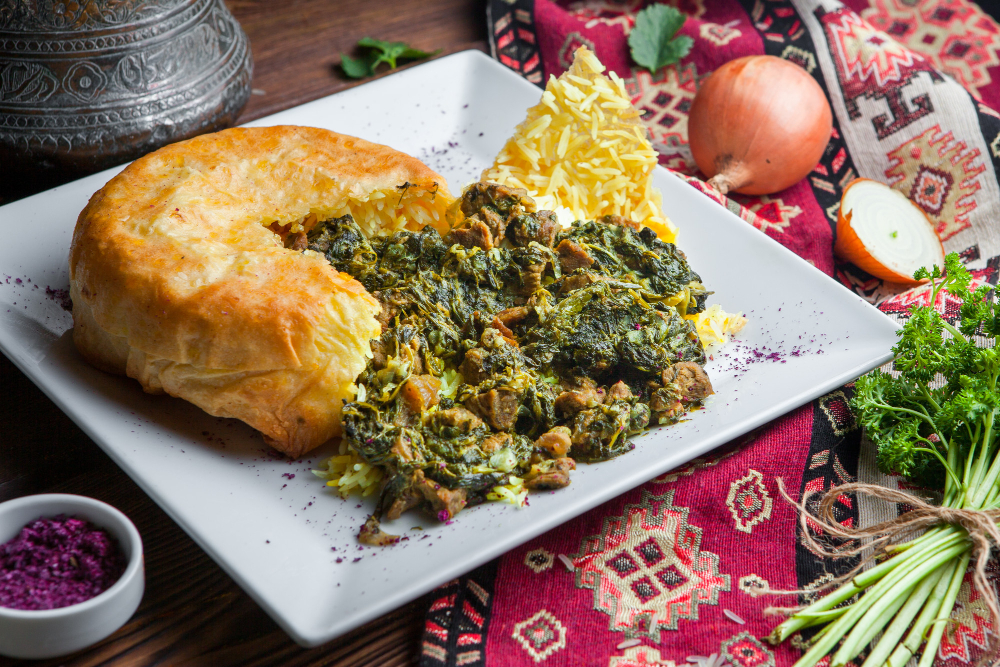
Iranian cuisine is celebrated for its careful balance of herbs, spices, fruits, nuts and aromatic ingredients. Rather than relying exclusively on intense seasoning, many traditional Persian dishes develop their character through the freshness of their ingredients and the way they are combined. One distinctive example is Kuku Sabzi, a herb-rich Iranian dish prepared primarily with parsley, coriander, dill and other leafy greens, bound together with eggs and cooked until the mixture becomes firm, fragrant and deeply green.
Kuku Sabzi is often compared with a frittata or a thick herb omelette because eggs help hold the ingredients together. However, this comparison only partly captures its identity. In many preparations, herbs form the overwhelming majority of the mixture, while eggs act mainly as a binding ingredient. The result is a dish that tastes fresh, earthy and aromatic, with a texture that can range from tender and moist inside to crisp and golden around the edges.
The name itself offers a useful introduction to the dish. In Persian cooking, kuku refers to a family of egg-based preparations, while sabzi means greens or herbs. Together, the words describe a preparation in which leafy ingredients are central rather than merely decorative. Depending on the household and regional tradition, the recipe may include walnuts, barberries, fenugreek, green onions or other herbs that contribute additional flavour and texture.
Kuku Sabzi occupies an important place in Persian home cooking and is especially associated with Nowruz, the Persian New Year. Its vivid green colour makes it a natural fit for a celebration that symbolises renewal, spring and new beginnings. Yet the dish is not restricted to festive occasions. It can be served as a light meal, a side dish, a picnic food or part of a larger spread of traditional Iranian dishes.
The Cultural Significance of Kuku Sabzi in Iran
A familiar dish with a festive identity
Food plays a meaningful role in Iranian celebrations, and Nowruz is particularly associated with symbolic ingredients, seasonal freshness and family gatherings. Kuku Sabzi is frequently served during this period because its green colour evokes spring and the return of plant life after winter. Its presence on a festive table is therefore both culinary and symbolic.
Nowruz celebrations vary among families and communities, but food remains an important way of expressing hospitality and continuity. Preparing a dish such as Kuku Sabzi can connect younger generations with the cooking traditions of parents and grandparents. The process of washing, sorting, chopping and combining herbs often reflects a style of home cooking in which preparation is as important as the final dish.
The association with spring does not mean that Kuku Sabzi can only be made with herbs harvested at that time of year. Modern kitchens can prepare it whenever fresh greens are available. Nevertheless, its seasonal symbolism remains an important part of its cultural identity, particularly during the Iranian New Year.
Home cooking and regional variation
Like many traditional dishes, Kuku Sabzi does not have one universally fixed recipe. Iranian households adjust the balance of herbs according to availability, taste and family custom. Parsley and coriander may provide the main herbal foundation, while dill contributes a distinctive fragrance. Chives, spring onions or other leafy herbs can add sharpness and complexity.
Some cooks incorporate walnuts for richness and texture, while barberries introduce small bursts of tartness. Other versions place greater emphasis on the herbs themselves, allowing their natural aroma to dominate. The proportion of eggs also varies. A mixture containing more herbs produces a denser, greener result, whereas a higher egg proportion can make the dish lighter and more omelette-like.
These variations are part of the dish’s appeal rather than evidence that one version is necessarily more authentic than another. Kuku Sabzi belongs to a living culinary tradition, and its character is shaped by the ingredients available and the preferences of the people preparing it.
The Ingredients That Define Kuku Sabzi
Parsley: The fresh and earthy foundation
Parsley is one of the most important ingredients in many versions of Kuku Sabzi. Its clean, green flavour provides a foundation for the other herbs without overpowering them. Finely chopped parsley also contributes to the dish’s dense texture, helping create a cohesive mixture that holds together during cooking.
Flat-leaf parsley is often preferred for its pronounced flavour, although curly parsley can also be used. The leaves should be fresh, clean and free from excess moisture. Once chopped, parsley blends readily with the eggs and other greens, producing the characteristic green appearance associated with the dish.
Parsley contributes more than flavour. It contains vitamin K and provides smaller amounts of vitamin C, folate and other nutrients. The quantity of each nutrient in a serving depends on the recipe, cooking method and portion size, but the herb-rich composition gives Kuku Sabzi a nutritional profile distinct from that of a conventional egg-heavy omelette.
Coriander: A citrus-like herbal note
Fresh coriander leaves, also known as cilantro, provide a brighter, slightly citrus-like flavour. Their aromatic quality complements parsley and prevents the mixture from tasting uniformly earthy. In some preparations, coriander is used generously, while in others it forms a smaller part of the herbal blend.
The relationship between parsley and coriander is important because the two herbs share a green freshness but have different flavour profiles. Parsley tends to be mild and grassy, whereas coriander can be more distinctive and fragrant. Their combination gives Kuku Sabzi a layered flavour that remains recognisable even after cooking.
Coriander also contains beneficial plant compounds and contributes vitamins and minerals. However, its main culinary role is to provide freshness and complexity. Because the herbs are finely chopped and distributed throughout the mixture, their flavours become integrated rather than appearing as separate elements.
Dill: Fragrance and depth
Dill introduces a delicate, slightly sweet aroma that distinguishes Kuku Sabzi from many other egg-based dishes. Its flavour is particularly noticeable when combined with parsley and coriander because it adds a softer, more distinctive herbal note.
Fresh dill is commonly used, although dried dill may appear in some adaptations. Fresh leaves provide a more delicate texture and a lively aroma, while dried dill has a more concentrated flavour and should be used with care. The balance depends on the cook’s preference and the availability of fresh ingredients.
Dill also works well with eggs, making it a natural component of the mixture. Its fragrance can remain noticeable even after the dish has been cooked, contributing to the impression that Kuku Sabzi is both rich and fresh.
Additional herbs and supporting ingredients
Depending on the recipe, Kuku Sabzi may contain chives, spring onion greens, fenugreek leaves or other herbs. These additions can introduce mild sharpness, bitterness or a deeper earthy character. Fenugreek, for example, has a distinctive aroma, so it is usually best used in moderation to avoid overwhelming the other greens.
Eggs bind the chopped herbs and allow the mixture to set during cooking. Salt and black pepper provide basic seasoning, while some recipes include turmeric or other mild spices. Walnuts can add richness and a pleasant crunch, while dried barberries contribute a tart contrast to the herbal flavours.
These additional ingredients are not compulsory in every version. The central identity of Kuku Sabzi comes from the abundance of greens and the way they are combined with enough egg to create a cohesive dish. Its flavour should remain herb-forward rather than being dominated by spices, cheese or other heavy additions.
How Kuku Sabzi Is Prepared
Preparing the herbs correctly
The quality of Kuku Sabzi begins with the preparation of its greens. Fresh herbs should be washed carefully to remove soil and other residue, then dried thoroughly before chopping. Excess water can make the mixture too wet, interfere with browning and create a softer texture than intended.
The herbs are usually chopped finely so that they distribute evenly through the eggs. Very large pieces can make the mixture difficult to shape and may cause the finished dish to break apart when sliced. However, the herbs should not be processed into a paste. A little texture helps preserve the character of the ingredients and prevents the mixture from becoming overly compact.
The balance of greens matters as much as their preparation. A generous quantity of herbs produces the dense, dark-green appearance associated with Kuku Sabzi. The eggs should bind the ingredients without turning the dish into an ordinary omelette with a small amount of greenery.
Combining the mixture
Once the herbs are chopped, they are combined with beaten eggs and seasoning. The mixture should be cohesive enough to hold together but should still show the texture of the chopped leaves. Walnuts or barberries can be folded in at this stage when they are part of the recipe.
The amount of egg depends on the volume of herbs and the desired consistency. Too little egg may make the mixture fragile, while too much can dilute the herbal flavour and create a more conventional egg dish. The ideal balance produces a sliceable preparation in which greens remain the main ingredient.
Some cooks allow the mixture to rest briefly before cooking, giving the ingredients time to settle together. Others cook it immediately. Both approaches can work, provided the mixture is not excessively watery and the pan is prepared correctly.
Cooking for a golden exterior and tender centre
Kuku Sabzi can be cooked in a frying pan or baked in an oven. In the stovetop method, the mixture is spread into a lightly oiled pan and cooked over moderate heat until the base sets and develops a golden crust. The heat must be controlled carefully because the outside can brown before the centre has fully cooked.
The dish can then be turned to cook the other side, or covered to help the centre set. A sufficiently wide pan can make turning easier, while a smaller, deeper pan creates a thicker preparation that may need more time to cook evenly.
Baking offers another approach. The mixture is placed in an oven-safe dish and cooked until firm in the centre, with a lightly browned surface. This method can be convenient when preparing a larger quantity for a family meal or celebration.
Whichever method is used, the finished dish should be fully set while retaining enough moisture to remain pleasant to eat. Excessive heat can produce a dry interior and a bitter, over-browned exterior, while insufficient cooking can leave the centre too soft to slice cleanly.
What Makes Kuku Sabzi Different from Other Herb-Based Dishes?
More than an ordinary omelette
Kuku Sabzi may resemble an omelette or frittata, but its ingredient balance creates a different eating experience. In a typical omelette, eggs form the main body of the dish and herbs are added for seasoning. In Kuku Sabzi, the herbs are the defining ingredient, and eggs provide structure.
This difference influences its texture, flavour and appearance. A well-prepared Kuku Sabzi has a dense, leafy interior with a deep-green colour. Its flavour is aromatic and earthy, with the freshness of the herbs remaining prominent even after cooking. Depending on the method, the exterior may develop a delicate crust that contrasts with the softer centre.
The dish is also different from herb sauces and cooked vegetable mixtures because the ingredients are combined into a firm preparation that can be cut into wedges or squares. This makes it practical for serving at gatherings, packing for a picnic or presenting as part of a larger meal.
The importance of balance
The success of Kuku Sabzi depends on balancing several characteristics. The herbs must provide enough moisture and flavour without making the mixture soggy. The eggs must hold everything together without overwhelming the greens. The seasoning should enhance the herbs rather than conceal their natural aromas.
Texture also plays a major role. Finely chopped greens create a compact slice, while a slightly coarser chop gives the dish a more rustic appearance. Walnuts add crunch, and barberries contribute a tart contrast that can make the herbal flavour feel more pronounced.
This balance explains why Kuku Sabzi can taste different from one household to another even when the basic ingredients remain similar. Small changes in herb proportions, chopping technique, cooking temperature and thickness can significantly influence the final result.
Nutritional Profile and Potential Health Benefits
A herb-rich source of nutrients
Kuku Sabzi combines leafy herbs with eggs, creating a dish that can provide protein, vitamins, minerals and plant compounds. Eggs supply complete protein and nutrients such as vitamin B12 and choline, while the herbs contribute vitamin K, folate and other micronutrients. Parsley and coriander also contain plant compounds that contribute to their characteristic colours and aromas.
Because herbs make up a substantial proportion of the recipe, Kuku Sabzi can offer a different nutritional balance from an egg dish containing very few vegetables. Its nutritional value nevertheless depends on portion size, the number of eggs used, the amount of cooking oil and any additional ingredients.
Walnuts can contribute unsaturated fats and minerals, while barberries provide tartness and additional plant compounds. These additions can increase the dish’s richness and complexity, although they also change its overall nutritional composition.
A practical option for varied meals
Kuku Sabzi can fit into a varied diet because it combines vegetables and protein in one preparation. It may be served with whole-grain bread, yoghurt, fresh vegetables or other foods to create a more complete meal. The combination can be adjusted to suit different appetites and meal occasions.
The cooking method also influences its overall energy content. A preparation made with a moderate amount of oil may be lighter than one cooked in a generous quantity of fat. Baking can make oil measurement easier, although the final nutritional result still depends on the ingredients and portion size.
Kuku Sabzi should not be treated as a cure for any health condition or as a substitute for a balanced diet. Its main nutritional advantage is the combination of fresh herbs and eggs, which can contribute useful nutrients as part of a varied eating pattern.
How Kuku Sabzi Is Traditionally Served
Kuku Sabzi can be served warm, at room temperature or chilled, depending on the occasion and household preference. It is often cut into wedges or squares, making it easy to share. Its firm texture also means that it can be prepared ahead of a meal without requiring elaborate last-minute presentation.
At a Persian table, it may appear alongside flatbread, yoghurt, pickled vegetables, fresh herbs and other dishes. The freshness of these accompaniments complements the rich, concentrated herbal flavour of the kuku. A squeeze of lemon may also be used according to personal preference, adding brightness to the dish.
During Nowruz, Kuku Sabzi can form part of a festive meal that brings together family members and reflects the seasonal symbolism of green ingredients. Outside celebrations, it works equally well as a light lunch, a breakfast dish or a simple dinner accompanied by salad and bread.
Its adaptability is one reason it remains popular in home cooking. It can be prepared in advance, divided into individual portions and served without complicated garnishes. The visual appeal comes primarily from the green herbs and the golden surface created during cooking.
Modern Variations and Contemporary Appeal
Although Kuku Sabzi has a strong traditional identity, it can be adapted to modern kitchens. Oven-baked versions are convenient for preparing larger quantities, while individual portions can be made in small baking dishes. Some cooks adjust the herbal mixture according to seasonal availability or personal taste.
A vegetarian version of Kuku Sabzi is naturally possible because its traditional preparation is centred on herbs and eggs rather than meat. For those who avoid eggs, however, replacing them requires a different binding approach, and the resulting dish will not have exactly the same texture as the traditional version.
Modern presentations may pair Kuku Sabzi with grain salads, roasted vegetables or lighter yoghurt-based accompaniments. These combinations can make it suitable for contemporary brunches and shared meals while preserving its Persian character. However, excessive additions can obscure the herbal balance that makes the dish distinctive.
The growing interest in regional food traditions has also encouraged greater appreciation for dishes that rely on fresh produce and straightforward cooking techniques. Kuku Sabzi fits this interest without needing to be reimagined as a completely new recipe. Its enduring appeal comes from the way a few familiar ingredients are transformed through proportion, preparation and cultural meaning.
Conclusion: A Persian Dish Rooted in Freshness and Tradition
Kuku Sabzi is much more than an Iranian herb omelette. It is a distinctive preparation in which parsley, coriander, dill and other greens form the heart of the dish, while eggs create the structure that brings the ingredients together. Optional additions such as walnuts and barberries introduce richness and contrast, allowing different households to develop their own versions.
Its association with Nowruz gives it a symbolic connection to spring, renewal and family gatherings, while its straightforward preparation makes it suitable for everyday meals. The dish also demonstrates how traditional cooking can produce satisfying food through careful ingredient balance rather than elaborate techniques or heavy seasoning.
Nutritionally, Kuku Sabzi combines the protein and other nutrients supplied by eggs with the vitamins, minerals and plant compounds present in leafy herbs. Its overall nutritional profile depends on the recipe and cooking method, but the emphasis on fresh greens remains central to its identity.
Ultimately, the appeal of Kuku Sabzi lies in its simplicity, versatility and cultural significance. Its vivid colour, fragrant flavour and firm yet tender texture make it a memorable part of Persian cuisine. Whether served during a New Year celebration or prepared for an ordinary family meal, it reflects a culinary tradition in which fresh ingredients, seasonal symbolism and the pleasure of sharing food come together.
Online Internship with Certificate
You may be interested

Ghapama: Armenia’s Festive Stuffed Pumpkin with Rice, Dried Fruits, and Nuts
Anshika Jain - October 29, 2026Armenian cuisine is known for its rich culinary heritage, seasonal ingredients, and dishes that bring families together around the table. Among its most distinctive festive preparations is…

Sopa Paraguaya: Paraguay’s Traditional Savoury Cornmeal Cake
Anshika Jain - October 29, 2026Paraguayan cuisine reflects a rich combination of Indigenous Guaraní food traditions and influences introduced during the colonial period. Corn, cassava, cheese, milk, and onions feature prominently in…
Kasespatzle: Cheese Noodles of Austria and Southern Germany
Anshika Jain - October 29, 2026European comfort food often finds its greatest appeal in the thoughtful combination of simple ingredients. Across Austria and southern Germany, few dishes illustrate this principle as effectively…
Most from this category
Kroppkakor: Sweden’s Traditional Potato Dumplings with a Vegetarian Twist
Anshika Jain - October 29, 2026
Nachni Ambil: Maharashtra’s Traditional Finger Millet Drink and Porridge
Anshika Jain - October 28, 2026Kroppkakor: Sweden’s Traditional Potato Dumplings with a Vegetarian Twist
Anshika Jain - October 29, 2026Talkkuna: The Traditional Roasted-Grain Flour of Finland and Estonia
Anshika Jain - October 28, 2026

Sopa Paraguaya: Paraguay’s Traditional Savoury Cornmeal Cake
October 29, 2026
Kasespatzle: Cheese Noodles of Austria and Southern Germany
October 29, 2026

Leave a Comment