

Revani: Turkey’s Syrup-Soaked Semolina Cake

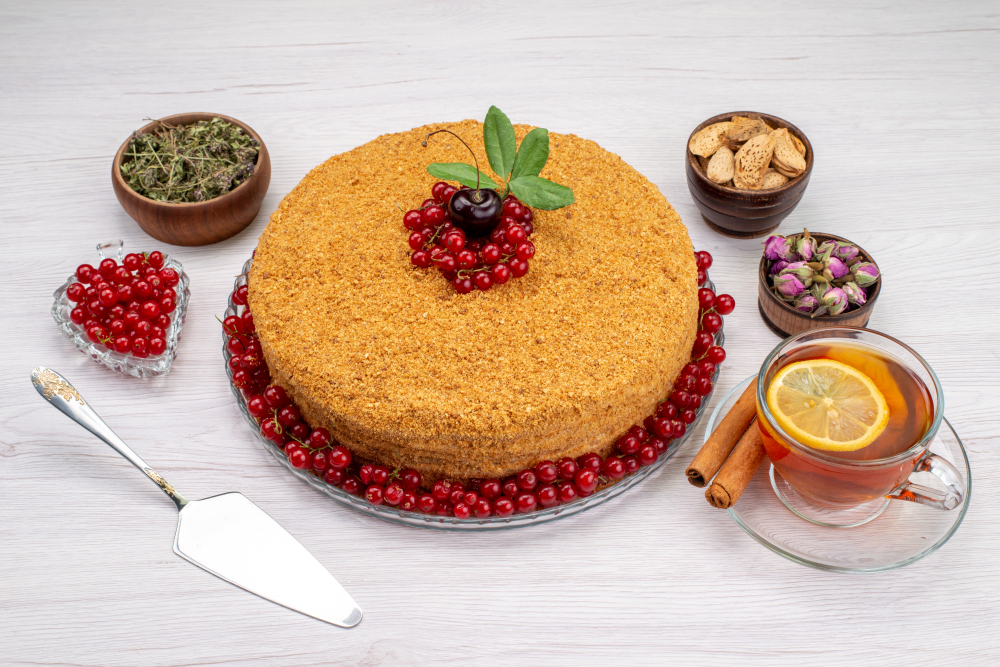
Turkish cuisine is celebrated for its remarkable variety of breads, savoury dishes, pastries, desserts, and sweets that reflect centuries of culinary exchange. Among its traditional desserts, Revani holds a distinctive place. It is a soft, golden semolina cake soaked generously with sweet syrup, creating a dessert that combines a light crumb with a moist, rich texture. Often flavoured with lemon or orange and sometimes decorated with pistachios or coconut, Revani represents a style of dessert in which simple ingredients are transformed through careful preparation into something deeply satisfying.
Revani is particularly interesting because it sits between the worlds of cake and syrup-based pastry. Unlike a conventional sponge cake that is usually served relatively dry, Revani is deliberately soaked after baking. The syrup penetrates the cake, giving it a moist texture and a characteristic sweetness. Semolina provides a slightly grainy structure that distinguishes Revani from flour-based cakes, while citrus can add freshness and balance to the sweetness.
The dessert is strongly associated with Turkish culinary traditions, although versions of semolina-based syrup desserts can be found across the wider region influenced by Ottoman cuisine. Different countries and communities have developed their own interpretations, ingredients, names, and preparation methods. In Turkey, however, Revani remains a familiar traditional dessert that continues to appear in homes, bakeries, restaurants, and festive settings.
What Is Revani?
Revani is a traditional Turkish semolina cake that is baked until golden and then soaked with a sweet syrup. The basic preparation commonly combines semolina, flour, eggs, sugar, yogurt or another dairy ingredient, and leavening agents. After baking, a syrup made primarily from sugar and water is poured over the warm cake, often with lemon juice or citrus flavouring.
The interaction between the cake and syrup is central to Revani’s identity. The cake itself provides structure and a mildly nutty grain character from the semolina, while the syrup introduces moisture and sweetness. When prepared correctly, the result should not simply taste like a dry cake covered in sugar. Instead, the syrup becomes integrated into the crumb, creating a soft and moist texture while allowing the cake to retain enough structure to be sliced and served.
Revani can vary considerably depending on the recipe. Some versions are relatively light and airy, while others are denser and more intensely soaked. The amount of semolina, the proportion of flour, the type of dairy used, and the concentration of the syrup can all influence the final result.
The Importance of Semolina
Semolina is one of the defining ingredients in Revani. Produced from durum wheat, semolina has a distinctive texture and flavour that differs from ordinary wheat flour. Its inclusion gives the cake a slightly coarse but pleasant crumb and contributes to its characteristic golden appearance.
When combined with other ingredients and baked, semolina develops a subtle toasted flavour. This makes Revani different from a standard sponge cake, where flour generally provides a smoother and finer texture.
Semolina also works particularly well with syrup-based desserts. Its structure allows the cake to absorb moisture while maintaining enough firmness to avoid completely collapsing. This quality has made semolina an important ingredient in several traditional sweets across the Mediterranean, Middle East, and regions historically connected through Ottoman culinary traditions.
The use of semolina also demonstrates how traditional desserts often depend on ingredients that were practical, accessible, and adaptable. Rather than relying on elaborate ingredients, Revani builds its character from grains, eggs, dairy, sugar, and citrus.
The History and Ottoman Connection of Revani
Revani is generally associated with Turkish and Ottoman culinary traditions, although its precise historical development is difficult to separate from the broader movement of foods across the Ottoman world. The Ottoman Empire connected large regions of Europe, Asia, and the Middle East for centuries, creating extensive cultural and culinary exchange.
Desserts made with grains, syrups, nuts, and aromatic ingredients became an important part of this culinary environment. Similar semolina-based syrup desserts developed across different communities, with variations emerging according to local ingredients and cooking traditions.
The name Revani is sometimes connected to historical references from the Ottoman period, and several stories have been told about how the dessert acquired its name. However, the exact origins and naming history can vary across sources and culinary traditions.
What is clearer is the dessert’s long-standing place within Turkish food culture. Revani became part of the broader tradition of syrup-soaked sweets that includes many celebrated desserts from the region.
Its history therefore cannot be understood simply as the story of one recipe. It is also part of a much larger culinary history involving grains, sugar, citrus, dairy, nuts, and techniques that travelled across regions and generations.
How Revani Is Traditionally Prepared
The preparation of Revani begins with creating the cake batter. Eggs and sugar are generally combined until sufficiently blended or aerated, depending on the recipe. Yogurt or another dairy ingredient may then be incorporated, followed by semolina and flour.
Leavening agents help create the cake’s structure, while flavourings such as lemon zest or vanilla may contribute additional aroma. Some recipes use orange zest or other citrus ingredients to give the cake a brighter character.
The batter is transferred into a baking dish and cooked until the surface develops a golden colour and the centre is properly set. The cake must be baked carefully because its final texture depends on the relationship between the crumb and the syrup.
The syrup is generally prepared separately. Sugar and water are heated together until the sugar dissolves and the liquid reaches the desired consistency. Lemon juice is often added toward the end of preparation, providing acidity that helps balance the sweetness.
Once the cake has been baked, it is cut into portions or marked for slicing. The syrup is then poured over the cake so that it can gradually penetrate the crumb.
This final stage is what transforms the baked semolina cake into Revani.
The Art of Syrup Soaking
The syrup is arguably the most important element separating Revani from an ordinary semolina cake. The amount, temperature, concentration, and timing of the syrup can significantly affect the finished dessert.
If too little syrup is used, the cake may remain dry and lack the characteristic moistness expected from Revani. If too much syrup is added too quickly, the dessert may become excessively wet or lose some of its structural character.
Traditional preparation therefore requires an understanding of how the cake absorbs liquid. The syrup gradually moves through the crumb, carrying sweetness and moisture into the interior.
The balance between cake and syrup is important because Revani should remain identifiable as a cake rather than becoming simply a sweet, saturated mass. A successful preparation maintains a pleasant contrast between the soft crumb and the syrup’s rich sweetness.
This balance is one reason traditional syrup desserts require more attention than their relatively simple ingredient lists might suggest.
The Role of Citrus Flavours
Citrus is commonly associated with Revani and plays an important role in balancing its sweetness. Lemon is frequently used in the syrup, while lemon or orange zest can be incorporated into the cake itself.
The acidity and aromatic qualities of citrus provide contrast to the sugar. Without that balance, a syrup-soaked dessert can easily become overwhelmingly sweet.
Lemon creates a bright, fresh character, while orange can provide a warmer and more fragrant profile. The choice of citrus can therefore subtly change the personality of the dessert.
This combination of sweetness and acidity reflects a broader principle found throughout traditional dessert-making. Rich and sweet ingredients often become more enjoyable when paired with contrasting flavours.
What Does Revani Taste Like?
Revani has a distinctive taste that combines the gentle graininess of semolina with the sweetness of syrup and the fragrance of citrus. Its texture is usually soft and moist, but it retains enough structure to be sliced neatly.
The surface may be slightly firmer than the interior, particularly when the cake has developed a golden crust during baking. Beneath that surface, the syrup creates a moist crumb that can feel almost tender and pudding-like without completely losing the qualities of a cake.
The flavour is generally sweet, but the intensity can vary according to the amount and concentration of syrup used. Citrus helps prevent the sweetness from becoming one-dimensional, while semolina contributes a subtle toasted grain character.
When topped with pistachios, coconut, or other garnishes, additional flavours and textures can be introduced. These additions can make the dessert more visually appealing while also providing contrast to its soft crumb.
Revani and Turkish Dessert Culture
Revani is part of a broader Turkish dessert culture in which sweets often play an important role in hospitality, celebration, and social occasions.
Turkish cuisine includes numerous desserts based on dough, grains, nuts, dairy, fruit, and syrup. Some are associated with particular festivals or religious occasions, while others are simply enjoyed as part of everyday meals.
Revani has the flexibility to occupy both spaces. It can be prepared at home as a relatively accessible dessert or served in restaurants and pastry shops as part of a larger selection of traditional sweets.
Its rectangular or diamond-shaped presentation also makes it suitable for sharing. A single baking dish can produce numerous portions, making Revani practical for family gatherings and occasions where food is served to several people.
This connection between practicality and hospitality is an important part of its continuing appeal.
Revani in Turkish Homes and Bakeries
One of the strengths of Revani is its accessibility. Unlike some elaborate pastries that require specialised techniques, Revani can be prepared using relatively ordinary kitchen equipment.
Its ingredients are also familiar and generally easy to work with. Semolina, flour, eggs, sugar, yogurt, and citrus form the foundation of many versions.
In Turkish homes, recipes can vary between families. One household may prefer a softer cake, another may use more semolina, while another may emphasise lemon or orange flavour.
Commercial bakeries and restaurants can similarly develop their own interpretations. Some may serve smaller individual portions, while others may prepare large trays for sharing.
This flexibility allows Revani to remain recognisable while accommodating personal and regional preferences.
Common Garnishes and Presentation
Revani is often presented simply, allowing its golden colour and moist texture to remain the focus. However, garnishes can add both visual appeal and additional flavour.
Crushed pistachios are a particularly natural accompaniment because their colour contrasts beautifully with the golden cake. Their slightly nutty flavour also complements the roasted character of semolina.
Coconut is another possible garnish, providing a softer sweetness and a distinctive texture. Some versions may use additional citrus zest or other decorative ingredients.
The cake can be cut into squares, rectangles, diamonds, or other portions depending on the occasion and presentation style.
Although decoration can make Revani more visually elaborate, its traditional appeal does not depend on excessive ornamentation. The cake’s identity comes primarily from its semolina structure and syrup-soaked texture.
Revani and Similar Regional Desserts
Revani belongs to a wider family of syrup-soaked semolina and grain-based desserts found across regions historically connected through trade, migration, and empire.
Similar desserts exist under different names and with different proportions of ingredients. In some culinary traditions, semolina cakes are heavily soaked with syrup, while others use different flavourings, nuts, dairy ingredients, or preparation methods.
The existence of these related desserts illustrates how food traditions rarely develop in complete isolation. Recipes travel with people, ingredients, merchants, cooks, and cultural exchange. Over generations, communities adapt them according to local tastes.
Revani therefore provides an interesting example of culinary continuity and transformation. It has a distinctly Turkish identity while also belonging to a broader regional dessert tradition.
Why Revani Remains Popular
Traditional foods sometimes disappear when preparation becomes too complicated or when ingredients become difficult to obtain. Revani has avoided some of these challenges because its basic preparation remains relatively straightforward.
The dessert is also adaptable. It can be made for family meals, celebrations, gatherings, restaurants, and casual occasions. It does not require expensive ingredients or elaborate equipment.
Its flavour is another reason for its longevity. The combination of soft cake, roasted semolina, sweet syrup, and citrus is familiar yet distinctive.
Modern consumers may encounter countless new desserts, but traditional sweets can continue to hold value because they connect food with memory and cultural identity. Revani can remind people of family kitchens, celebrations, traditional restaurants, and familiar flavours from childhood.
Revani in Modern Turkish Cuisine
Although Revani has deep traditional roots, it continues to adapt to contemporary food culture.
Modern pastry chefs may experiment with presentation, portion size, flavour combinations, and garnishes while retaining the basic characteristics of the dessert. Some versions may emphasise citrus, nuts, cream, or contemporary plating techniques.
This ability to evolve is important for traditional foods. Culinary heritage does not necessarily require recipes to remain completely unchanged. A dish can preserve its essential identity while adapting to new environments and preferences.
Revani’s fundamental combination of semolina cake and syrup remains recognisable even when its presentation changes.
This makes it an example of how traditional desserts can remain relevant in modern culinary culture without losing their historical character.
The Appeal of Semolina-Based Desserts
Semolina is an important ingredient in many traditional desserts because it provides a texture that flour alone cannot easily reproduce.
It can absorb liquids effectively while maintaining a pleasant grain structure. When baked, it can also develop a subtle toasted flavour that works particularly well with sugar, dairy, citrus, and nuts.
In Revani, these characteristics are especially valuable because the cake needs to absorb syrup without becoming completely shapeless.
The popularity of semolina desserts across different countries also demonstrates how versatile this grain product can be. It can form the basis of cakes, puddings, halwa-like sweets, and other preparations.
Revani highlights one particularly successful use of semolina: transforming it into a cake capable of absorbing a fragrant syrup while maintaining its identity.
Revani as a Representation of Turkish Culinary Heritage
Food can preserve history in ways that written records sometimes cannot. A traditional dessert may carry memories of ingredients, cooking techniques, family traditions, celebrations, and cultural exchange.
Revani represents this idea particularly well. Its ingredients are relatively simple, yet its history connects it to the wider culinary traditions of Turkey and the former Ottoman world.
Its continued presence demonstrates how traditional foods can survive through everyday practice. People do not need to consciously study culinary history every time they prepare Revani. By continuing to cook and serve it, they naturally pass the tradition from one generation to another.
The dessert therefore represents more than a combination of semolina, eggs, sugar, and syrup. It is part of a continuing food culture.
Conclusion
Revani is one of Turkey’s distinctive syrup-soaked desserts, combining the gentle grain texture of semolina cake with the rich sweetness of citrus-infused syrup. Its golden appearance, moist crumb, and simple yet memorable flavour have helped it remain a familiar part of Turkish culinary culture.
The dessert demonstrates how traditional cooking can transform everyday ingredients into something deeply connected with identity and history. Semolina provides the foundation, while syrup gives Revani its characteristic moisture and sweetness. Citrus introduces balance, and garnishes such as pistachios or coconut can provide additional flavour and visual appeal.
Its connection to Ottoman culinary history also places Revani within a much larger story of food travelling across regions and evolving through cultural exchange. Related syrup-soaked semolina desserts can be found in different parts of the region, yet each tradition has developed its own identity.
Today, Revani continues to be enjoyed in Turkish homes, bakeries, restaurants, and gatherings. Its preparation can remain traditional while its presentation adapts to modern tastes. This combination of familiarity and flexibility helps explain why the dessert continues to hold a place in contemporary Turkish cuisine.
For anyone interested in discovering traditional foods from around the world, Revani offers more than a sweet taste. It provides a glimpse into Turkey’s relationship with grains, citrus, syrup, hospitality, and culinary heritage. In every moist slice of this golden semolina cake, a simple recipe becomes part of a much longer story of food, culture, and tradition.
Online Internship with Certificate
You may be interested
Kachnar Kali: The Indian Flower Bud That Becomes a Vegetable
Anshika Jain - October 15, 2026In many parts of the world, flowers are admired for their beauty, fragrance and ornamental value. In India, however, certain flowers have another purpose: they become ingredients…
Omija-cha: Korea’s Five-Flavour Tea Made From a Single Berry
Anshika Jain - October 15, 2026Imagine a ruby-red drink that tastes sweet, sour, bitter, salty and pungent, all from a single fruit. This unusual combination is the defining characteristic of Omija-cha, a…
Bir Pletok: Indonesia’s Alcohol-Free ‘Beer’ Made From Ginger and Spices
Anshika Jain - October 15, 2026The word “beer” usually brings to mind a fermented beverage made from grains, a foamy glass served in a pub, or a drink associated with social gatherings.…
Most from this category
Ragi Ambli: Fermented Millet Drink That Predates Today’s Beverage Trend
Anshika Jain - October 15, 2026
Gudok: Tripura’s Fermented Vegetable Dish That Deserves a Global Food Revival
Anshika Jain - October 15, 2026
Mahua: The Forest Flower That Became a Traditional Food and Beverage Ingredient
Anshika Jain - October 14, 2026Ragi Ambli: Fermented Millet Drink That Predates Today’s Beverage Trend
Anshika Jain - October 15, 2026Gudok: Tripura’s Fermented Vegetable Dish That Deserves a Global Food Revival
Anshika Jain - October 15, 2026
Kachnar Kali: The Indian Flower Bud That Becomes a Vegetable
October 15, 2026


Leave a Comment