

Chandrakanti: The Lesser-Known Indian Sweet With a Crisp Exterior and Soft Centre

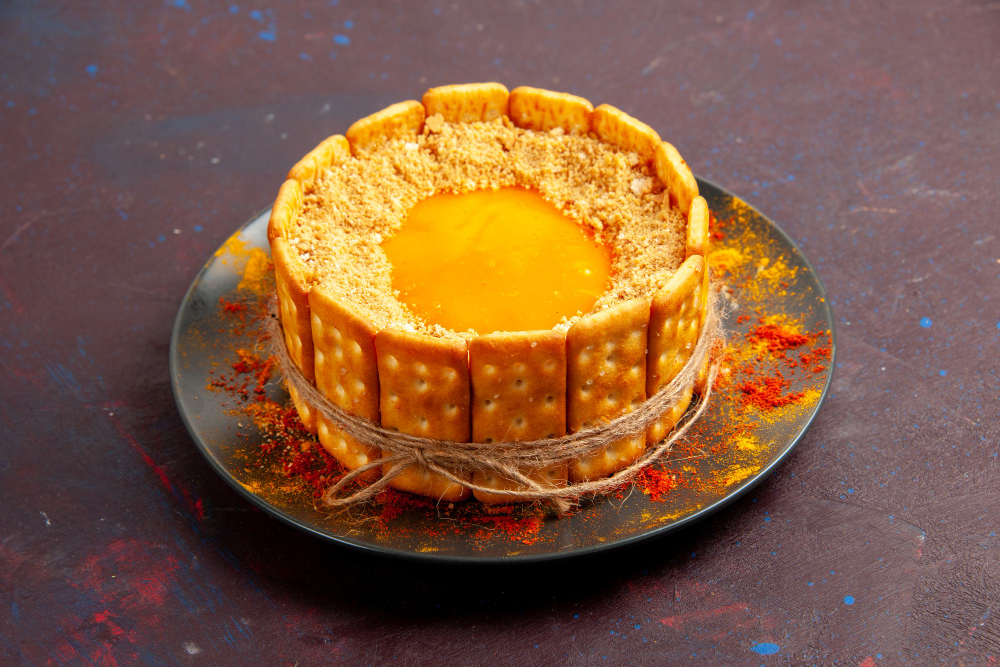
India’s traditional sweet culture extends far beyond the famous desserts that appear on restaurant menus and supermarket shelves. Every region has developed sweets shaped by local ingredients, cooking techniques, festivals, family traditions, and historical influences. While sweets such as gulab jamun, jalebi, rasgulla, peda, and laddoo have achieved widespread recognition, many equally fascinating preparations remain relatively unfamiliar outside their traditional communities. Chandrakanti is one such lesser-known Indian sweet.
Chandrakanti is known for its striking contrast in texture. Its exterior can become crisp and lightly golden through frying, while the centre remains soft, dense, and delicately sweet. This combination gives the sweet a distinctive character that sets it apart from many conventional Indian desserts. Rather than relying on elaborate decoration or expensive ingredients, Chandrakanti demonstrates how simple components can be transformed through careful preparation into a memorable traditional delicacy.
The sweet is generally associated with eastern Indian culinary traditions and is particularly connected with Odisha’s rich heritage of traditional foods. Preparations may differ between households and regions, but the basic idea centres on a soft mixture that is shaped, cooled or set, cut into pieces, and fried to create a crisp outer layer. Ingredients such as moong dal, coconut, sugar, cardamom, and ghee can contribute to its flavour and texture.
Chandrakanti is interesting not only as a dessert but also as an example of India’s diverse culinary heritage. Its relative obscurity outside regional food culture demonstrates how many traditional Indian sweets remain waiting to be discovered.
What Is Chandrakanti?
Chandrakanti is a traditional Indian sweet made from a cooked mixture that develops a soft interior and is later fried to create a crisp exterior. The contrast between these two textures is one of its defining characteristics.
The preparation commonly involves moong dal, which is cooked and processed into a smooth or slightly textured mixture. Sugar and coconut may be added for sweetness and richness, while cardamom contributes a warm aromatic note. Depending on the recipe, ghee and other ingredients may also be incorporated.
Once the mixture reaches the correct consistency, it is allowed to cool and firm up. This stage is important because the mixture needs enough structure to be shaped or cut before frying. The pieces are then fried until the outside becomes golden and crisp.
The result is a sweet that can appear relatively simple from the outside but offers a noticeably different experience when bitten into. The first sensation is often the crisp fried surface, followed by the softer, richer centre.
This contrast is central to Chandrakanti’s appeal and demonstrates the importance of texture in traditional Indian sweets.
The Regional Connection of Chandrakanti
Chandrakanti is particularly associated with Odisha, a state known for a rich and distinctive culinary heritage. Odia cuisine includes numerous traditional preparations that make use of grains, lentils, coconut, jaggery, milk, spices, and seasonal ingredients.
The state’s sweet traditions are especially diverse. Some sweets are closely connected with temples and religious offerings, while others have developed as household and festive preparations. Chandrakanti belongs to the broader world of regional sweets that have historically been prepared outside the more commercialised dessert traditions that are now widely recognised across India.
Regional sweets often remain relatively unknown nationally because their popularity can be strongly concentrated within particular communities. Recipes may be passed from one generation to another without being formally documented or commercialised on a large scale.
Chandrakanti illustrates this phenomenon. For people familiar with the sweet, it can be part of a meaningful food tradition, while someone from another part of India may encounter it for the first time.
The Importance of Moong Dal
One of the most interesting aspects of Chandrakanti is its use of moong dal as a foundation for a sweet preparation. Lentils are commonly associated with savoury Indian cuisine, but they have also played an important role in traditional desserts.
Moong dal has a relatively delicate flavour and can be cooked into a smooth consistency. When combined with sugar, coconut, ghee, and aromatic ingredients, it becomes capable of forming the soft centre of a dessert.
The use of pulses in sweets reflects the versatility of Indian cooking. Ingredients are rarely restricted to a single culinary category. A lentil can become part of a savoury curry, a fermented batter, a snack, or a sweet depending on how it is processed.
In Chandrakanti, moong dal contributes body and structure while also providing a subtle earthy flavour that balances the sweetness of the dessert.
This is one reason traditional Indian sweets can be so varied. Their recipes frequently emerge from creative combinations of ingredients that were already familiar within local kitchens.
How Chandrakanti Is Traditionally Prepared
The preparation of Chandrakanti requires attention to texture from beginning to end. The process generally begins with preparing moong dal until it becomes soft enough to be processed into a smooth mixture.
The cooked dal is then combined with ingredients such as sugar and coconut. Depending on the recipe, ghee may be added to enrich the mixture and improve its texture. Cardamom is often used to introduce fragrance.
The mixture is cooked further until it becomes sufficiently thick. This stage requires care because the consistency determines whether the mixture will set properly once cooled.
After cooking, the mixture is transferred into a suitable tray or container and allowed to cool. As it cools, it becomes firmer and easier to cut into pieces.
The pieces are then carefully fried. The heat creates a golden exterior while the interior remains soft. The final result depends heavily on controlling the frying temperature. If the oil is too hot, the exterior may brown too quickly while the centre remains inadequately heated. If the temperature is too low, the pieces may absorb excessive oil and fail to develop the desired crispness.
This combination of preparation stages makes Chandrakanti more technically interesting than its simple ingredient list might suggest.
The Crisp Exterior and Soft Centre
Texture is perhaps the most memorable feature of Chandrakanti. Many Indian sweets are soft throughout, while others are crisp or chewy from beginning to end. Chandrakanti occupies an appealing middle ground.
The frying process creates a thin, crisp outer layer. This surface provides a slight crunch when the sweet is bitten. Beneath it, the cooked moong dal mixture remains soft and tender.
The contrast makes the dessert more interesting than a uniformly textured sweet. Each bite contains two distinct sensations, with the crisp shell giving way to a softer centre.
This approach to texture can be found in many traditional cuisines around the world. Cooks have long used frying, baking, roasting, and other techniques to create contrasts between exterior and interior.
Chandrakanti demonstrates how texture can be just as important as flavour in defining a traditional dish.
The Role of Coconut
Coconut is another ingredient commonly associated with Chandrakanti and many other sweets from eastern and coastal India. Its natural sweetness and slightly rich texture complement the earthy quality of moong dal.
Freshly grated coconut can provide a subtle chewiness, while coconut also contributes aroma to the mixture. When combined with sugar and cardamom, it helps create a flavour profile that is sweet but not entirely dependent on sugar alone.
Coconut has long been important in Indian regional cooking because of its versatility. It appears in curries, chutneys, rice preparations, snacks, sweets, and festive dishes.
Its presence in Chandrakanti connects the sweet to a broader culinary tradition in which local ingredients are used across multiple categories of food.
Cardamom and the Aromatic Character
Indian sweets often depend on aromatic spices to create complexity. Cardamom is one of the most familiar examples.
In Chandrakanti, cardamom can add a warm, fragrant quality that balances the richness of coconut and the sweetness of sugar. Even a relatively small quantity can influence the overall aroma of the dessert.
The use of cardamom also connects Chandrakanti with a broader Indian dessert tradition. From halwa and kheer to peda and various milk-based sweets, cardamom has been used for generations to create a recognisable aromatic character.
This demonstrates that traditional sweets are rarely defined by sweetness alone. Aroma, texture, richness, and aftertaste all contribute to the final experience.
Chandrakanti and Indian Festive Food Culture
Traditional Indian sweets often become particularly important during festivals, family celebrations, religious occasions, and social gatherings. Food prepared for such occasions can carry emotional significance because it connects people with family traditions and memories.
Chandrakanti can occupy this kind of cultural space. Its preparation requires several stages, which makes it suitable for occasions when families come together to prepare traditional foods.
In many Indian households, traditional recipes are not simply instructions written on paper. They are knowledge passed through observation and practice. A younger family member may learn the correct consistency of a mixture by watching an experienced cook rather than measuring every ingredient precisely.
This kind of knowledge helps explain why regional sweets can develop numerous variations while retaining their essential identity.
Why Lesser-Known Sweets Matter
The popularity of nationally recognised Indian sweets can sometimes overshadow the enormous diversity of regional desserts. Commercial availability, tourism, restaurant culture, and social media have helped some sweets become internationally familiar, but many others remain closely connected to particular regions.
Lesser-known sweets such as Chandrakanti are valuable because they reveal a more detailed picture of Indian food culture.
They demonstrate that Indian cuisine is not a single culinary tradition. It is a collection of regional food cultures shaped by geography, agriculture, religion, migration, trade, family practices, and historical exchange.
Exploring lesser-known sweets also encourages greater appreciation for ingredients that may otherwise be overlooked. Moong dal, coconut, rice, semolina, jaggery, and regional grains have all contributed to India’s enormous dessert heritage.
Chandrakanti Compared With Other Indian Sweets
Chandrakanti differs from many popular Indian sweets primarily through its preparation and texture. Gulab jamun, for example, is usually made from a milk-solid-based dough that is fried and soaked in syrup. Jalebi is created by frying a fermented or prepared batter into intricate shapes before soaking it in syrup.
Chandrakanti follows a different path. Its mixture is prepared and set before being cut and fried, resulting in a soft centre enclosed by a crisp surface.
The use of moong dal also gives it a different flavour profile from milk-based sweets. Instead of relying primarily on dairy richness, Chandrakanti can combine the earthy character of lentils with coconut, sugar, ghee, and aromatic spices.
These differences illustrate how Indian sweet-making has developed numerous methods for transforming relatively simple ingredients.
The Art of Getting the Consistency Right
Consistency is particularly important in Chandrakanti because the mixture needs to perform two different roles. Before frying, it must become firm enough to be shaped and handled. After frying, it should remain soft enough inside to provide the characteristic contrast.
Achieving this balance requires attention during cooking. The mixture cannot remain too loose, because it may fail to hold its shape. At the same time, overcooking can produce an overly firm centre.
Traditional cooks often develop an intuitive understanding of these stages through experience. They recognise visual changes in the mixture, understand how it behaves while cooling, and know when it is ready for the next stage.
This kind of practical knowledge is an important part of traditional food culture. Recipes can provide measurements, but experience often determines whether the final texture is successful.
The Cultural Value of Home-Prepared Sweets
Homemade sweets occupy a special place in Indian culinary culture because they can represent hospitality, celebration, affection, and continuity.
Preparing a traditional dessert at home can take more effort than purchasing a commercially produced sweet, but that effort can itself become part of the occasion.
Chandrakanti is well suited to this tradition because it involves several stages of preparation. The cooking, cooling, shaping, and frying process can become a shared activity within a family.
Such food practices help preserve regional culinary knowledge. Even when recipes are not formally written down, repeated preparation keeps them alive.
This is particularly important for lesser-known dishes. Their survival often depends on households and small food communities rather than large-scale commercial production.
Chandrakanti in Contemporary Food Culture
Modern interest in regional Indian cuisine has created new opportunities for lesser-known foods to gain attention. Food blogs, cooking channels, social media platforms, regional food festivals, and culinary tourism have made it easier for people to discover dishes outside their immediate communities.
Chandrakanti can benefit from this growing interest because its appearance and texture make it particularly interesting for food enthusiasts. The contrast between a crisp exterior and soft centre provides a distinctive culinary experience that can attract people looking for something beyond familiar sweets.
At the same time, modern exposure raises an important question about authenticity. Traditional recipes often vary naturally between families and regions, so there may not be one single version that represents every preparation.
A modern adaptation does not necessarily have to replace the traditional form. Instead, both can exist alongside each other, allowing the dessert to reach new audiences while maintaining its cultural roots.
Preserving Regional Sweet Traditions
The preservation of traditional sweets depends on more than recording ingredient lists. The techniques, stories, occasions, and cultural contexts surrounding a dish are equally important.
For Chandrakanti, understanding the process of preparing the moong dal mixture, achieving the correct consistency, shaping it, and frying it properly provides insight into the knowledge behind the dessert.
Documentation through cookbooks, regional food writing, culinary research, and digital media can help make such traditions more accessible. However, continued preparation remains equally important.
A traditional food survives most successfully when it remains part of people’s lives rather than becoming only an item in a historical archive.
Why Chandrakanti Deserves Greater Recognition
Chandrakanti offers several qualities that make it an interesting representative of India’s regional sweet culture. Its ingredients are relatively familiar, yet their combination produces a distinctive dessert; Its preparation uses traditional cooking knowledge, while its final texture provides a contrast that many modern desserts also seek to create.
Its relatively limited recognition outside regional food traditions makes it especially valuable for culinary exploration. Discovering such sweets can broaden the understanding of Indian cuisine beyond the dishes that dominate restaurant menus and international food coverage.
Chandrakanti also demonstrates that culinary creativity does not always depend on exotic ingredients. Simple ingredients can become remarkable when technique, timing, and cultural knowledge are combined.
The Broader Story of Indian Regional Desserts
India’s regional desserts reflect the country’s agricultural diversity and cultural history. Ingredients such as coconut, jaggery, rice, wheat, lentils, milk, nuts, fruits, and spices have been transformed into countless preparations.
Climate and geography influence these traditions. Coastal areas often make extensive use of coconut, while agricultural regions may develop sweets around locally abundant grains and pulses. Religious traditions, festivals, trade routes, and migration have also influenced how ingredients and cooking methods moved between communities.
Chandrakanti belongs within this larger story. It shows how a dessert can develop around ingredients that are already deeply familiar to a community and become distinctive through a particular method of preparation.
Studying such foods therefore provides more than an opportunity to discover new flavours. It offers a way to understand how communities express identity through everyday cooking.
Conclusion
Chandrakanti is a lesser-known Indian sweet that demonstrates the extraordinary diversity of the country’s regional dessert traditions. With its crisp fried exterior and soft centre, it offers a distinctive combination of textures that separates it from many more widely recognised Indian sweets.
Its use of moong dal, coconut, sugar, ghee, and aromatic spices reflects the creativity of traditional Indian cooking. Rather than depending on elaborate ingredients, Chandrakanti transforms familiar foods through careful preparation and precise control of texture.
Its association with Odisha and eastern Indian culinary traditions also highlights the importance of regional food heritage. Many traditional sweets remain relatively unknown outside their communities because their recipes have been passed through families rather than commercialised on a national scale.
As interest in regional Indian cuisine continues to grow, sweets such as Chandrakanti provide an opportunity to explore a deeper and more diverse culinary landscape. They remind us that Indian dessert culture extends far beyond the famous sweets known around the world.
Ultimately, Chandrakanti is more than a sweet with an appealing contrast between crispness and softness. It represents the knowledge of traditional cooks, the value of regional ingredients, the importance of family recipes, and the continuing evolution of Indian food culture. Discovering such lesser-known desserts allows forgotten or underrepresented culinary traditions to receive the attention they deserve while keeping their stories alive for future generations.
Online Internship with Certificate
You may be interested
Kachnar Kali: The Indian Flower Bud That Becomes a Vegetable
Anshika Jain - October 15, 2026In many parts of the world, flowers are admired for their beauty, fragrance and ornamental value. In India, however, certain flowers have another purpose: they become ingredients…
Omija-cha: Korea’s Five-Flavour Tea Made From a Single Berry
Anshika Jain - October 15, 2026Imagine a ruby-red drink that tastes sweet, sour, bitter, salty and pungent, all from a single fruit. This unusual combination is the defining characteristic of Omija-cha, a…
Bir Pletok: Indonesia’s Alcohol-Free ‘Beer’ Made From Ginger and Spices
Anshika Jain - October 15, 2026The word “beer” usually brings to mind a fermented beverage made from grains, a foamy glass served in a pub, or a drink associated with social gatherings.…
Most from this category
Ragi Ambli: Fermented Millet Drink That Predates Today’s Beverage Trend
Anshika Jain - October 15, 2026
Gudok: Tripura’s Fermented Vegetable Dish That Deserves a Global Food Revival
Anshika Jain - October 15, 2026
Mahua: The Forest Flower That Became a Traditional Food and Beverage Ingredient
Anshika Jain - October 14, 2026Ragi Ambli: Fermented Millet Drink That Predates Today’s Beverage Trend
Anshika Jain - October 15, 2026Gudok: Tripura’s Fermented Vegetable Dish That Deserves a Global Food Revival
Anshika Jain - October 15, 2026
Kachnar Kali: The Indian Flower Bud That Becomes a Vegetable
October 15, 2026

Leave a Comment