

Zelnik: A Traditional Layered Pastry with Spinach, Cheese, Cabbage and Leeks

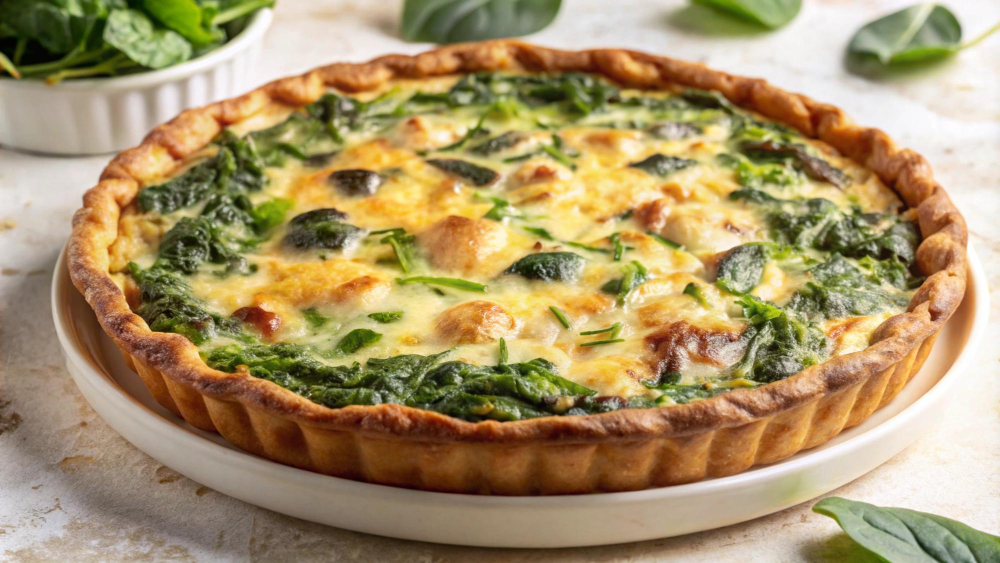
Balkan cuisine is known for its comforting baked dishes, handmade pastries and creative use of seasonal vegetables. Across the region, flour, fresh cheese, leafy greens, cabbage and leeks are transformed into satisfying meals that reflect generations of home cooking. One such preparation is Zelnik, a traditional layered pastry associated particularly with North Macedonia and neighbouring Balkan food traditions.
Zelnik is generally made by layering thin sheets of dough around a savoury filling. Depending on the household and regional variation, the filling may contain spinach, white cheese, cabbage, leeks or a combination of vegetables. The pastry is baked until its exterior becomes golden and crisp while the interior remains soft, flavourful and moist.
This article explores a completely vegetarian interpretation of Zelnik. It focuses on fillings made from spinach, cheese, cabbage and leeks, without meat, poultry, fish or meat-based ingredients. The dish is particularly interesting because it combines the texture of layered pastry with the natural flavours of vegetables and dairy. Its flexibility also makes it suitable for different tastes, seasonal ingredients and home-cooking preferences.
What Is Zelnik?
Zelnik is a traditional savoury pastry prepared in parts of the Balkans, especially North Macedonia. It belongs to a broader family of regional baked and filled dough dishes that includes several varieties of pita and burek. Although these preparations share techniques and ingredients, they are not necessarily identical in their shapes, fillings or local names.
The basic structure of Zelnik involves thin layers of dough surrounding a savoury filling. Some versions use individually prepared pastry sheets, while others are made by rolling or stretching dough into thin layers and arranging them in a baking tray. The finished pastry may be folded, coiled or layered according to the method followed by the cook.
Its fillings are particularly adaptable. Spinach and white cheese create a familiar combination of leafy freshness and creamy saltiness. Cabbage provides a mild sweetness and soft texture, while leeks contribute a delicate onion-like flavour. These ingredients can be used individually or combined to produce different versions of the dish.
In vegetarian home cooking, Zelnik is appealing because its main ingredients are relatively accessible. Flour, water, oil, vegetables and cheese can be transformed into a substantial baked meal without requiring complicated equipment or specialised ingredients.
The Balkan Culinary Tradition Behind Zelnik
Balkan cooking reflects a long history of cultural exchange, agricultural traditions and regional adaptation. The cuisine has been influenced by different communities and historical periods, resulting in a rich variety of breads, pastries, vegetable dishes and dairy-based preparations.
Handmade pastry has a particularly important place in everyday and festive cooking. Families have traditionally prepared dough using simple ingredients, stretched it into thin sheets and filled it with locally available vegetables, cheese or other ingredients. These preparations make practical use of flour and seasonal produce while creating dishes suitable for sharing.
Zelnik fits naturally into this tradition. Its vegetable fillings reflect the importance of cabbage, spinach, leeks and other garden produce in regional cooking. Cheese is another common ingredient in Balkan kitchens, particularly varieties made from sheep’s milk or cow’s milk.
Although recipes vary between regions and households, Zelnik is often associated with home baking and family meals. Its preparation can be a time-consuming process when the pastry is made from scratch, which makes it especially suited to occasions when cooking is shared among family members.
It is important to recognise that the name and preparation of Zelnik can vary across the Balkans. Similar names may be used for different pastries, and some dishes described as zelnik may have distinctive regional characteristics. The version discussed here focuses on the North Macedonian and broader Balkan-style savoury layered pastry tradition.
What Makes Vegetarian Zelnik Special?
The defining characteristic of vegetarian Zelnik is the relationship between its pastry and filling. The outer layers become crisp and lightly browned during baking, while the vegetables inside soften and release their natural flavours.
Unlike pastries that rely heavily on meat or rich sauces, vegetarian Zelnik uses vegetables and cheese to create its character. Spinach provides an earthy freshness, cabbage adds mild sweetness, and leeks contribute a gentle savoury aroma. White cheese brings creaminess and a slightly tangy taste that balances the vegetables.
Another important feature is its adaptability. A cook can prepare a spinach-and-cheese version for a rich filling, a cabbage version for a softer and more delicate flavour, or a leek-based preparation for a more aromatic result. Combining the vegetables also creates a filling with greater complexity.
The pastry itself is equally important. Thin layers allow the filling to remain the centre of attention while providing crispness and structure. When properly baked, the layers separate slightly and develop a pleasant contrast between the exterior and interior.
Understanding the Main Ingredients
Flour and Pastry Dough
Flour forms the foundation of Zelnik. All-purpose wheat flour is commonly suitable for homemade pastry because it can be kneaded into a flexible dough and rolled into thin sheets.
Water, salt and a small amount of oil are added to create the dough. Some preparations also use vinegar to help with handling, although it is not essential. The dough should be smooth and elastic rather than excessively firm.
After kneading, it needs to rest. Resting allows the gluten structure to relax, making the dough easier to stretch and roll. This stage is particularly important when preparing thin pastry sheets by hand.
The final texture depends on how thinly the dough is rolled and how the layers are assembled. Thinner sheets generally produce a more delicate pastry, while slightly thicker layers create a more substantial baked texture.
Spinach
Spinach is one of the most popular vegetable fillings for savoury Balkan pastries. Its mild earthy flavour works well with white cheese, black pepper and a little garlic.
Fresh spinach should be washed thoroughly to remove soil and then chopped. It can be lightly wilted before being added to the filling. This reduces its volume and removes some of its excess moisture.
Frozen spinach can also be used, provided it is thawed and drained properly. Excess water should be squeezed out because a wet filling can make the pastry soggy and prevent the lower layers from becoming crisp.
Spinach contributes dietary fibre, folate, vitamin K and other micronutrients. Its colour also gives the filling an attractive green appearance.
White Cheese
White cheese provides richness and a mildly tangy flavour. Depending on availability and regional preference, a Balkan-style white cheese or a suitable feta-style cheese can be used.
The cheese is generally crumbled rather than blended into a smooth paste. This allows small pockets of creamy texture to remain throughout the filling.
Its saltiness should be considered when seasoning the vegetables. Some white cheeses are naturally quite salty, so additional salt may not be necessary.
For a fully vegetarian preparation, the cheese should be made with vegetarian-friendly coagulation methods if the cook wishes to avoid animal rennet. Checking the label is important because traditional cheeses do not always use vegetarian rennet.
Cabbage
Cabbage offers a different character from spinach. It has a mild sweetness that becomes more noticeable when cooked slowly. Finely shredded cabbage can be sautéed with onion, black pepper and a little olive oil before being used as a filling.
The cabbage should be cooked until softened but not excessively wet. If it releases too much liquid, it should be drained or cooked further before being placed inside the pastry.
White cabbage is a suitable choice, although other varieties can also be used. Its soft texture and gentle flavour make it an excellent filling for those who prefer a less pronounced leafy taste.
Leeks
Leeks are another traditional-style vegetable choice for savoury pastries. Their flavour is softer and sweeter than that of ordinary onions, making them particularly suitable for layered baked dishes.
The white and light-green portions are usually sliced thinly and washed carefully because soil can collect between the layers. They are then sautéed gently in olive oil until soft.
Leeks can be combined with spinach or white cheese to create a more aromatic filling. Their natural sweetness balances the saltiness of cheese and complements the crisp pastry.
Oil, Herbs and Seasonings
Oil helps create a flexible dough and contributes to the texture of the pastry layers. Olive oil can also be used for sautéing the vegetables. Some traditional pastry methods use other vegetable oils or butter, depending on the household recipe.
Salt and black pepper provide basic seasoning. Parsley can add freshness, while a small amount of dried mint or paprika can introduce additional flavour. Garlic is particularly suitable for spinach and leek fillings, although it should be used moderately.
The aim is to allow the vegetables and cheese to remain recognisable. Zelnik is not usually dependent on a heavily spiced filling.
Preparing Vegetarian Zelnik at Home
Preparing the Dough
The flour is placed in a large mixing bowl and combined with salt. Water and a little oil are added gradually until the mixture forms a dough. It is then kneaded until smooth and elastic.
The dough should not be too sticky or too dry. If it feels excessively firm, a small amount of water can be added. If it sticks heavily to the hands, a little flour can help, although too much additional flour may make the pastry tough.
After kneading, the dough is divided into portions and lightly coated with oil. It is covered and allowed to rest for approximately 30 to 45 minutes. This makes the dough easier to roll into thin sheets.
Preparing the Spinach and Cheese Filling
The spinach is washed, chopped and lightly cooked in a pan until it begins to wilt. Any excess moisture is removed before it is allowed to cool.
The spinach is then combined with crumbled white cheese, black pepper and a little garlic. Chopped parsley can be added for additional freshness.
The mixture should be moist but not watery. If the spinach contains too much liquid, it can affect the pastry’s texture during baking. Allowing the filling to cool before assembly also makes the pastry easier to handle.
Preparing the Cabbage Filling
Cabbage is shredded finely and cooked gently in olive oil. Onion can be added to provide additional sweetness, while black pepper gives the mixture a mild savoury flavour.
The cabbage should be cooked until tender and any excess moisture should be allowed to evaporate. It is then cooled before being placed between the pastry layers.
For a more substantial filling, a small amount of crumbled vegetarian white cheese can be added. This creates a balance between the sweetness of cabbage and the tanginess of cheese.
Preparing the Leek Filling
The leeks are cleaned carefully and sliced into thin pieces. They are cooked slowly in olive oil until soft and aromatic.
Spinach or white cheese can be combined with the leeks to produce a more complex filling. The mixture should be cooled before assembly so that it does not soften the pastry prematurely.
Leeks are particularly useful when preparing Zelnik for people who prefer a mild vegetable flavour rather than a strongly leafy filling.
Layering and Assembling the Pastry
The rested dough is rolled into thin sheets on a lightly floured surface. Depending on the recipe, these sheets can be arranged individually in a baking tray or rolled around the filling.
A baking tray is lightly greased before the first pastry layer is placed inside. A thin coating of oil can be brushed between layers to help them separate during baking.
The vegetable filling is spread evenly over the pastry. Additional sheets are placed over it, and the edges are folded or tucked to enclose the filling. The process can be repeated if the recipe uses multiple layers.
Some preparations form the pastry into a spiral or coil, while others use a flat layered arrangement. Both approaches can produce an attractive result, provided the filling is distributed evenly and the pastry is not excessively thick.
The surface can be brushed lightly with oil before baking. This encourages browning and helps develop a crisp exterior.
Baking Until Golden and Crisp
The assembled Zelnik is placed in a preheated oven, generally at around 180–200°C, depending on the pastry thickness and the oven. It is baked until the surface becomes golden and the pastry layers are cooked through.
The baking time will vary according to the size of the tray, the moisture content of the filling and the thickness of the dough. The pastry should be checked towards the end of cooking to ensure that the top does not brown too quickly while the inner layers remain undercooked.
After baking, the Zelnik should rest briefly before slicing. This allows the filling to settle and makes the pastry easier to serve.
Exploring Different Vegetarian Zelnik Variations
Spinach and Cheese Zelnik
Spinach and cheese make one of the most recognisable combinations for vegetarian Zelnik. The earthy taste of spinach balances the salty, creamy character of white cheese, while the pastry provides crispness.
This version is suitable for lunch, dinner or a shared meal. It can be served warm, when the cheese remains soft and the pastry is at its crispest.
Cabbage Zelnik
Cabbage Zelnik has a gentler flavour and a softer filling. The cabbage becomes naturally sweet as it cooks, making it suitable for people who prefer a milder savoury pastry.
A little onion and black pepper can enhance the filling without overpowering the cabbage. Cheese may be included, but the vegetable can also remain the main ingredient.
Leek Zelnik
Leek-based Zelnik is aromatic and slightly sweet. Slow-cooked leeks provide a smooth texture and pair particularly well with white cheese or spinach.
This variation is especially appealing during seasons when fresh leeks are available. It offers a distinctive alternative to the more familiar spinach filling.
Mixed Vegetable Zelnik
A mixed vegetable version can combine spinach, cabbage and leeks. The ingredients should be cooked separately or prepared according to their individual moisture levels before being mixed.
This approach creates a filling with different textures and flavours. White cheese can be added to bind the vegetables together and provide a creamy contrast.
Flavour, Texture and Serving Style
A well-prepared Zelnik offers a contrast between crisp pastry and soft vegetable filling. The outer layers should be golden and lightly flaky, while the centre should remain moist without becoming soggy.
Spinach and cheese versions are generally richer and saltier, while cabbage fillings are milder and slightly sweet. Leek versions offer a gentle aromatic flavour that works well with both cheese and leafy vegetables.
Zelnik is usually served in slices or portions. It can be enjoyed warm as a main meal or cut into smaller pieces for a shared table. A fresh tomato and cucumber salad provides a refreshing contrast, while plain yoghurt can complement the richness of the pastry.
For a fully vegan serving, the pastry should be prepared without butter or dairy, and the filling should use vegetables and olive oil instead of cheese. A plant-based yoghurt accompaniment can also be used.
Nutritional Characteristics of Vegetarian Zelnik
The nutritional value of Zelnik depends on the pastry, filling and amount of oil or cheese used. Its vegetable fillings can contribute dietary fibre, vitamins and minerals, while wheat flour provides carbohydrates.
Spinach contains folate, vitamin K and other micronutrients. Cabbage provides vitamin C and fibre, while leeks contribute fibre and naturally occurring plant compounds. White cheese adds protein and calcium, although its fat and sodium content can vary considerably.
The pastry itself contributes a substantial proportion of the dish’s energy. Using a moderate amount of oil and a generous quantity of vegetables can help create a more balanced preparation. Whole-wheat flour can also be used for part of the dough, although it may produce a denser texture and require adjustments to the amount of water.
Vegetarian Zelnik can form part of a balanced meal when served with fresh vegetables or a salad. Its portion size should be considered according to the richness of the pastry and filling.
Why Zelnik Remains Relevant in Modern Vegetarian Cooking
Zelnik demonstrates how traditional food preparation can remain relevant in contemporary kitchens. Its ingredients are adaptable, and the dish can be adjusted according to seasonal produce, dietary preferences and ingredient availability.
For vegetarian cooking, it offers a practical way to use leafy greens and vegetables in a satisfying baked meal. It also provides an opportunity to explore regional Balkan food traditions beyond the more widely recognised dishes.
Modern cooks can experiment with whole-grain pastry, different vegetable combinations and vegetarian cheeses while maintaining the basic layered structure. The dish can also be prepared in advance and reheated, making it useful for family meals and gatherings.
Its continued appeal comes from the balance between simplicity and technique. The ingredients are familiar, but the preparation of thin pastry and the careful handling of the filling create a distinctive result.
Conclusion
Zelnik is a traditional Balkan-style savoury pastry that highlights the region’s appreciation for handmade dough, seasonal vegetables and comforting baked food. Its layered structure and adaptable filling make it suitable for several vegetarian interpretations, particularly those featuring spinach, white cheese, cabbage and leeks.
The spinach-and-cheese version offers a rich and tangy flavour, while cabbage provides natural sweetness and leeks contribute a delicate aroma. These fillings can also be combined to create a more varied dish without losing the essential character of the pastry.
For vegetarian food enthusiasts, Zelnik offers an opportunity to explore Balkan culinary traditions through ingredients that are accessible and versatile. Its crisp exterior, soft filling and satisfying flavour make it suitable for everyday meals as well as shared occasions.
Whether prepared with spinach and cheese, gently cooked cabbage or aromatic leeks, vegetarian Zelnik demonstrates how a simple combination of flour, vegetables and careful preparation can become a memorable regional dish.
Online Internship with Certificate
You may be interested
Bissara: Vegetarian Preparation of Fava Beans, Split Peas, Garlic and Olive Oil
Anshika Jain - November 12, 2026Moroccan cuisine is widely appreciated for its combination of aromatic spices, fresh herbs, vegetables, legumes and carefully developed flavours. Among its traditional everyday preparations, Bissara holds a…
Kuku Bademjan: Vegetarian Dish of Aubergine, Fresh Herbs and Aromatic Spices
Anshika Jain - November 12, 2026Iranian cuisine is recognised for its thoughtful use of vegetables, fresh herbs, aromatic spices, dried fruits and carefully balanced flavours. Aubergine, known as bademjan in Persian, is…
Pkhali: Vegetarian Delicacy of Vegetables, Walnuts, Garlic and Herbs
Anshika Jain - November 12, 2026Georgian cuisine is celebrated for its generous use of walnuts, fresh herbs, seasonal vegetables and aromatic spices. Among its most distinctive traditional preparations is Pkhali, a colourful…
Most from this category
Malfouf: Vegetarian Cabbage Rolls with Rice, Herbs, Garlic and Lemon
Anshika Jain - November 12, 2026
Celtuce: Exploring the Chinese Vegetable Valued for Its Thick, Crisp Stem
Anshika Jain - November 6, 2026
Chayote: Exploring the Crisp and Versatile Squash Used in Savoury Cooking
Anshika Jain - November 6, 2026Ajapsandali: Stew of Aubergine, Tomatoes, Peppers and Fresh Herbs
Anshika Jain - November 12, 2026Malfouf: Vegetarian Cabbage Rolls with Rice, Herbs, Garlic and Lemon
Anshika Jain - November 12, 2026Celtuce: Exploring the Chinese Vegetable Valued for Its Thick, Crisp Stem
Anshika Jain - November 6, 2026

Pkhali: Vegetarian Delicacy of Vegetables, Walnuts, Garlic and Herbs
November 12, 2026
Ajapsandali: Stew of Aubergine, Tomatoes, Peppers and Fresh Herbs
November 12, 2026

Leave a Comment