

Japchae: Stir-fried glass noodles with vegetables and sesame

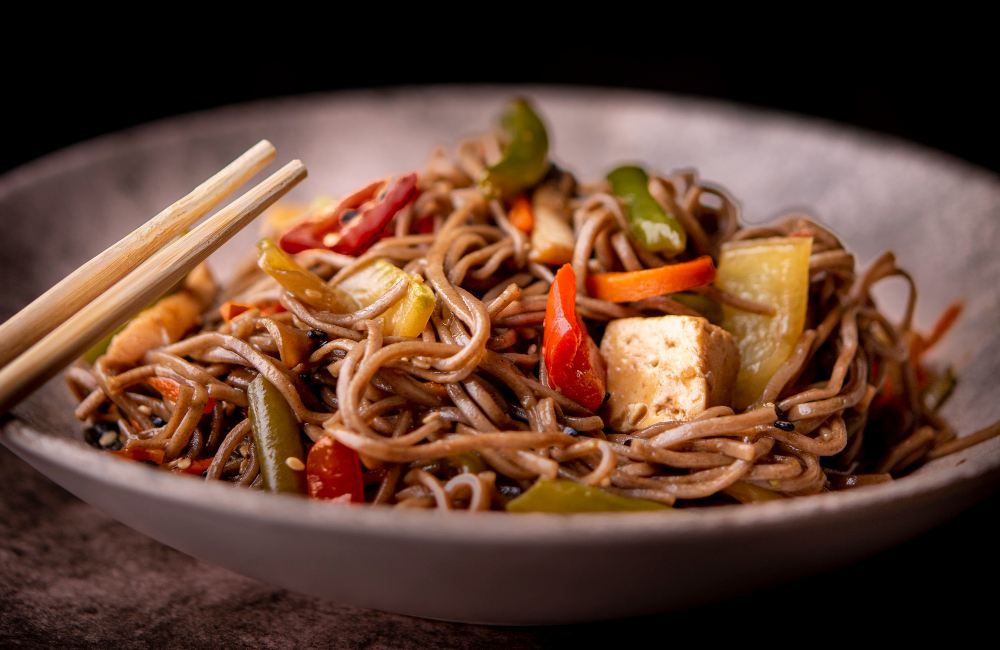
Japchae, one of Korea’s most recognizable noodle dishes, has long occupied a special place in Korean cuisine. Made with chewy glass noodles, colorful vegetables, sesame oil, soy sauce, japchae combines contrasting textures and flavors in a dish that is both comforting and visually appealing. Traditionally served at celebrations, family gatherings, holidays, and important occasions, japchae has gradually moved beyond its cultural origins to become a familiar Korean food around the world.
The dish is particularly distinctive because its noodles are made from sweet potato starch rather than wheat. Known as dangmyeon, these translucent noodles develop a pleasantly elastic and chewy texture when cooked. They absorb the savory-sweet seasoning exceptionally well, allowing the flavors of soy sauce, sesame oil, garlic, vegetables, and other ingredients to come together in every bite.
Japchae is also experiencing a new phase of popularity. Recent developments in Korea show that the dish is increasingly being adapted for modern lifestyles, including ready-to-eat meals, instant versions, convenience-store dishes, and lighter interpretations. In September 2026, Korean media reported on a five-minute instant japchae product that combines glass noodles, dried vegetables, seasoning, and sesame oil, reflecting the growing demand for convenient versions of traditional Korean foods.
At the same time, japchae is benefiting from the broader international growth of Korean food, or K-food. Korean culinary institutions have highlighted japchae as one of the Korean dishes gaining attention among international consumers, particularly because of its colorful vegetables, chewy noodles, adaptable ingredients, and naturally gluten-free noodle base.
The Origins and Cultural Importance of Japchae
Japchae has a long history in Korean culinary culture. The dish is associated with Korean royal and celebratory cuisine and has evolved considerably over the centuries. Although modern japchae is strongly identified with sweet potato starch noodles, earlier forms of the dish did not necessarily contain the noodles that are considered essential today.
The modern version developed into a combination of noodles and separately prepared vegetables, and seasonings. This method gives japchae its characteristic complexity. Rather than throwing everything into a single pan at once, traditional preparation often involves cooking individual ingredients separately before combining them.
This approach may require more time than preparing an ordinary noodle stir-fry, but it serves an important culinary purpose. Vegetables such as carrots, onions, spinach, mushrooms, and bell peppers have different cooking requirements. Preparing them individually helps preserve their color, texture, and individual flavor.
Japchae is therefore more than simply stir-fried noodles. It represents a Korean approach to creating harmony among multiple ingredients. Sweet, salty, nutty, savory, fresh, soft, and crunchy elements can exist together without one completely overpowering the others.
The dish is especially associated with holidays and celebrations. It is commonly prepared for gatherings because it can be made in a relatively large quantity and served either warm or at room temperature. Its attractive combination of translucent noodles and colorful vegetables also makes it particularly suitable for festive tables.
What Makes Japchae Different?
The most important ingredient in traditional japchae is dangmyeon, the Korean glass noodle made primarily from sweet potato starch. Unlike wheat-based noodles, dangmyeon becomes translucent and chewy when cooked.
This texture is one of japchae’s defining characteristics. The noodles are firm enough to provide resistance when bitten but soft enough to absorb the seasoning. Their relatively neutral flavor makes them an effective carrier for soy sauce, sesame oil, garlic, pepper, and other seasonings.
The second defining characteristic is the vegetable combination. Carrots, onions, spinach, mushrooms, and bell peppers are among the ingredients frequently associated with japchae. Beef is also commonly included in traditional versions, pork, seafood, tofu.
Sesame plays an equally important role. Sesame oil contributes a deep, toasted aroma that immediately identifies the dish as Korean. Toasted sesame seeds are often sprinkled over the finished noodles, adding a delicate crunch and additional nuttiness.
The seasoning is generally built around soy sauce, sesame oil, garlic, sugar or another sweetening ingredient, and black pepper. The resulting flavor is neither overwhelmingly salty nor intensely sweet. Instead, the dish is characterized by a balanced sweet-savory profile.
The Traditional Cooking Method
Traditional japchae preparation demonstrates the importance of technique in Korean cooking. The noodles are generally cooked separately before being drained and combined with the other ingredients.
Vegetables may be sliced into thin, similarly sized pieces. Carrots and onions provide sweetness and structure, spinach introduces a soft leafy texture, and mushrooms contribute umami.
One of the distinctive features of traditional preparation is that different ingredients may be stir-fried individually. Once they are cooked, they are combined with the noodles and seasoning. This method helps prevent the vegetables from becoming excessively soft or watery.
The final stage involves tossing the ingredients together so that the seasoning coats the noodles evenly. Sesame oil is particularly important at this point because its aroma can become less pronounced if exposed to prolonged high heat.
This traditional approach explains why authentic japchae can require considerable preparation time. However, modern cooks have increasingly adapted the technique to make the dish faster and more accessible.
Japchae and the Growth of K-Food
The international popularity of Korean food has created new opportunities for dishes that were once primarily familiar within Korea. Japchae is part of this broader expansion.
A 2026 publication from the Korean government’s Hansik platform identified japchae among Korean side dishes attracting international attention. The dish has particular appeal because its vegetables create a colorful presentation, while its sweet potato starch noodles provide an alternative to conventional wheat pasta.
This development fits into a larger change in the international perception of Korean cuisine. Korean food is no longer represented internationally only by a handful of famous dishes. Consumers are increasingly encountering banchan, noodles, fermented foods, soups, dumplings, desserts, and home-style dishes.
Research highlighted in Korea’s 2025 overseas Hansik consumer survey showed that consumers strongly associate Korean cuisine with qualities such as healthiness, uniqueness, popularity, tradition, freshness, and trendiness. Japchae was among the dishes identified with Korean cuisine, although it remained less universally recognized than kimchi, bibimbap, bulgogi.
This distinction is important. Japchae may not yet have the same worldwide recognition as kimchi, but its adaptability gives it considerable potential in international markets.
The 2026 Convenience-Food Transformation
One of the most interesting recent developments surrounding japchae is its transformation into a convenience food.
In September 2026, Korean media reported on an instant japchae product designed to be prepared in approximately five minutes. The product combines glass noodles with dried vegetables, seasoning, and sesame oil. According to the report, a 75-gram serving contains 255 calories, while preparation involves boiling the noodles and vegetables before draining them and adding the seasoning and sesame oil.
The development illustrates an important shift in how traditional Korean dishes are being consumed. Japchae has historically been associated with considerable preparation, particularly when multiple vegetables. Instant versions respond to a modern preference for convenience without completely abandoning the recognizable flavor profile of the original dish.
This trend also connects japchae to the expanding Korean ready-meal market. Korean convenience stores are increasingly offering traditional dishes as part of ready-to-eat meals, with retailers reporting stronger interest from international visitors in authentic Korean-style food. Japchae has been included among the side dishes being incorporated into these convenient meal formats.
The change does not necessarily mean that traditional japchae is being replaced. Instead, the two versions serve different purposes. Traditional japchae remains associated with family meals, holidays, celebrations, and home cooking, while instant and ready-made versions address speed and convenience.
Japchae and Modern Health-Conscious Eating
Another recent development is the growing interest in adapting japchae for lighter eating patterns.
Although japchae contains substantial quantities of vegetables, its principal noodle ingredient is still a starch-based food. The noodles can contribute a significant amount of carbohydrates, while oil, sweeteners, and salty seasonings increase the overall energy and sodium content depending on how the dish is prepared.
Recent Korean health coverage has therefore encouraged consumers to pay attention to portion size and preparation methods rather than automatically considering japchae a low-calorie food simply because it contains vegetables.
At the same time, creative alternatives are emerging. In 2026, Korean media reported on a version of “diet japchae” using konjac noodles and additional bean sprouts instead of conventional sweet potato starch noodles. The adaptation reflects a broader consumer interest in modifying familiar dishes to fit individual dietary preferences.
These variations demonstrate the flexibility of japchae. The dish can be modified by changing the noodles, increasing vegetables, reducing oil, adjusting sweetness with plant-based ingredients.
However, such versions should be understood as adaptations rather than replacements for traditional japchae. The distinctive chewy texture of dangmyeon is one of the defining features of the original dish, and changing the noodles inevitably changes the eating experience.
Vegetarian and Plant-Based Japchae
Japchae is particularly well suited to vegetarian cooking because vegetables already play such a prominent role in the dish.
A vegetarian version can focus on mushrooms, spinach, carrots, onions, bell peppers, cabbage, bean sprouts, and other seasonal vegetables. Mushrooms are especially useful because their savory flavor can provide some of the depth normally.
Plant-based japchae can also benefit from tofu or other protein-rich ingredients. The seasoning can remain largely similar, although cooks should check the ingredients of commercial sauces and seasonings when preparing a strictly vegetarian or vegan version.
The popularity of plant-forward eating has contributed to the adaptability of Korean dishes internationally. Japchae’s combination of noodles and vegetables makes it relatively easy for cooks unfamiliar with Korean cuisine to understand and customize.
Sesame Oil: The Aromatic Signature
Sesame oil deserves special attention because it plays a critical role in the sensory identity of japchae.
A small amount of toasted sesame oil can transform the aroma of the entire dish. Its nutty fragrance complements the sweetness of the vegetables and the saltiness of soy sauce. Toasted sesame seeds provide an additional layer of flavor and texture.
The key is moderation. Sesame oil has a strong flavor, so excessive use can dominate the other ingredients. Traditionally, it is often incorporated toward the end of cooking or during the final mixing stage, allowing its aroma to remain noticeable.
This finishing technique also explains why japchae can smell particularly fragrant immediately after preparation. The sesame oil is not simply another cooking fat; it functions as an aromatic seasoning.
Japchae in Contemporary Korean Food Culture
Japchae’s evolution reflects a broader transformation in Korean food culture. Traditional recipes are increasingly appearing in formats designed for convenience, international markets, and contemporary dietary preferences.
The broader K-food industry has been moving beyond the idea that international consumers will only purchase highly recognizable Korean products. Food industry analysts have described Korean cuisine as developing from a short-term cultural phenomenon into a longer-term international food trend, with growing interest in a wider variety of Korean dishes and ready-to-eat products.
Japchae fits naturally into this development because it can exist in several forms. It can be prepared traditionally for a Korean holiday, served as part of a restaurant meal, packaged as a convenience-store side dish, sold as an instant noodle-style product, or adapted with alternative noodles for health-conscious consumers.
Its basic flavor structure is also relatively approachable. Unlike some fermented or intensely spicy Korean foods, japchae generally relies on familiar flavors such as soy sauce, garlic, sesame, sweetness, and vegetables.
The Future of Japchae
The future of japchae is likely to involve both preservation and experimentation. Traditional preparation will remain important because the dish is closely connected with Korean culinary heritage and celebrations. At the same time, modern consumers are demanding faster preparation, convenient packaging, different portion sizes, and dietary alternatives.
The recent appearance of five-minute japchae products illustrates how traditional dishes can be redesigned for modern lifestyles without abandoning their fundamental identity. Meanwhile, ready-to-eat meal formats are helping introduce japchae to consumers who may encounter it for the first time outside a traditional Korean restaurant.
International interest is another important factor. As global consumers become more familiar with Korean food, dishes beyond the most famous examples have greater opportunities to gain recognition. Japchae’s colorful appearance, chewy texture, adaptable ingredients, and mild sweet-savory seasoning make it particularly suitable for this wider culinary landscape.
The challenge will be maintaining authenticity while allowing innovation. Excessive localization can remove the qualities that make a dish recognizably Korean, while refusing to adapt at all can limit its accessibility in new markets. Current discussions around the international expansion of K-food increasingly emphasize a balance between authentic Korean flavors and thoughtful localization.
Conclusion
Japchae is much more than stir-fried glass noodles with vegetables and sesame. It is a dish that demonstrates the balance, color, texture, and harmony characteristic of Korean cuisine. Its chewy sweet potato starch noodles, crisp and tender vegetables, savory seasoning, fragrant sesame oil, and plant-based ingredients create a combination that is both traditional and remarkably adaptable.
The latest developments in 2026 show that japchae is entering an interesting new stage. Convenience versions are making the dish faster to prepare, Korean convenience stores are incorporating it into ready-to-eat meals aimed at a broader audience, and consumers are experimenting with lighter alternatives such as konjac noodles and additional vegetables. At the same time, Korean culinary institutions continue to highlight japchae as part of the country’s expanding international food culture.
Its enduring appeal ultimately comes from its flexibility. Japchae can be a centerpiece at a family celebration, a side dish on a Korean table, a vegetarian meal, a convenient packaged food, or an introduction to Korean cuisine for someone trying it for the first time.
As Korean food continues to establish itself internationally, japchae represents an important bridge between tradition and modern dining. Its fundamental character remains recognizable, while its preparation, ingredients, packaging, and presentation continue to evolve. That combination of cultural heritage and adaptability ensures that japchae will remain an important and increasingly visible part of Korean cuisine in the years ahead.
Online Internship with Certificate
You may be interested

Rupjmaizes Kartojums: Latvia’s Layered Rye Bread Dessert
Anshika Jain - October 23, 2026Rupjmaizes kārtojums is a traditional Latvian dessert that transforms dark rye bread into a layered combination of toasted crumbs, whipped cream, and fruit preserves. Often compared with…
Gamja Ongsimi Small dumplings made primarily from potato
Anshika Jain - October 23, 2026Gamja Ongsimi is particularly associated with Gangwon Province in northeastern South Korea, a region known for its mountainous landscapes and long-standing potato-growing traditions. Potatoes became an important…
Bharli Karli Bitter gourds stuffed with a spiced mixture
Anshika Jain - October 23, 2026Maharashtrian cuisine is known for its thoughtful use of spices, roasted ingredients, pulses, coconut, and seasonal vegetables. Bharli Karli fits naturally into this culinary tradition, particularly because…
Most from this category
Pathrode: Layered Colocasia Leaves Become a Traditional Steamed Delicacy
Anshika Jain - October 23, 2026
Taikilo Bhaji: Exploring Goa’s Seasonal Wild Greens and Konkani Food Traditions
Anshika Jain - October 23, 2026

Pathrode: Layered Colocasia Leaves Become a Traditional Steamed Delicacy
Anshika Jain - October 23, 2026Taikilo Bhaji: Exploring Goa’s Seasonal Wild Greens and Konkani Food Traditions
Anshika Jain - October 23, 2026Kachnar Kali Curry: Unopened Flower Buds into a Savoury Delicacy
Anshika Jain - October 23, 2026
Rupjmaizes Kartojums: Latvia’s Layered Rye Bread Dessert
October 23, 2026
Gamja Ongsimi Small dumplings made primarily from potato
October 23, 2026



Leave a Comment